
How Much Does Website Development Cost in 2026? A Practitioner’s Breakdown
Stop asking agencies for a price list. There isn’t one. The real cost of website development in 2026 ranges from under $5,000 for a basic template site to over $250,000 for a custom SaaS platform. To truly understand website development cost, consider factors like scope and technology. Most serious businesses with custom needs should expect to invest between $15,000 and $75,000 for a professional, scalable website designed to drive growth. The final number depends entirely on the complexity of the build, the experience of the team, and the specific business outcomes you need to achieve.

Website Development Cost: A Line-Item Breakdown
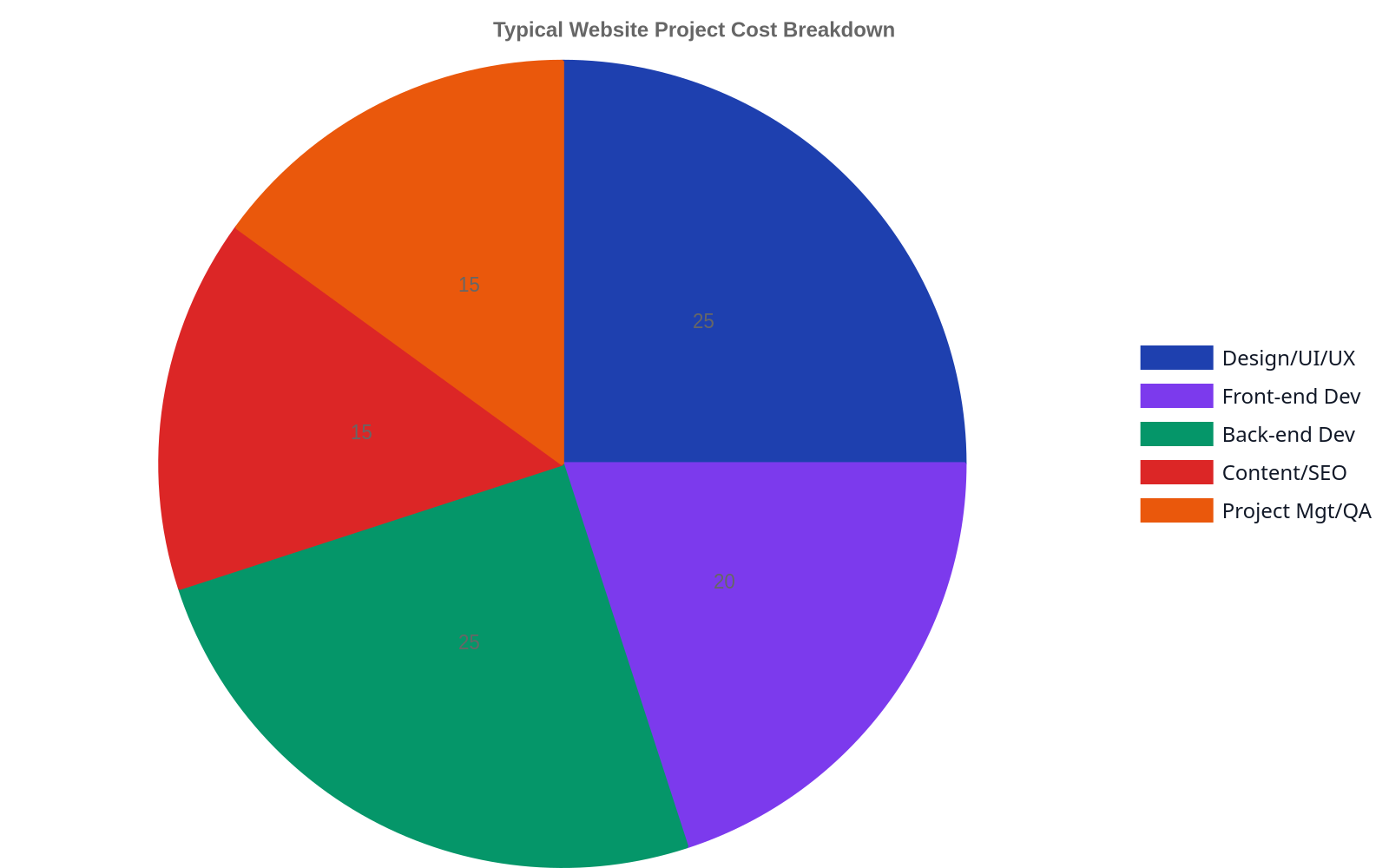
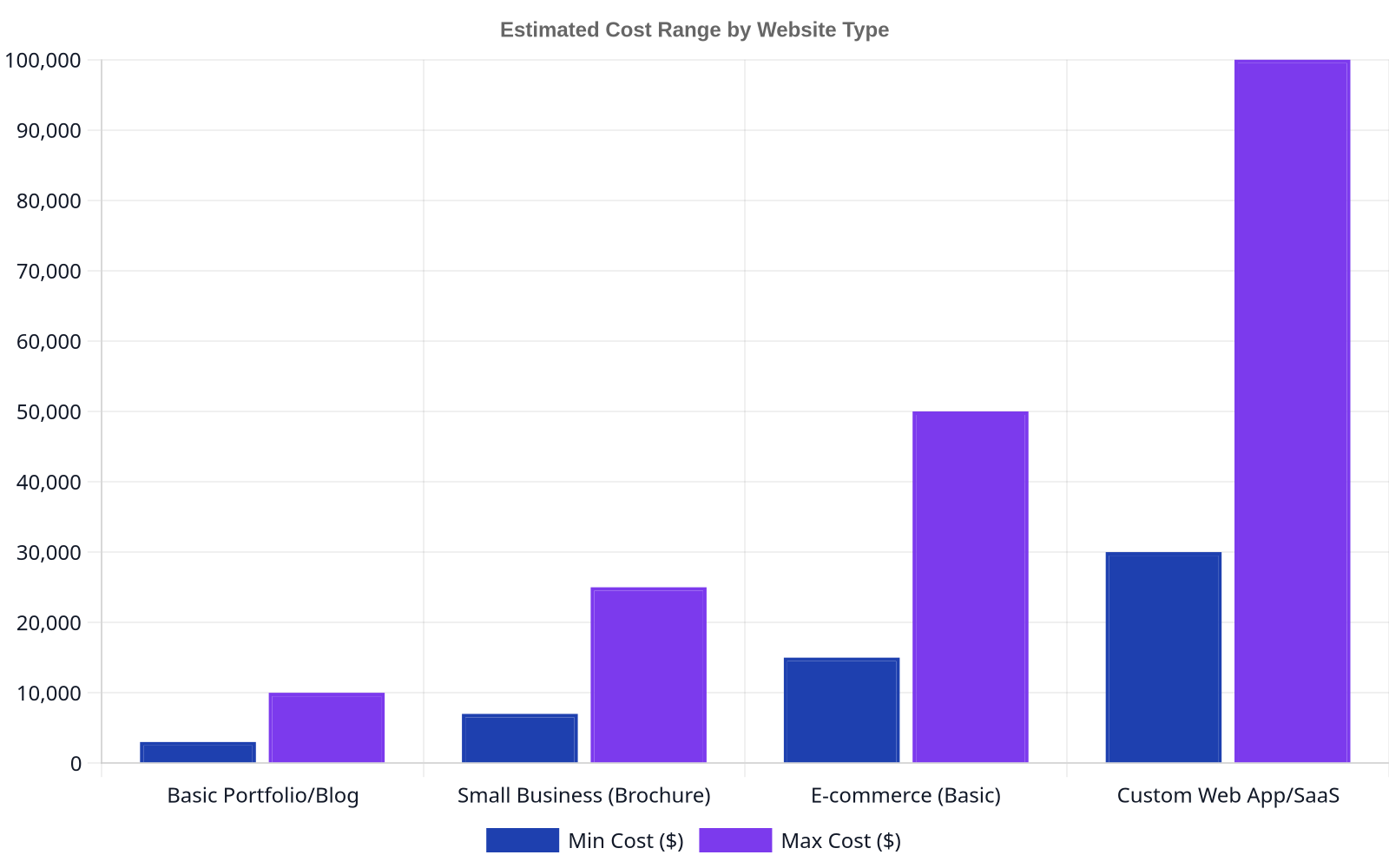
Your final invoice is a sum of its parts. Agencies don’t pull numbers from thin air; we calculate the hours required for specific tasks and deliverables. Here’s a typical breakdown of where the money goes. Prices reflect agency-level work in 2026; freelancers may be cheaper, but bring different risks.
| Feature/Phase | Typical Cost Range (USD) | What Drives the Cost Higher? |
|---|---|---|
| Strategy & Discovery | $2,000 – $10,000 | Multiple stakeholder interviews, competitor analysis, complex user journey mapping, technical audits. |
| UI/UX Design | $3,000 – $20,000+ | Multiple unique page templates, interactive prototypes, user testing, complex animations, branding from scratch. |
| Frontend Development | $4,000 – $40,000+ | Pixel-perfect implementation, complex CSS animations, state management (e.g., React, Vue.js), accessibility compliance. |
| Backend Development | $5,000 – $80,000+ | Custom APIs, database architecture, third-party integrations (CRM, ERP), user authentication, payment processing. |
| Content Management System (CMS) | $2,000 – $25,000+ | Headless CMS setup, custom field development, complex user permissions, migration from an old system. |
| E-commerce Functionality | $5,000 – $50,000+ | Custom product filters, subscription models, integration with multiple payment gateways, complex shipping logic. |
| Testing & QA | $2,000 – $15,000+ | Automated testing scripts, cross-browser/device testing, performance and security load testing. |
| Deployment & Training | $1,000 – $5,000 | Complex server configurations (e.g., AWS, Google Cloud), CI/CD pipeline setup, team training sessions. |
What Moves the Price of a Website?
Four main factors determine whether your project lands on the low or high end of those ranges. Understanding them is the key to creating a realistic budget and a sane request for proposal (RFP).
1. Scope: Features & Complexity
A simple 10-page marketing site with a contact form is a different universe from a multi-language e-commerce store with 10,000 SKUs. Every feature you add, from a simple blog to a full-blown custom SaaS platform, adds design and development hours. The single biggest cost driver is custom functionality. If you need logic that doesn’t exist in an off-the-shelf plugin, you’re paying for a developer to architect, build, test, and secure it from scratch.
2. Design: Template vs. Custom
Using a pre-built theme or template is the fastest way to get online, but you inherit its limitations. A custom UI/UX design process costs more upfront but results in a site tailored precisely to your user journeys and brand identity. According to a 2023 Adobe study, poor UX can lead businesses to lose up to 20% of their potential revenue. A custom design is an investment in avoiding that loss.

3. Technology Stack
Building on an open-source platform like WordPress with pre-existing plugins is generally less expensive than a fully custom application built with frameworks like React or Ruby on Rails. Headless CMS architectures, while offering superior flexibility and performance, often require more specialized development expertise, which influences the cost. The choice of hosting environment, from shared hosting to a dedicated AWS cluster, also has significant cost implications.
4. The Team You Hire
A solo freelancer in a low-cost market will quote a much lower price than a 10-person agency in New York City. You’re not just paying for hours; you’re paying for experience, processes, and accountability. An agency brings a project manager, a strategist, designers, and multiple developers. This structure costs more but mitigates risk and is better equipped to handle complex projects like building enterprise-grade e-commerce stores or scalable software applications.
A cheap website is often the most expensive mistake a business can make. It’s the one you have to scrap and rebuild in 18 months because it can’t scale, nobody can update it, and it doesn’t convert.
Costs People Forget
The quote from your development agency isn’t the total cost of ownership. Budget for these often-overlooked expenses from day one to avoid surprises.
- Domain Name: $10 – $60 per year. Premium domains can cost thousands.
- Hosting: $100 – $5,000+ per year. This ranges from basic shared hosting to dedicated servers or cloud infrastructure. A 2023 analysis by HostingAdvice shows managed cloud hosting costs can easily exceed $300/month for serious applications.
- SSL Certificate: $0 – $300 per year. Many hosts include this, but enterprise-level certificates cost more.
- Premium Plugins/Software Licenses: $300 – $2,000+ per year. These include licenses for themes, advanced form builders, SEO tools, or performance optimization plugins.
- Maintenance & Retainers: $1,500 – $30,000+ per year. You need a budget for software updates, security patches, backups, and minor tweaks. Most agencies offer retainers for this. Wordfence data shows over 90,000 attacks per minute target WordPress sites alone; skipping maintenance is not an option.
- Content Creation: Don’t forget the cost of professional photography, videography, and copywriting. A beautiful, empty website is useless. A Nielsen Norman Group study found that users rarely read on the web; professionally written, scannable copy is critical.

Sample Budgets: What to Expect
To make this concrete, here are three common scenarios we see at Dynareach, where we focus on building sites that are designed for growth.
Scenario 1: The Startup Brochure Site
- Goal: Establish a professional online presence and generate leads.
- Features: 5-10 pages, custom design, mobile-responsive, blog, contact forms, basic on-page SEO.
- Stack: WordPress with a customized theme.
- Estimated Cost: $15,000 – $30,000
Scenario 2: The Growing E-commerce Business
- Goal: Increase online sales and streamline operations.
- Features: All of the above, plus full e-commerce functionality (e.g., Shopify, Magento, or WooCommerce), up to 500 products, payment gateway integration, customer accounts, custom product filters.
- Stack: Headless CMS with a React frontend, or a highly customized Shopify Plus build.
- Estimated Cost: $40,000 – $100,000
Scenario 3: The Custom Web Application / SaaS MVP
- Goal: Launch a minimum viable product for a new software idea.
- Features: Multi-tenant user accounts, subscription billing, custom dashboard, unique business logic, third-party API integrations.
- Stack: Custom backend (e.g., Node.js, Python), modern frontend framework (e.g., React, Vue), cloud infrastructure (AWS/Google Cloud).
- Estimated Cost: $80,000 – $250,000+
Where You Can Cut Costs (Without Regretting It)
Trying to save money is natural, but cutting the wrong corners is disastrous. Instead of just asking for a lower price, focus on reducing the scope in smart ways.
- Phase the project. Don’t try to build everything at once. Launch a solid version 1.0 that achieves your core business goal, and plan for a version 1.1 and 2.0 to add the “nice-to-haves.” This is a core principle of how we approach building scalable sites.
- Use high-quality stock assets. Custom photography and videography are ideal, but they are expensive. High-quality, professionally licensed stock photos and videos are a perfectly acceptable substitute for your initial launch.
- Write your own copy (if you can). If you are a strong writer and know your subject matter inside and out, you can save thousands by writing your own web copy. Just be honest with yourself about your abilities. Bad copy will kill conversions faster than a slow load time.
- Simplify the design. Instead of five unique page templates, can you get by with three? Reducing the number of unique layouts is a direct way to reduce design and frontend development hours.
FAQ
How much does it cost to maintain a website per month?
This fee covers security, updates, and expert availability, not new feature development.
Why do website quotes vary so much between agencies?
Quotes vary based on team size, location, experience, and process. A large agency has higher overheads (office, project managers, strategists) than a small boutique firm. You are paying for that structure, which often translates to more reliable processes and risk management, especially for complex projects like custom software platforms.
Can I build a website myself for free?
Yes, using platforms like Wix, Squarespace, or WordPress.com, you can create a basic site for a very low cost. However, you are limited by their templates and features. The real “cost” is your time and the limitations on branding, SEO, and functionality that can hold your business back as it tries to scale.
Is it cheaper to use a freelancer than an agency?
Typically, yes, a freelancer’s hourly rate is lower than an agency’s. The tradeoff is that you become the project manager. You are responsible for finding, vetting, and managing the designer, the developer, and the copywriter. For a complex project, coordinating multiple freelancers can be a full-time job in itself.
How long does it take to build a custom website?
A basic custom marketing website typically takes 8-12 weeks from start to finish. A larger e-commerce project can take 4-6 months. A full custom web application can take 6-12 months or more. The initial strategy and design phases are often the most time-consuming but are critical to a smooth development process.
What are the main website cost components?
The main costs are strategy, UI/UX design, frontend and backend development, content creation, and project management. Development (coding) is often the largest single component, but a mistake in strategy or design can lead to expensive rework, making them equally critical.
Ready to get a real number for your project? The best way to understand your specific website development cost is to talk to a professional. Book a call with Dynareach, and let’s talk about the specific goals you have for your business and what it will truly take to get you there.