
A website development business is a service-based company that designs, builds, and maintains websites for clients. These firms translate a client’s vision and business goals into functional, user-friendly digital experiences, handling everything from the underlying code to the visual design and ongoing support. Understanding website development cost is crucial for both clients and agencies. For a business to succeed, it must offer more than just aesthetics; it needs to deliver performance, security, and a clear return on investment, whether through lead generation, direct sales, or improved brand positioning. This involves a strategic blend of technical skill, project management, and client collaboration, all part of a repeatable website development process.

What is a website development business?
A website development business is a professional services firm that provides the technical and creative expertise required to build and launch a presence on the internet. These aren’t just freelancers; they are organized teams comprising developers, designers, project managers, and strategists. The scope of work ranges from creating a simple informational site for a local service provider to engineering complex, multi-functional SaaS platforms for global users.
Fundamentally, the business solves a core problem for clients: creating a digital asset that performs a specific job. For an e-commerce client, that job is selling products. For a B2B company, it might be capturing qualified leads. As we often explain to our clients, a website isn’t a digital brochure. It’s a piece of machinery engineered for a business outcome. Its success is measured by metrics like conversion rates, uptime, and page load speed, not just by how it looks.
Understanding the Website Development Market
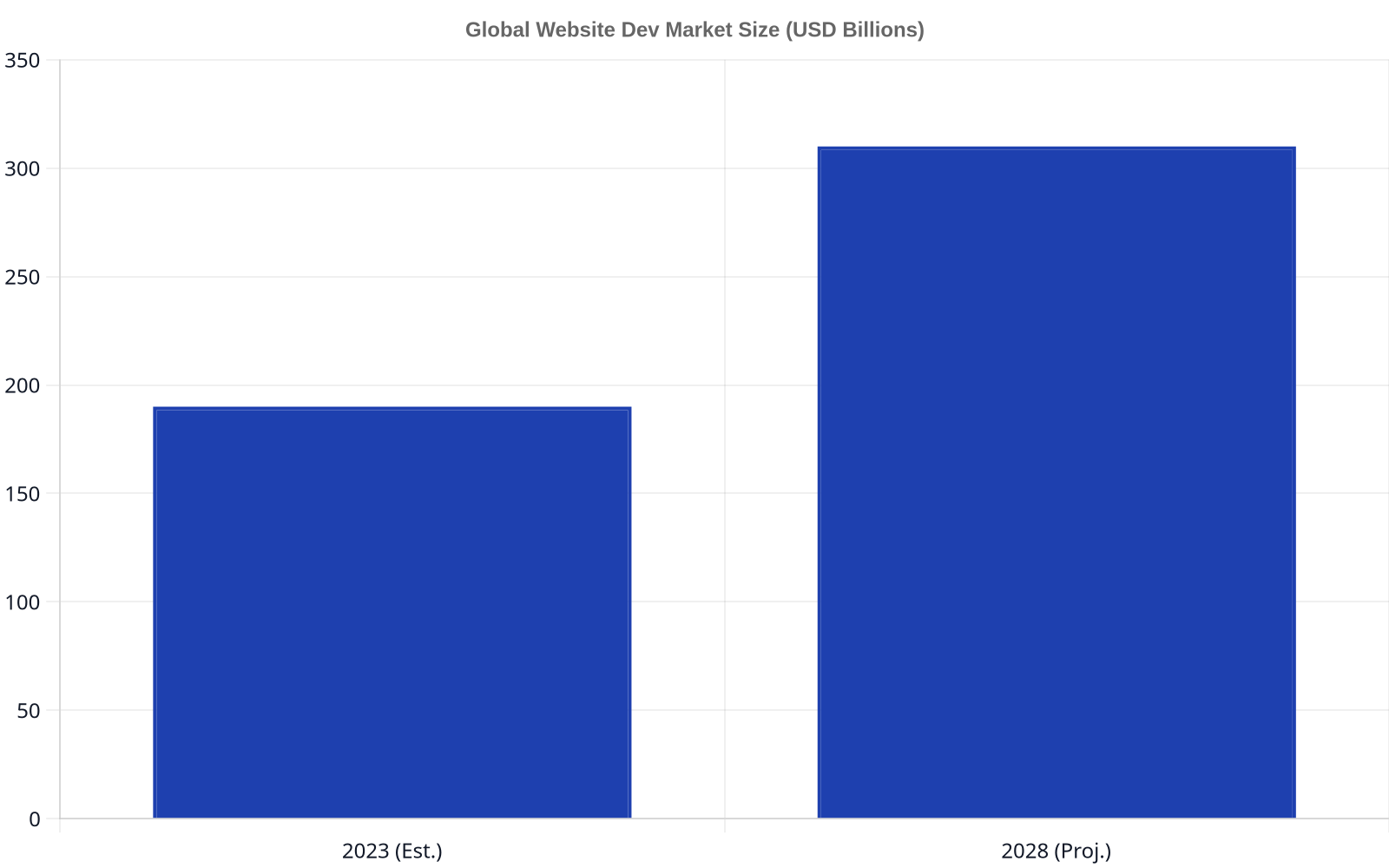
The demand for skilled website development is not slowing down. The global market for web development services is substantial and continues to grow as businesses of all sizes recognize the necessity of a credible online presence. To succeed, a new website development business must find a specific niche to serve. This could be specializing in a particular industry like healthcare or finance, or focusing on a specific technology stack such as headless CMS or a particular JavaScript framework like React.
A niche isn’t just about the industry you serve. It’s about the problems you are uniquely equipped to solve. Specializing in high-security e-commerce for regulated industries is a niche. So is building ultra-fast static sites for marketing campaigns.
Specialization allows a firm to build deep, defensible expertise. For instance, a firm that only serves law offices will understand the specific compliance, security, and client-intake requirements of that vertical far better than a generalist agency. This expertise justifies higher pricing and creates a stronger competitive moat.

Revenue Models and Pricing Strategies
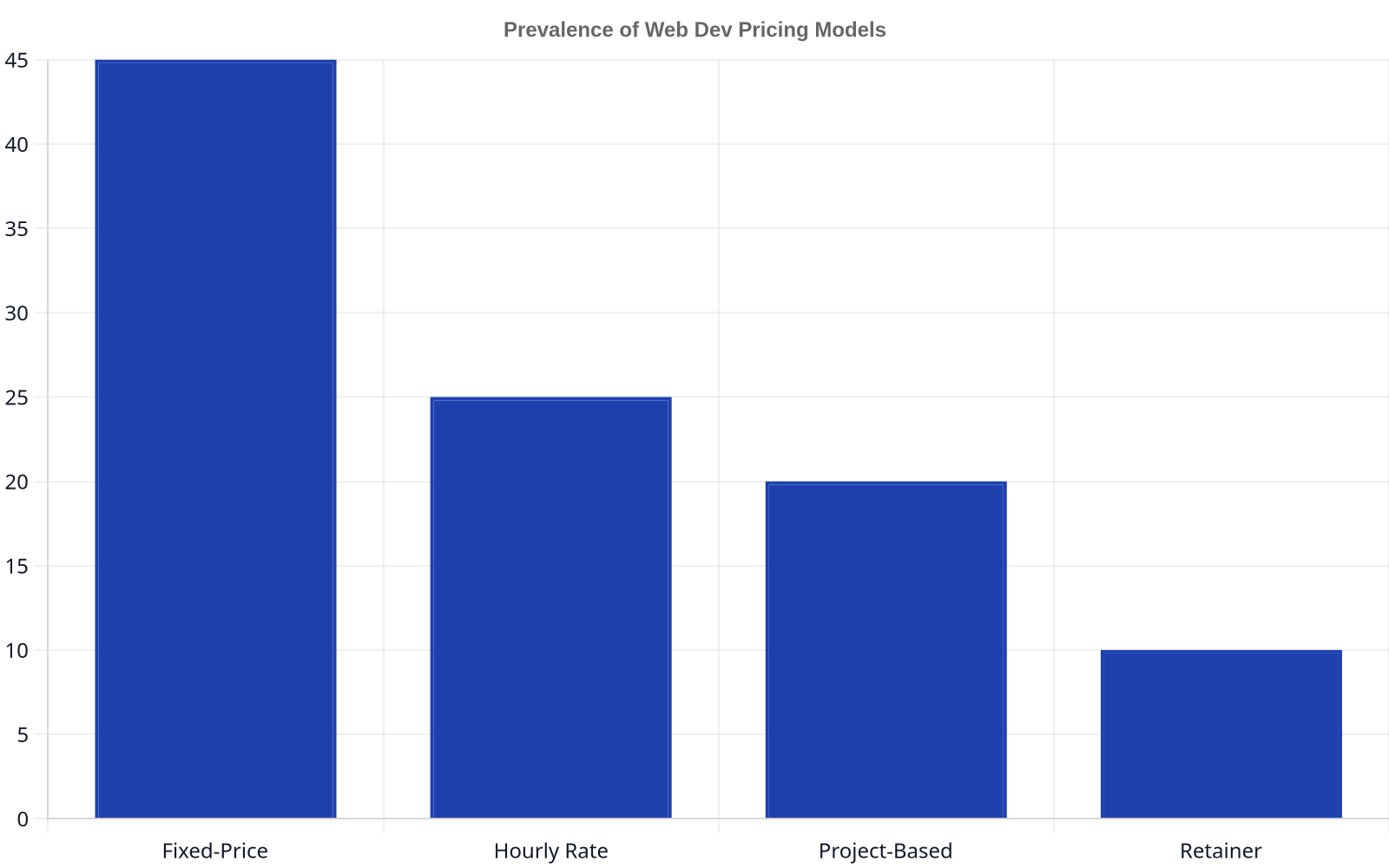
How a website development business makes money is a critical strategic decision. There are several common models, each with its own advantages.
- Project-Based Pricing: This is the most straightforward model. The firm provides a fixed quote for a defined scope of work, such as building a complete website. This offers predictability for the client but carries risk for the agency if the project scope expands.
- Time & Materials (Hourly Rate): The client is billed for the actual hours worked by the development team. This model is flexible and well-suited for projects where the scope is not clearly defined from the start. It requires transparent tracking and communication.
- Retainer/Subscription: For ongoing work like maintenance, security updates, and feature enhancements, a client pays a recurring monthly fee. This model provides a predictable revenue stream for the agency and ensures continuous support for the client. We find that retainer agreements for building out e-commerce stores or SaaS products work well, as they align our team with the client’s long-term growth.
Choosing the right model often depends on the type of client and project. A startup might prefer a fixed-price project to manage their budget, while a larger company with evolving needs may opt for a retainer.
What a Web Development Business Is Not
It’s crucial to distinguish a professional website development business from other related services. Misunderstanding these differences can lead to mismatched expectations and failed projects.
It is not simply a “website builder” subscription like Wix or Squarespace. While these tools are excellent for DIY users or very simple projects, they lack the customization, scalability, and unique functionality that custom development provides. As an example, a business needing a proprietary algorithm for its service cannot use a template-based builder.
It is not just a graphic design firm. While visual design is a key component, a web development business is rooted in engineering and functionality. It’s responsible for the back-end logic, database interactions, and server infrastructure that make the site work. As the Penn State Extension notes, a website needs a clear purpose, content, and design, but also ongoing maintenance, which is a core technical function.
Finally, it is not a digital marketing agency, though there is often overlap. While we offer SEO and branding services, our core is building the platform itself. A marketing agency focuses on driving traffic to the site through channels like PPC, social media, and content marketing. The two should work in tandem, but their primary functions are different.

FAQ
How do I start a web design business?
A legal business structure (like an LLC) is the first step. After that, focus on building a portfolio, even if it means doing a few initial projects at a reduced rate. Define your niche and ideal client, then create a marketing plan to reach them. According to Jess Creatives, promoting your business online through social media and a professional website is essential for attracting your first clients.
What are the different types of web development?
The main categories are front-end, back-end, and full-stack. Front-end development deals with the parts of the website a user sees and interacts with (the client-side), using languages like HTML, CSS, and JavaScript. Back-end development involves the server, database, and application logic (the server-side). Full-stack developers have expertise in both areas.
How do web development businesses find clients?
Client acquisition often comes from a mix of inbound and outbound strategies. Inbound methods include content marketing (blogging, case studies), SEO, and referrals. Outbound methods can involve targeted outreach to companies in your chosen niche, networking at industry events, and strategic partnerships with marketing or design agencies. Building a strong reputation is key to generating consistent leads.
What are the key components of a business website?
Every business website should have a clear purpose, a logical structure (sitemap), high-quality content that speaks to its target audience, and a professional, responsive design. Beyond that, it needs to be secure, fast-loading, and have a plan for regular maintenance and updates to remain effective. According to the University of Redlands, fundamentals like clear navigation and user-focused design are crucial for success.
Is website development a good career?
Yes, for those with the right skills and mindset. The field offers strong earning potential and diverse opportunities. However, it requires a commitment to continuous learning to keep up with new technologies and programming languages. St. John’s University Career Services highlights the pros, such as high demand and flexibility, along with the cons, like the need to constantly adapt to a changing technological landscape.