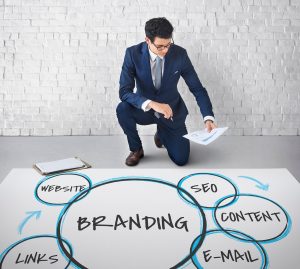
Branding for services is the process of building a distinct identity and reputation for an intangible offering, focusing on trust, expertise, and the customer experience. Unlike product branding, which uses physical attributes, service branding builds its reputation on the consistency and quality of the experience it delivers, making your promise to the customer tangible. It turns an abstract service into a reliable, recognizable, and preferred choice in the market, directly influencing client trust and perceived value.
Most people think branding is a logo and a color scheme. That’s not even half the story, especially for service-based businesses. A law firm doesn’t sell a physical object. A SaaS company doesn’t ship a box. They sell expertise, processes, and outcomes. The brand is the container for the trust a client must have before they sign a contract. It’s the sum of every interaction, from the first time they read a blog post to the way your team answers the phone. According to a study by Gartner, customers spend only 17% of their buying journey meeting with potential suppliers. The rest of their time is spent researching independently, meaning your brand must do the selling long before a salesperson ever gets involved.
We see this constantly with our clients. For Jaora, a startup we worked with from the ground up, establishing a professional brand was critical. We developed their visual identity and website, but the core of the work was defining their promise. The result was a cohesive brand that communicated credibility, leading to more inbound inquiries and a stronger market position from day one.

How does branding for services work?
Service branding works by creating a system of consistent signals that communicate your value and build trust. It’s less about a single “big bang” launch and more about methodical, relentless consistency across every touchpoint. Think of it as building a reputation brick by brick.
Let’s use a concrete example: a cybersecurity consulting firm. Their service is complex and entirely based on expertise.
- Define the Promise: The firm’s core promise isn’t just “cybersecurity.” It might be “We make enterprise-grade security accessible to mid-market companies.” This is specific, targeted, and speaks to a pain point.
- Create the Identity: They develop a visual identity that reflects this promise. Maybe it uses dark blues and clean lines to convey professionalism and security, avoiding the flashy, alarmist reds common in the industry. The name, logo, and tagline all reinforce this position of calm authority.
- Translate into Touchpoints: This is where the service becomes tangible.
* Website: The site isn’t just a brochure. It features in-depth case studies and whitepapers that demonstrate expertise. It uses clear, confident language.
* Proposals: Every proposal follows a standard, professionally designed template. The scope of work is detailed, transparent, and reinforces the initial promise.
Client Onboarding: The first 30 days of a client relationship are standardized. There are clear milestones, a dedicated point of contact, and regular communication. This process is* the brand.
* Reporting: Monthly reports aren’t just data dumps. They are designed to be easily understood, visually tracking progress against the client’s goals.
This system ensures that no matter who the client interacts with, the experience is consistent and reinforces the brand’s promise of accessible, professional security. It’s this operational consistency that truly defines branding for services.
The best service brand isn’t the one with the cleverest logo. It’s the one whose sales deck, invoice, and consultant all tell the exact same story of competence and reliability.
Key Elements of Service Branding
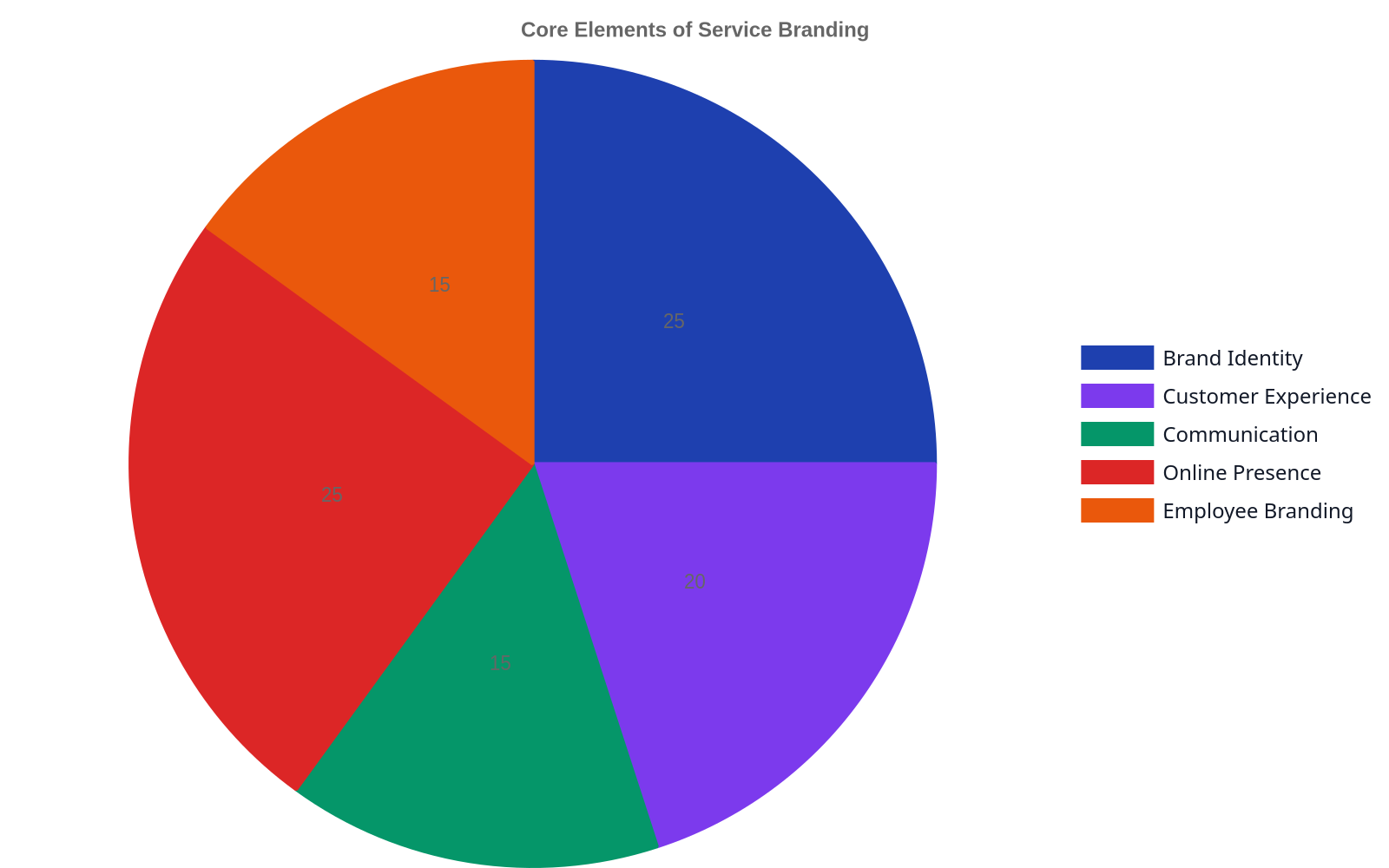
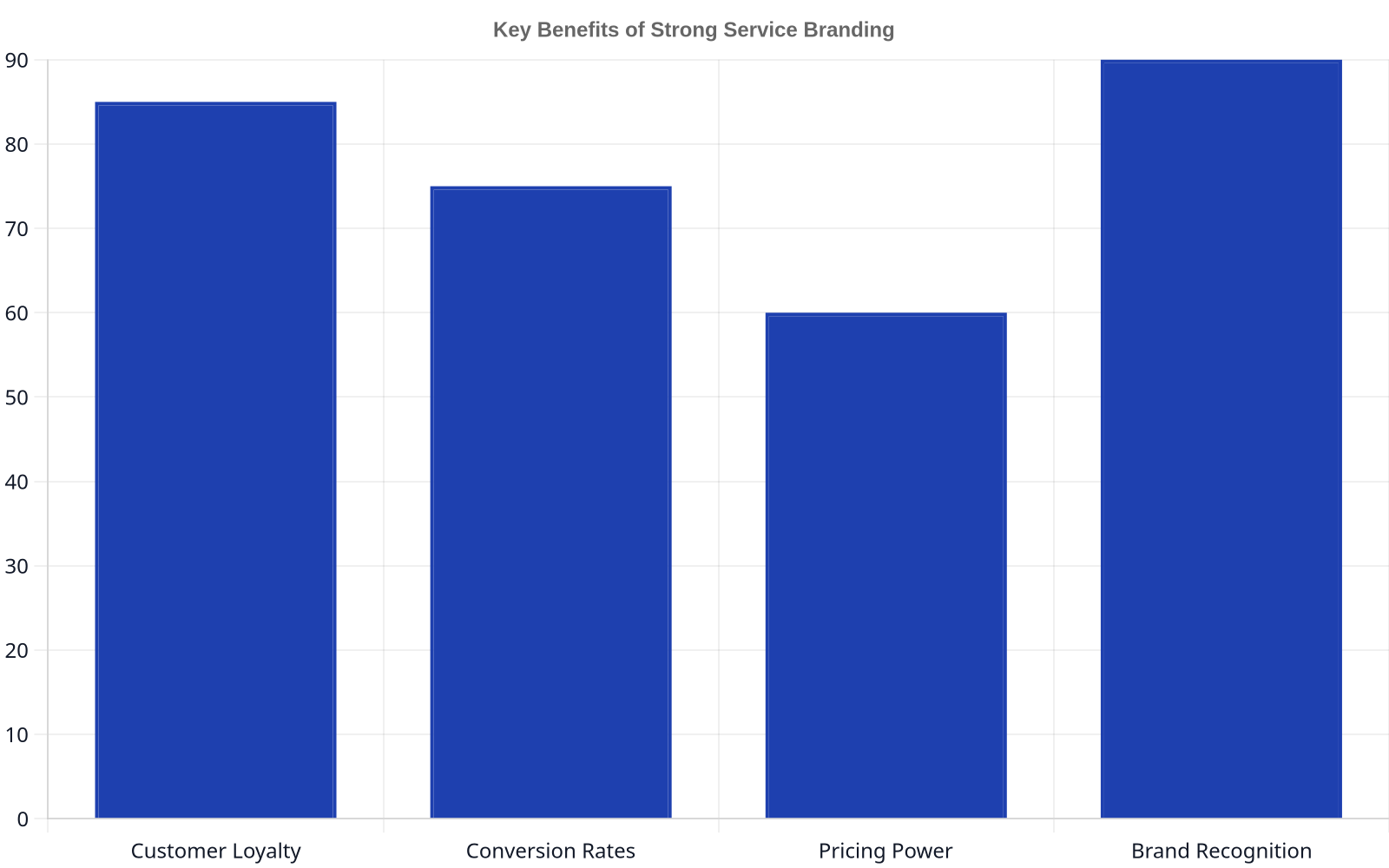
Building a powerful service brand involves orchestrating several key elements. While a logo and color palette are part of it, the real substance lies in the less visible components that govern the customer experience.
- Positioning: This is the foundation. It’s the niche you occupy in the client’s mind. Are you the fastest, the most affordable, the most comprehensive, or the most specialized? Trying to be everything to everyone is a common failure point. A 2020 report from McKinsey highlights that top-performing B2B companies have radically different and superior go-to-market models, which starts with clear positioning.
- Messaging and Voice: This is how you articulate your positioning. It includes your mission, value proposition, and the specific tone you use in all communications. For instance, a wealth management service might use a formal, reassuring tone, while a marketing agency might be more energetic and bold. This voice must be consistent everywhere, from ad copy to support emails.
- Visual Identity: This is the most tangible part of your brand. It includes your logo, color palette, typography, and imagery. For services, the visual identity’s job is to make your promise visible and memorable. As a firm that provides branding and identity services, we emphasize creating a full brand style guide to ensure this consistency is maintained across every department and platform.
Customer Experience (CX): This is the most critical element. It’s the sum of all interactions a customer has with your company. For service businesses like OPP-HUB CONSULTANCY, the quality of the consultation and the reliability of the follow-up is* the product. A bad experience can shatter a great brand promise instantly. In fact, shows that 32% of customers will walk away from a brand they love after just one bad experience.

What service branding is not
To truly grasp branding for services, it’s just as important to understand what it isn’t. People often confuse it with adjacent concepts, leading to misaligned strategies and wasted investment.
It is not just marketing. Marketing is the set of activities you use to find and persuade potential customers. Branding is the foundation upon which those activities are built. Marketing is the invitation to the party; branding is the reason people want to be there in the first place. You can run a brilliant marketing campaign, but if the service experience fails to deliver on the promise, the customer won’t return. The brand is what creates long-term loyalty.
It is not just customer service. Customer service is a reactive function, solving problems as they arise. While a crucial part of the overall customer experience, it is only one piece of the puzzle. Branding is proactive. It involves designing the entire client journey, from discovery to renewal, to be so clear and effective that the need for reactive customer service is minimized. Great branding anticipates client needs before they become problems.
Don’t confuse your brand with your marketing budget. Your brand is what people say about you after the marketing campaign ends. It’s your reputation, and it’s earned through every single interaction.
It is not a one-time project. You don’t “finish” branding your service. A brand isn’t a logo design project that ends when the files are delivered. It’s a living part of your business operations that must be managed, measured, and refined. As your services evolve and the market changes, your brand strategy must adapt as well. For example, HubSpot, which started as a marketing automation tool, has continuously evolved its brand to encompass a full “inbound” platform for sales and service, showing how a brand must grow with the business.

FAQ
How is branding a service different from branding a product?
Branding a product focuses on tangible features: how it looks, what it’s made of, and its physical performance. Branding for services focuses on intangible qualities: trust, reliability, expertise, and the customer experience. You can’t hold a service, so the brand must make the promise of quality feel real and dependable through consistent messaging and execution.
What are the first steps to branding a service-based business?
Start with strategy, not visuals. The first step is to define your market position: who is your ideal client, what unique problem do you solve for them, and why should they choose you over anyone else? From there, you can develop your core messaging and promise. Only after this foundation is set should you move on to designing a logo or building a website.
Can a small business or startup afford to invest in branding?
A better question is, can they afford not to? For a startup, a strong brand is a critical asset that builds credibility and attracts early customers. You don’t need a massive budget. Start by clearly defining your promise and ensuring every client interaction is professional and consistent. That costs very little but builds immense brand equity.
How do you measure the ROI of service branding?
Measuring service branding ROI can be done through both direct and indirect metrics. Direct measures include tracking lead quality, customer acquisition cost (CAC), and client lifetime value (LTV). Indirect measures include monitoring brand awareness (through surveys and social listening), website traffic from direct and organic sources, and customer satisfaction scores (like Net Promoter Score). An increase in clients saying “I chose you because of your reputation” is a clear sign of success.
How long does it take to build a strong service brand?
Building a reputation takes time. You can create the visual elements of a brand in a few weeks, but earning the trust and recognition that defines a strong brand takes months or even years of consistent delivery and communication. There are no shortcuts; it requires a long-term commitment to excellence in every part of your service.