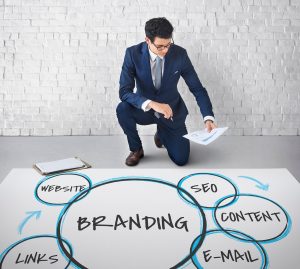
Most articles about SEO trends are recycled noise. They list the same handful of concepts—AI, E-A-T, video—without offering a concrete strategy. For a startup with finite time and a non-existent budget, this isn’t just unhelpful; it’s a distraction. The critical SEO trend for startups in 2027 is the shift from chasing individual keywords to building an undeniable fortress of topical authority. It’s about creating a body of work so comprehensive and expert-driven that Google’s AI-powered systems see you not just as a result, but as the source.
AI is the New Search Engine: Optimizing for Answers, Not Just Links
For years, SEO was about getting a spot on a list of ten blue links. In 2027, that list is frequently being replaced by a direct answer, generated by AI. This fundamentally changes the user’s interaction with Google and, therefore, our entire approach to optimization.
Beyond the Ten Blue Links: How AI Overviews Change the Game
Google’s AI Overviews (formerly SGE) represent the single biggest shift in search behavior since the introduction of mobile-first indexing. These AI-generated summaries appear at the very top of the search results, directly answering a user’s query by synthesizing information from multiple sources. A 2024 study from SearchEngineLand revealed that AI Overviews appear on a significant percentage of queries, and that number is only projected to grow. For a startup, this means ranking #1 organically might not even get you a click if your content isn’t good enough to be featured in the AI summary.
What “Optimizing for LLMs” Actually Means for a Startup
Optimizing for Large Language Models (LLMs) isn’t about some new-age technical trick. It’s about clarity, structure, and depth. LLMs value content that is unambiguous, factually dense, and well-organized. Use clear headings, answer questions directly, and present data in simple formats like bulleted lists and tables. For businesses with complex offerings like custom SaaS platforms, this means breaking down features and benefits into easily digestible chunks of information that an AI can parse and confidently cite.
The New Reality of Zero-Click Searches
With AI Overviews and other rich snippets providing direct answers, more searches will result in “zero clicks”—the user gets their answer on the results page and never clicks through to a website. While this sounds alarming, it forces a strategic pivot. The goal is no longer just to get a click; it’s to become the authoritative source cited within the answer. This builds brand recognition and establishes trust, which pays dividends later. According to analysis from Semrush, zero-click searches have been on the rise for years, and AI Overviews will only accelerate this.
Top SEO Trends for Startups in 2027
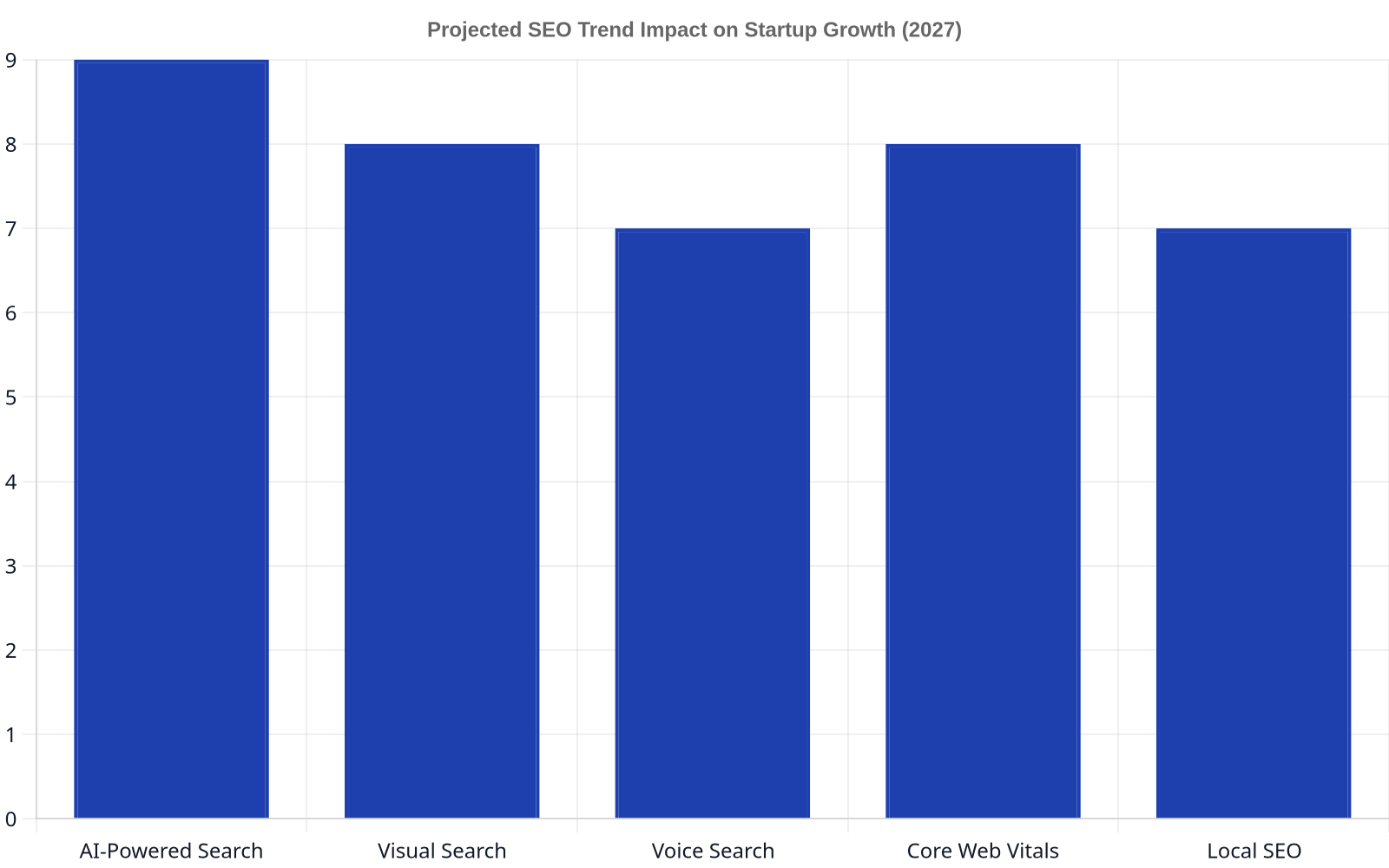
Focusing on the right trends is critical when resources are scarce. For 2027, the focus is on depth, expertise, and a multi-format approach.
From Keywords to Concepts: Mastering Search Intent
Old-school SEO fixated on keyword density. Modern SEO, and especially future SEO, is about mastering user intent. What is the user really asking? Are they looking for information, comparing products, or ready to buy? This is where deep keyword research evolves into “intent research.” Instead of just targeting “SaaS accounting software,” you map out content for “how to choose accounting software,” “best accounting software for small business,” and “X vs. Y accounting software comparison.” Each piece serves a different stage of the user journey.
The Business Case for Helpful, Experience-Driven Content (E-E-A-T)
Google’s guidelines reward content that demonstrates Experience, Expertise, Authoritativeness, and Trustworthiness (E-E-A-T). For a startup, this is a massive opportunity to compete against incumbents. You can’t out-spend them, but you can out-share your expertise. Document your processes, publish case studies (even of small wins), and write from a genuine, first-person perspective. Google states this directly in their own documentation, emphasizing that they reward content that shows it was created with a high degree of E-E-A-T. Building a brand and participating in industry communities are no longer just PR activities; they are direct inputs into your site’s perceived authority.
Don’t just write about what you do. Write about how you do it, why it failed the first three times, and what you learned that no one else knows.
Content Diversification: Why Your Blog Isn’t Enough
Written content is foundational, but relying on it exclusively is a mistake. In 2027, your audience consumes information across multiple platforms and formats. A single piece of core research can be repurposed into:
- A detailed blog post.
- A short-form video for TikTok and YouTube Shorts.
- An infographic for Pinterest and LinkedIn.
- A slide deck for a webinar.
- A guest post for an industry publication.
This strategy maximizes the return on your content creation efforts and builds brand presence across channels, which reinforces your authority signals back to Google.
The Founder’s Guide to Building Topical Authority on a Budget
Topical authority sounds like a long, expensive process, but it can be methodically built even with limited resources. It’s about being a big fish in a small pond. Instead of trying to rank for everything, you aim to dominate a very specific niche.
Here is a simple, four-step process for a startup to begin building topical authority:
- Identify Your Core Expertise: What is the one subject you know better than anyone else? This shouldn’t be your product, but the problem your product solves. For us, we don’t just build websites; we build growth engines for businesses. So we write about SEO, branding, and web development strategies for growth.
- Define a Pillar Page: Create one massive, definitive resource on your core topic. This “pillar” should be the best, most comprehensive guide on the internet for that subject. It’s the page you want everyone in your industry to link to.
- Map Your Content Clusters: Brainstorm every related sub-topic and question. These become your “cluster” articles. Each cluster article should cover a specific long-tail query in detail and, crucially, link back up to your pillar page.
- Execute and Interlink: Write the cluster articles. As you publish each one, ensure it links to other relevant cluster articles and up to the main pillar. This creates a dense web of internal links that signals to Google you have deep expertise on this topic.
Technical SEO is No Longer Optional for Startups
For too long, startups have treated technical SEO as a “nice to have” or something to fix later. In 2027, a solid technical foundation is the price of admission. Google’s crawlers are more sophisticated, and user patience for slow, clunky websites is zero. Our agency’s technical SEO services are not just about audits; they are about building a foundation for all other marketing efforts to succeed.
Core Web Vitals: The Price of Admission
Largest Contentful Paint (LCP), First Input Delay (FID), and Cumulative Layout Shift (CLS)—these are Google’s Core Web Vitals. They are direct ranking factors because they measure user experience. A slow-loading site with jumping elements will be penalized. For startups, optimizing images, using a good hosting provider, and minimizing heavy scripts isn’t just good practice; it’s essential for survival. Google provides its own resources at web.dev for learning how to measure and improve these metrics.
Why Schema Markup is a Startup’s Secret Weapon
Schema markup is a vocabulary of code you add to your site to help search engines understand your content better. It’s what turns “Acme Inc., 123 Main St” into a machine-readable entity with a location. For a startup, this is invaluable. You can use schema from Schema.org to explicitly define your products, services, reviews, and company information. This dramatically increases your chances of appearing in rich snippets and being understood correctly by AI, giving you an edge over larger, less agile competitors who haven’t bothered.
Technical SEO isn’t a feature you bolt on at the end. It’s the concrete foundation upon which your entire digital presence is built.
Old SEO vs. 2027 SEO: A Comparison
| Outdated Tactic (Pre-2025) | Modern Approach (2027+) |
|---|---|
| Focus on high-volume keywords | Focus on user intent and long-tail queries |
| Publishing frequent, random blog posts | Building pillar pages and topic clusters |
| Acquiring a high quantity of backlinks | Earning high-quality, relevant links from authoritative sites |
| Treating content as a single asset | Diversifying content into multiple formats (video, audio, etc.) |
| Ignoring site speed and UX | Obsessing over Core Web Vitals |
| Writing for search engine bots | Writing for humans, with structure for bots |
Key Metrics to Track for Startup SEO Success
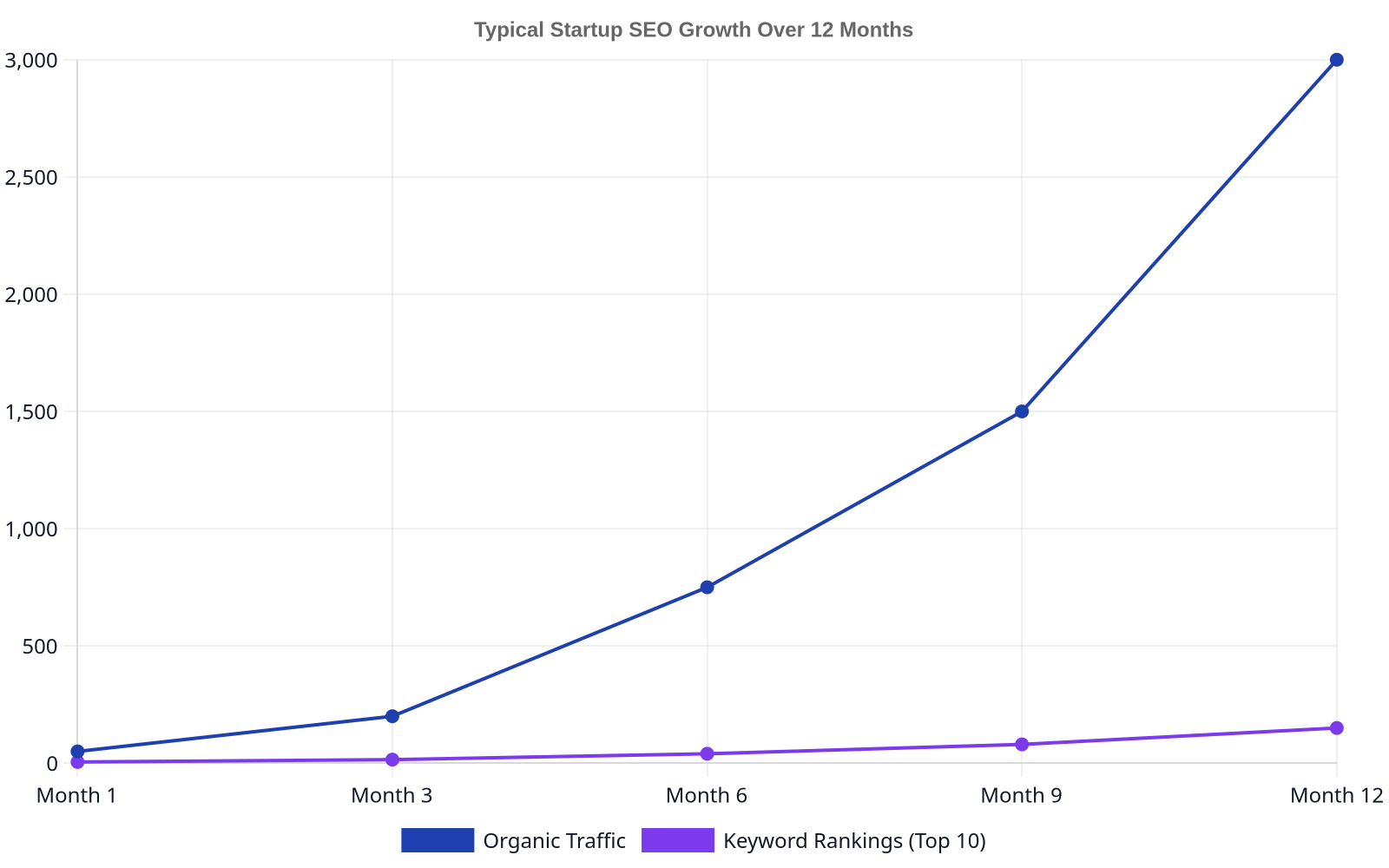
Chasing vanity metrics like keyword rankings for broad terms is a waste of time. A startup needs to track metrics that correlate directly with business growth.
Moving Beyond Rank Tracking: Measuring What Matters
Instead of obsessing over your rank for one or two keywords, focus on these metrics:
- Share of Voice for your topic cluster: Are you becoming more visible across your entire chosen niche?
- Number of keywords your site ranks for (in positions 1-20): This shows the breadth of your topical relevance.
- Organic traffic to key conversion pages: Is SEO driving traffic that actually leads to sign-ups or sales?
- Branded vs. Non-branded search traffic: An increase in branded search means your authority and brand recall are growing.
Calculating the ROI of Your SEO Efforts
Measuring the Return on Investment for SEO is notoriously difficult but essential for justifying the budget. A simple model is to calculate the value of your organic traffic. Look at the average cost-per-click (CPC) for your target keywords. If you are getting 1,000 clicks a month from organic search for keywords with an average CPC of $5, your SEO is generating the equivalent of $5,000 in paid ad value per month.
The Role of Content in Future SEO Strategies
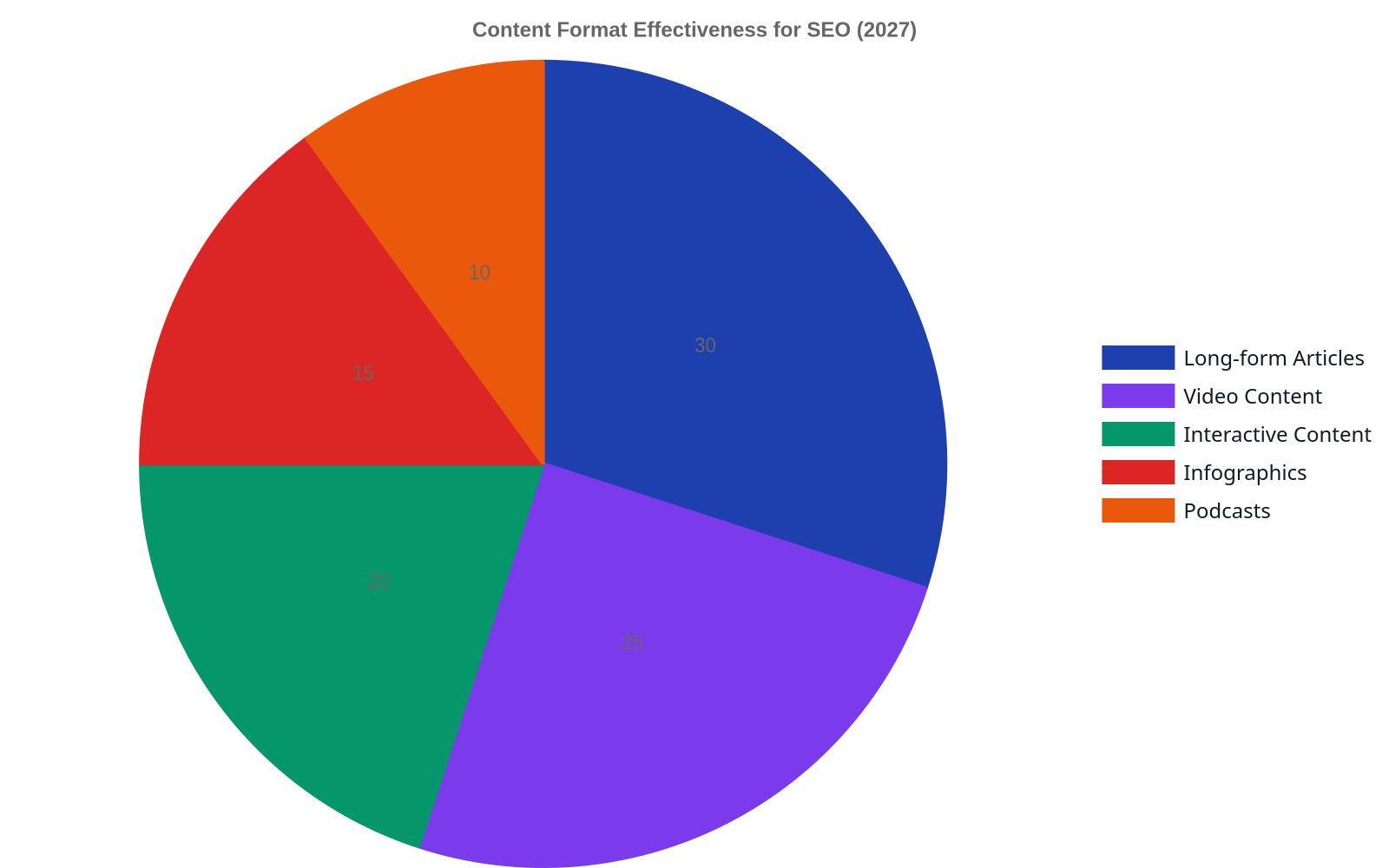
The adage “content is king” is still true, but the nature of the kingdom has changed. It’s less about volume and more about strategic value and longevity.
Why Content Refreshes Are More Valuable Than New Posts
Creating a new blog post from scratch is expensive and time-consuming. Refreshing and updating your existing, high-potential content often provides a much faster and greater return. Identify pages that rank on page 2 or 3, have decent traffic but low conversion, or contain outdated information. Update them with new data, add more depth, improve the E-E-A-T signals, and you can see a significant ranking boost in weeks, not months.
The Underrated Power of Local SEO for Early Traction
Even if you’re a global SaaS company, don’t ignore Local SEO. Setting up and optimizing a Google Business Profile is free and can drive immediate, high-intent traffic. Encourage reviews from your first customers. Ensure your business name, address, and phone number (NAP) are consistent everywhere online. This is often the lowest-hanging fruit for a new business to gain its first foothold in search results.
Further reading
- SEO Trends for 2027: 15 Strategies to Improve Rankings
- Future of Search Trends & AI SEO: 2026–2027
- Future-Proof SEO Strategies for 2027
Frequently Asked Questions
How much should a startup budget for SEO in 2027?
There is no magic number, but avoid thinking of SEO as a one-time cost. A reasonable starting point for a serious startup is between $2,000-$5,000 per month for a retainer with a competent agency or consultant. Anything less is likely to be ineffective. The focus should be on a consistent, long-term investment in content and technical foundations.
How long does it take for startup SEO to show results?
Assume a 6-12 month timeline to see significant, business-moving results. You may see early wins with local SEO or long-tail keywords in 3-4 months, but building true topical authority takes time. Anyone promising page-one rankings in weeks is selling snake oil. The work done in the first six months builds the foundation for growth in the years to come.
Is link building still important for SEO in 2027?
Yes, but the term “link building” is outdated. You should focus on “link earning.” High-quality, relevant links from authoritative websites are powerful trust signals. However, instead of mass outreach, the focus should be on creating content so valuable that people want to link to it, and on building genuine relationships through PR and industry collaboration.
Can a startup do SEO without an agency?
A motivated founder certainly can and should understand the basics of SEO. Building topical authority through content creation is something a passionate, knowledgeable internal team can do very well. However, the technical aspects, such as schema, site speed optimization, and detailed analytics, often require specialized expertise. A hybrid approach often works best: use the in-house team for content and an agency for technical oversight and strategy.
Trying to navigate the future of search alone is a recipe for wasted effort. The principles are clear—build authority, demonstrate expertise, and ensure your technical foundation is flawless—but execution is everything. If you’re building a startup and need a partner to design and execute a growth-focused SEO strategy, that’s what we do. Book a call with Dynareach, and let’s build your online presence the right way.