Most marketing plans are not plans; they are just shopping lists of channels. A little Facebook here, some Google Ads there, a blog post when someone has time. It feels productive, but it’s the equivalent of an orchestra tuning up—all noise and no music. An integrated digital marketing strategy is different. It’s the conductor, the sheet music, and the acoustics of the hall all working as one.
An integrated digital marketing strategy ensures all your marketing components work in concert to create a single, unified customer experience across every touchpoint. This approach treats each channel not as a silo but as part of a larger conversation with the customer, driving higher ROI and brand loyalty. The goal is to make your message so consistent and present that it becomes part of the customer’s natural journey, rather than a jarring interruption. This is how you turn a collection of tactics into a revenue-generating machine.
What is an Integrated Digital Marketing Strategy?
An integrated digital marketing strategy is an approach that unifies all your marketing efforts, tools, and channels into a cohesive whole. It’s the opposite of the siloed approach, where your SEO team, content team, and paid ads team operate in separate vacuums. In a truly integrated model, the insights from your on-page optimization efforts directly inform the content you create, which in turn is promoted by your social and email campaigns, all reinforcing the same core message.
This is more profound than just “multichannel marketing,” which simply means using more than one channel. It’s also a step beyond omnichannel, which focuses on creating a consistent experience from the customer’s perspective. Integration is the internal discipline that makes the external omnichannel experience possible. According to one analysis, “The consumer journey is no longer a straight line; it’s a dynamic path across countless screens and platforms.” An integrated strategy is your map for that path.
To illustrate the difference, consider this comparison:
| Feature | Siloed Marketing Approach | Integrated Marketing Approach |
|---|---|---|
| Planning | Channels planned separately | Holistic plan with shared goals |
| Messaging | Inconsistent across channels | Unified brand voice and message |
| Customer Experience | Fragmented and disjointed | Consistent and reinforcing |
| Data & Analytics | Metrics tracked per channel | Shared data, focused on full-funnel impact |
| Budgeting | Allocated by department/channel | Flexible, allocated to top-performing initiatives |
| Team Structure | Departmental, low collaboration | Cross-functional, high collaboration |
The Core Components of an Integrated Digital Marketing Strategy
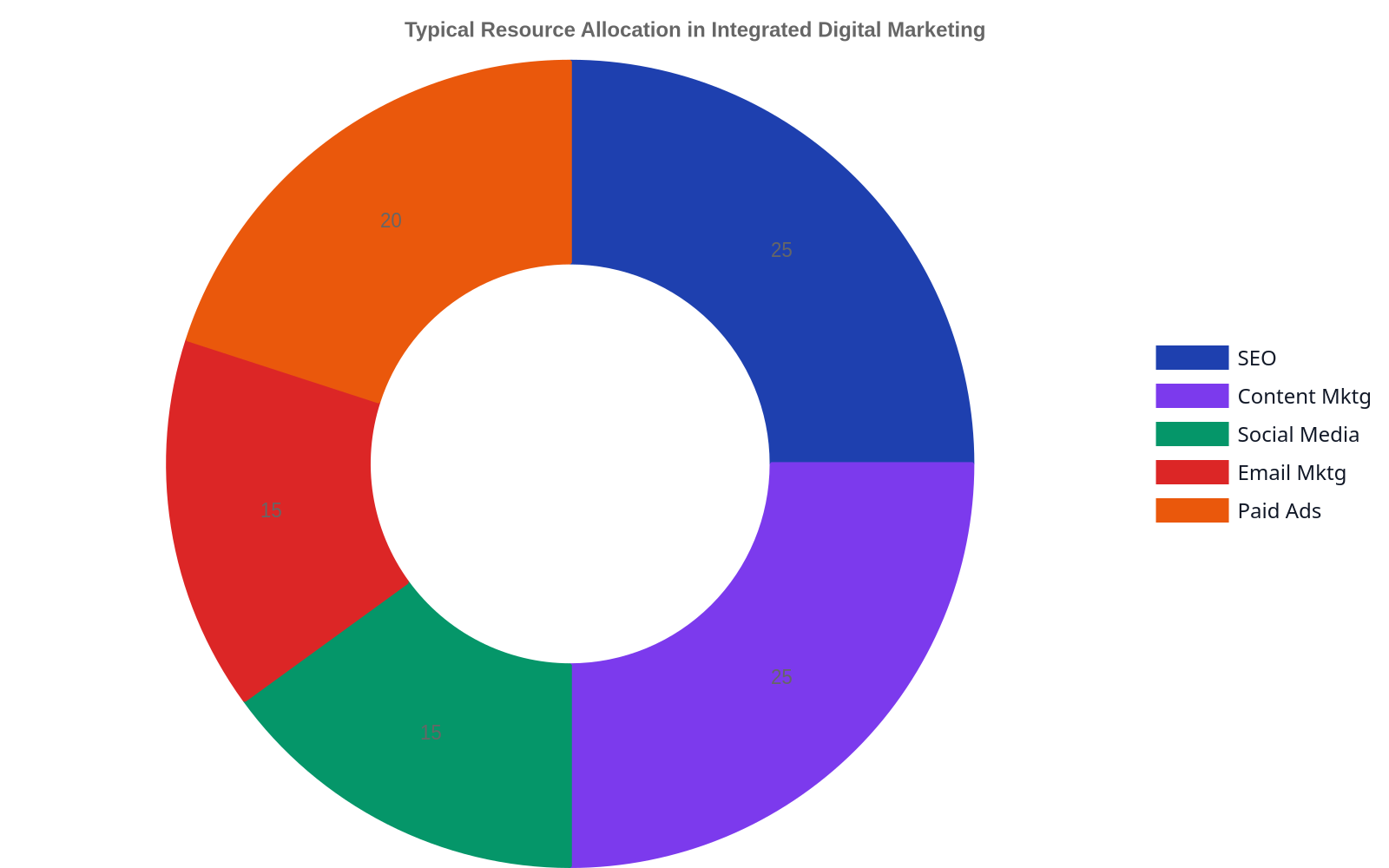

Building an effective integrated strategy requires several interconnected components to function as a single unit. Missing even one piece can cause the entire system to underperform. The foundation is a shared understanding of the brand and the customer.
Unified Brand Voice and Consistent Messaging
Your brand should sound and feel the same everywhere. The playful tone you use on Instagram should align with the helpful, authoritative tone of your blog posts and the professional language in your email newsletters. Brand consistency can increase revenue by 33%, because it builds trust. When customers see coherence, they perceive your brand as reliable and professional. This was a key goal for our client Jaora, where we built their website, branding, and SEO from scratch to ensure a professional, unified presence from day one.
Coordinated Multi-Channel Campaigns
This is where the strategy comes to life. A product launch isn’t just an email blast; it’s a coordinated sequence. It might start with a teaser campaign on social media, followed by a detailed blog post explaining the benefits, supported by paid ads targeting specific user segments. Retargeting ads then follow up with users who visited the blog post but didn’t convert. Every channel plays a specific, pre-determined role that builds on the others.
Shared Data and Analytics
In a siloed company, the SEO team reports on rankings and the PPC team reports on click-through rates. In an integrated one, everyone reports on contribution to revenue and customer lifetime value (CLV). Using a centralized analytics platform like Google Analytics or a CRM like HubSpot is non-negotiable. This single source of truth allows you to see how different channels influence each other and make data-driven decisions about where to allocate resources.
Developing Your Integrated Digital Marketing Strategy: A Step-by-Step Guide

Creating an integrated strategy is a systematic process, not a creative whim. It requires discipline, data, and a clear understanding of your business objectives. Following a structured framework ensures all your efforts are aligned and measurable.
- Define Overarching Business Goals: Before you think about channels, define what you want to achieve. Is it increasing market share by 15%? Reducing customer churn by 10%? Every marketing goal must ladder up to a primary business objective. Use the SMART (Specific, Measurable, Achievable, Relevant, Time-bound) framework to give your goals clarity.
- Develop Detailed Customer Personas: You cannot have a unified message if you don’t know who you’re talking to. Go beyond basic demographics. Understand your customers’ pain points, motivations, and the channels they frequent. Use surveys, customer interviews, and analytics data to build 2-3 detailed personas representing your ideal clients.
- Map the Customer Journey: Trace the path your personas take from awareness to purchase and beyond. Identify all the potential touchpoints where they might interact with your brand—a Google search, a social media post, a review site, a webinar. An Adobe report highlights the complexity of modern journeys, showing how many touchpoints exist. Your goal is to ensure a consistent experience at every stage.
- Select Channels and Assign Roles: Not every channel is right for every goal or every audience. Based on your personas and journey map, select the channels that will be most effective. Crucially, assign a primary role to each. For example, SEO and content marketing might be for attracting new users at the top of the funnel, while email marketing is for nurturing leads in the middle.
- Create a Content and Messaging Matrix: Plan your content themes and core messages. A matrix can help you map specific pieces of content (blog posts, videos, case studies) to each stage of the customer journey and each persona. This ensures you have relevant content for every interaction and that the messaging is consistent throughout.
- Execute, Measure, and Optimize: This isn’t a “set it and forget it” plan. Launch your campaigns and immediately start tracking performance against your goals. Use attribution modeling to understand which channels are driving conversions. Be prepared to shift budgets and tactics based on what the data tells you. For our client Wolverine Assemblies, optimizing their website and SEO was a continuous process that ultimately grew their inbound leads by 400%.
The most effective campaigns are designed to embed a brand within the very fabric of consumer conversation and lifestyle. They transcend the simple act of advertising a product or service.
Real-World Integrated Digital Marketing Strategy Examples
Theory is useful, but seeing integration in action makes the concept concrete. These examples show how businesses, both large and small, coordinate their channels to create something bigger than the sum of its parts.
Example 1: The B2B SaaS Company
A mid-sized SaaS company wants to increase sign-ups for its project management tool.
- Content Marketing: They publish a comprehensive guide on their blog titled “How to Choose the Best Project Management Software in 2026.” This article is heavily optimized for search engines to capture organic traffic.
- Paid Search: They run Google Ads targeting keywords like “project management tool for small business,” sending traffic to a dedicated landing page that offers a free trial.
- Social Media: On LinkedIn, they share excerpts from their guide and run targeted ads to users with job titles like “Project Manager” or “Operations Director.”
- Email Marketing: Website visitors who download the guide are entered into a 5-part email nurture sequence. Each email highlights a specific feature of their tool that solves a common project management problem discussed in the guide.
- Retargeting: Users who visit the blog or pricing page but don’t sign up see display ads on other websites, reminding them of the free trial offer.
Here, every channel works together. SEO brings in initial interest, paid ads capture high-intent users, social media targets specific professional roles, and email nurtures that interest until the prospect is ready to convert.
Example 2: The Local E-commerce Brand
A direct-to-consumer brand selling handmade leather goods wants to drive holiday sales.
- Instagram: They partner with local lifestyle influencers for an unboxing campaign, showcasing the quality of their products. They also run a user-generated content contest asking followers to post photos with their products for a chance to win a gift card.
- Email Marketing: They send a “12 Days of Christmas” email series to their subscriber list, with each day revealing a new special offer or product bundle.
- Local SEO: Their Google Business Profile is updated with holiday hours, and they create posts highlighting specific products as “perfect local gifts.”
- Facebook Ads: They use their email list to create a lookalike audience and run ads featuring their most popular holiday gift items, driving traffic directly to product pages.
This strategy creates a sense of urgency and community. The social proof from influencers and user content builds trust, while the email and Facebook campaigns create multiple opportunities for purchase.
Your marketing channels are not a collection of independent contractors. They are a team. And if they don’t practice together, they will perform poorly on game day.
Measuring Success: KPIs and Analytics
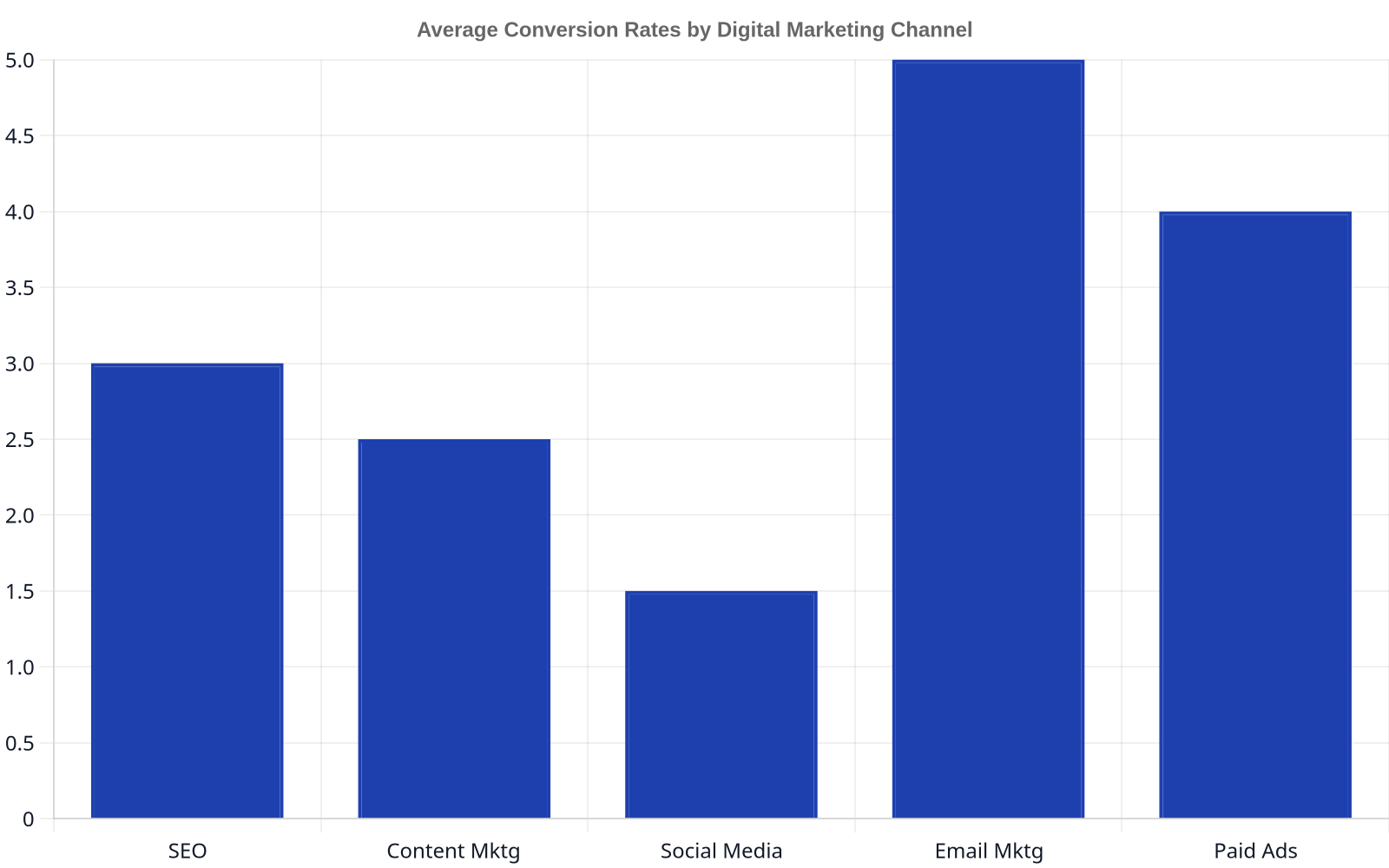
To justify an integrated approach, you must prove its value. This means moving beyond channel-specific vanity metrics (like followers or impressions) and focusing on KPIs that reflect true business impact. The right metrics reveal how your combined efforts influence the entire customer lifecycle.
Key Performance Indicators for Integrated Strategies
- Customer Lifetime Value (CLV): The ultimate measure of a successful, long-term customer relationship. An integrated strategy should increase CLV by improving retention and creating more upsell opportunities.
- Total Cost Per Acquisition (CPA): Instead of looking at CPA for a single channel, calculate your blended CPA across all marketing efforts. This gives you a more accurate picture of what it costs to acquire a new customer through your integrated system.
- Multi-Channel Funnel Conversion Rate: Use your analytics platform to track how many touchpoints a user interacts with before converting. A high number of assisted conversions is a strong sign that your integrated strategy is working.
- Brand Equity Metrics: Track metrics like branded search volume over time. As your integrated campaigns make your message more visible and consistent, more people should start searching for your brand by name.
Tools for Integrated Measurement
Success here is impossible without the right tools. Platforms like Google Analytics 4 offer advanced features like Data-Driven Attribution, which uses machine learning to assign credit to different touchpoints in the conversion path. Marketing automation platforms such as HubSpot and Marketo provide a central hub for executing and tracking campaigns across email, social, and your website. For competitive insights, tools like SEMrush or Ahrefs can show you how your integrated efforts are impacting your share of voice in the market.
The Evolution of Digital Marketing: Trends and Future Outlook
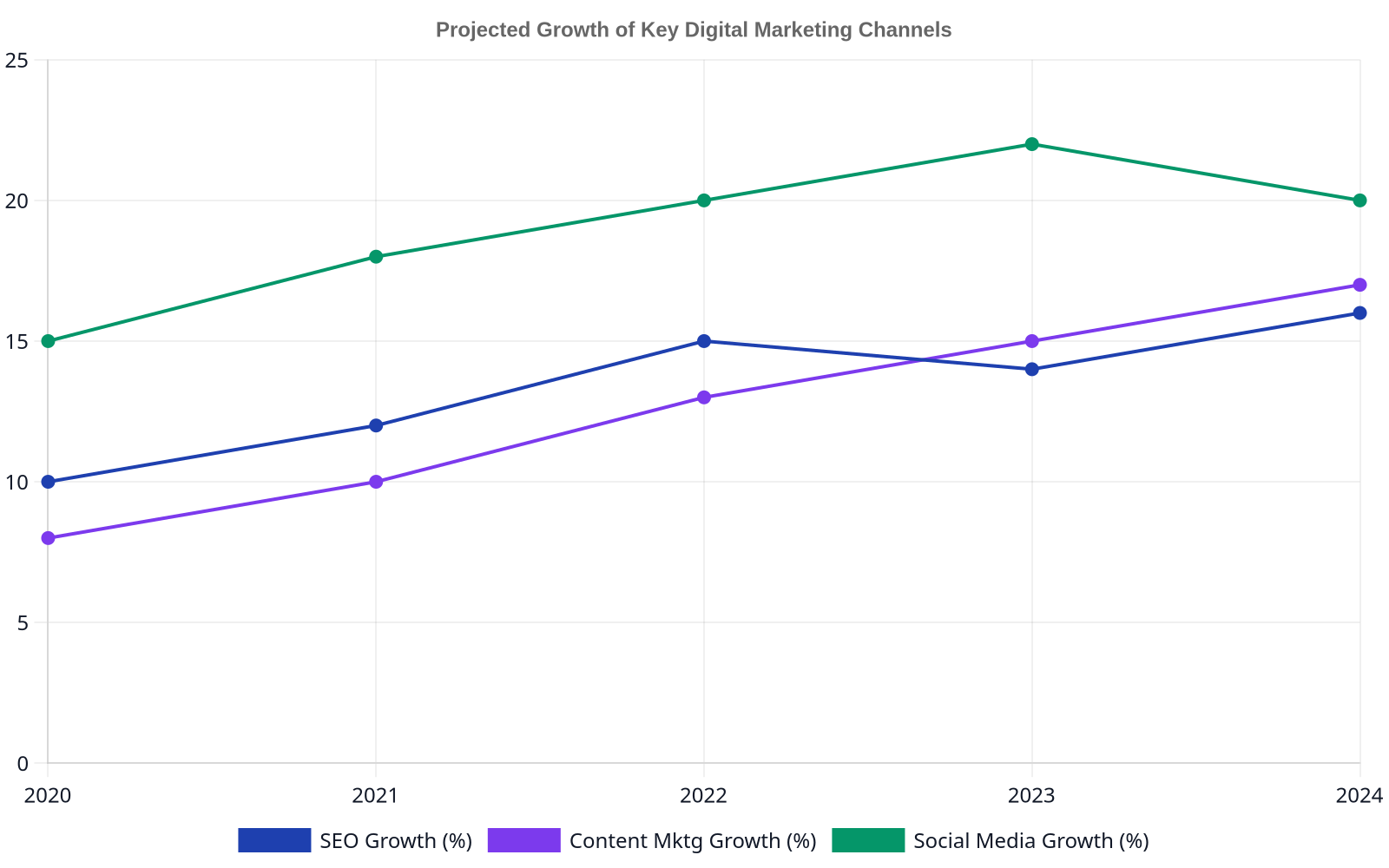
Integration is not a static concept; it evolves as new technologies and consumer behaviors emerge. Staying ahead requires anticipating how channels will blend in the future. According to a 2024 McKinsey analysis, AI is a key driver of this evolution, enabling personalization at an unprecedented scale.
One of the most significant trends is hyper-personalization. Using AI, marketers can now move beyond segment-level messaging to deliver 1-to-1 experiences. An e-commerce site can dynamically change its homepage based on a user’s past browsing history, or an email campaign can feature products that an AI model predicts the user is most likely to buy next.
Another major shift is the integration of new channels like Augmented Reality (AR) and Virtual Reality (VR). For a furniture retailer, this could mean an AR feature in their app that lets customers see how a sofa would look in their own living room. This creates an immersive experience that bridges the gap between digital browsing and physical reality.
Finally, the role of data privacy is shaping how integration works. With the decline of third-party cookies, first-party data—the information you collect directly from your customers—has become the most valuable asset for any integrated strategy. This makes building trust and providing value in exchange for data more critical than ever.
Further reading
- Harnessing Integrated Digital Marketing for 2026 and Beyond
- What Is Integrated Digital Marketing? | Wrike Guide
- Digital marketing strategy: How to structure a plan for 2025?
- Crafting Integrated Digital Marketing Strategies
FAQ
What is the difference between integrated marketing and omnichannel marketing?
They are closely related but distinct. Omnichannel marketing focuses on the customer’s experience, ensuring it is consistent and unified whether they are on a desktop, a mobile app, or in a physical store. Integrated marketing is the internal strategy and alignment of your teams, tools, and channels that makes a great omnichannel experience possible. You can’t have one without the other.
How long does it take to see results from an integrated digital marketing strategy?
While some channels like paid ads can produce immediate data, the full impact of an integrated strategy is a long-term play. You might see initial improvements in engagement and lead quality within the first 3-6 months. However, the most significant results—like increased branded search volume, higher customer lifetime value, and improved market share—typically build over 12-18 months as the effects of consistent messaging and SEO compound.
Can a small business implement an integrated marketing strategy?
Absolutely. Integration is a mindset, not a budget size. A small business can start by ensuring their website, social media profiles, and email newsletter all have a consistent brand voice and promote each other. The key is to pick 2-3 core channels where your audience is most active and make them work together, rather than trying to be everywhere at once. The principles of shared goals and consistent messaging apply at any scale.
How do you choose the right marketing channels for an integrated strategy?
Channel selection should be driven by data, not preference. Start with your customer personas: where do they spend their time online? What kind of content do they consume? Use tools like Google Analytics to see which channels are already driving traffic and conversions for your business. For new channels, start with small-scale tests to validate their effectiveness before committing significant resources.
An integrated digital marketing strategy isn’t a single campaign; it’s the operating system for your entire marketing function. It’s the difference between shouting a dozen different messages into the void and telling one compelling story that your ideal customers are eager to hear. If you’re ready to stop juggling tactics and start building a true growth engine, we should talk.