
What Differentiates a Top-Tier Website Development Business in 2026?
Too many people judge a website development business by the gloss of its portfolio. They see a handful of beautiful designs and assume competence. This is a mistake. To truly understand what a website development business entails, one must look beyond aesthetics. The best website development businesses in 2026 are not just code shops; they are strategic partners that integrate design, user experience, SEO, and business goals. To master this, understand the website design steps from conception to launch. For a repeatable process to build a professional site, learn to plan, build, and launch. Key indicators include a portfolio of performance-driven sites, transparent development processes, and a focus on long-term client growth, moving beyond simple project delivery to measurable business impact. A great partner cares about your conversion rates, not just their art gallery. Understanding website development cost is crucial for making informed decisions, so dive deeper into where your budget really goes, especially when considering e-commerce platforms. To ensure you pick the right partner, learn how to hire a web development company.
The Website Development Market Landscape
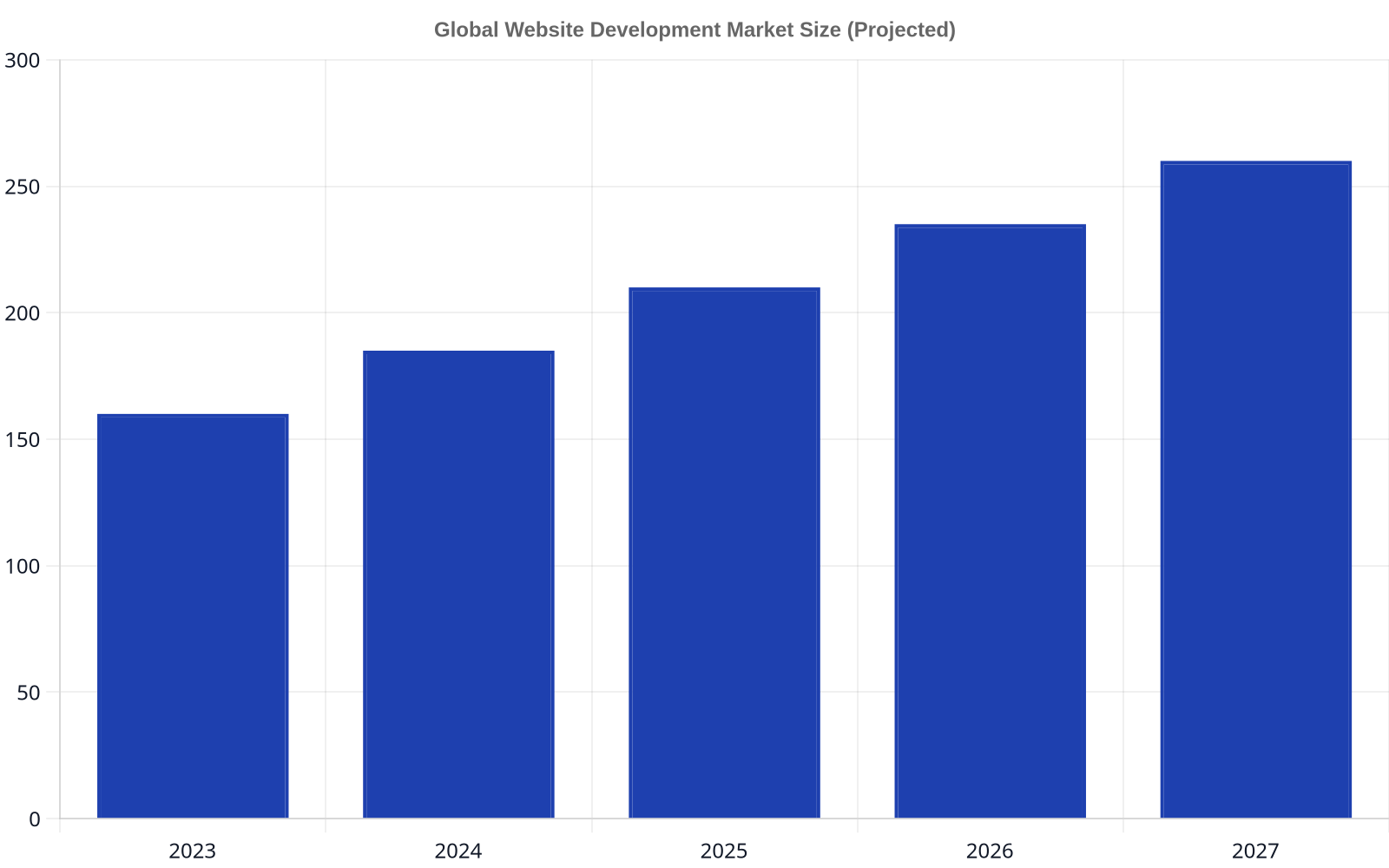
Before diving into the specific types of agencies, it’s crucial to understand the environment. The market is not monolithic. It’s a fragmented collection of specialists, generalists, and platform experts, each serving a different type of client need. Projected growth is strong, but that growth attracts a lot of low-quality providers. According to a report from Grand View Research, the global web development services market is expected to expand significantly, driven by the increasing need for businesses to have a robust online presence. This expansion means more choice, but also a greater need for due diligence.
Key Services Offered by Website Development Businesses
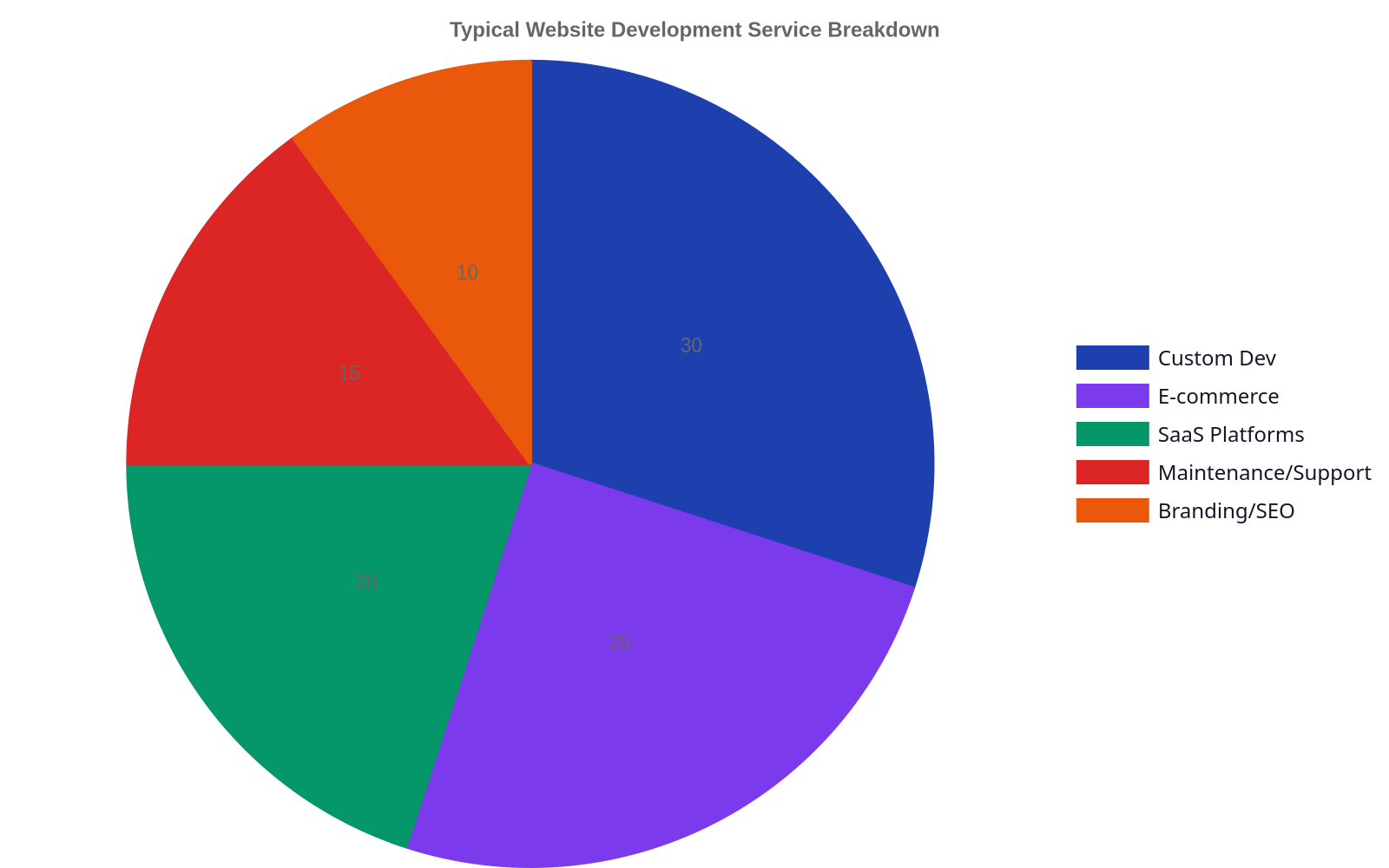
The term “website development” covers a vast array of services. For one business, it might mean creating a simple marketing site on WordPress. For another, it involves building a complex, multi-vendor marketplace from scratch. As a firm that provides a wide range of web and software development, we see the entire spectrum. It’s not just about writing code; it’s about architecture, user journey mapping, database design, security, and ongoing performance optimization.
1. The Niche Industry Specialist
This is the firm that has gone deep on a single vertical, like legal, healthcare, or industrial manufacturing. They don’t just know how to build a website; they know how to build a website that complies with HIPAA, integrates with legal practice management software, or speaks the language of B2B procurement officers. Their value proposition isn’t technical prowess alone, but domain expertise that translates into a site that feels native to its industry.
They understand the specific customer journey of a patient seeking a specialist versus a plant manager sourcing a new part. This leads to better content strategy, more intuitive navigation, and features that solve real-world industry problems. For example, a legal web developer will instinctively know to build a secure client portal, while a generalist might not even consider it.
- Best for: Businesses in regulated or specialized industries that need a partner who already speaks their language.
- Watch out for: A tendency to use templated solutions that look the same across all their clients in the same vertical.
- By the numbers: In healthcare, 83% of patients use hospital websites for information, making a specialized, user-friendly site a critical asset, not a generic brochure.
2. The Platform Guru
These teams are masters of a specific Content Management System (CMS) or e-commerce platform. Think Shopify Plus experts, enterprise-grade WordPress developers who can make the platform do anything, or Webflow wizards who build stunning interactive sites without writing custom code. They have explored every corner of their chosen tool, know its limitations, and have built a library of solutions to overcome them.
Their strength lies in speed and efficiency. Instead of reinventing the wheel, they use the full power of the platform’s ecosystem—plugins, apps, and APIs—to deliver sophisticated functionality on a faster timeline and often at a lower initial cost than a fully custom build. This is ideal for businesses that want to stay within a mainstream, well-supported ecosystem but require advanced customization.
- Best for: Companies that are already committed to a specific platform (like Shopify or WordPress) and need deep expertise to scale it.
- Watch out for: Shoehorning your project into their preferred platform, even when a different technology might be a better fit.
- By the numbers: WordPress powers over 43% of all websites on the internet, a testament to its flexibility and the value of specialized expertise within its ecosystem.
The debate isn’t about which technology is “best,” but which business model behind the technology is right for you. A solo freelancer on WordPress and an enterprise integrator using Adobe Experience Manager are both in the “website development business,” but they don’t solve the same problems.
3. The Full-Stack Product Studio
This is where Dynareach often operates. A product studio thinks less about “websites” and more about “digital products.” They are the partners you bring in when your website is your business—think custom SaaS platforms, two-sided marketplaces, or complex web applications with unique business logic. They are comfortable starting with a blank slate and architecting a solution from the ground up.
These firms employ a mix of front-end developers, back-end engineers, UX designers, and product strategists. The process is deeply collaborative, often feeling like an extension of your own product team. They focus on building scalable, maintainable, and secure applications designed for long-term evolution. If you need a partner to build something that has never been built before, this is the category to look at. This is where you can truly get a feel for how to find a partner, not just a vendor, which is key for a successful SaaS platform development partnership.
- Best for: Startups and established companies building custom software, web applications, or digital platforms as a core part of their business.
- Watch out for: Higher costs and longer timelines. Building from scratch is an investment.
- By the numbers: Poor user experience can have a massive cost. A Forrester report found that a well-designed UI could raise your site’s conversion rate by up to 200%, an outcome that product studios are built to deliver.
4. The SEO-First Development Firm
This type of website development business builds with Google as a primary stakeholder. Every decision—from site architecture and URL structure to mobile rendering and page speed—is filtered through the lens of search engine optimization. They understand that a beautiful site no one can find is worthless.
These firms often have as many technical SEO experts as they do developers. They obsess over Core Web Vitals, structured data, and crawl budget. They build sites that aren’t just fast and mobile-friendly but are also logically structured to demonstrate topical authority to search engines. For a business that relies on organic traffic for growth, this approach is non-negotiable. Building a foundation for seo for startups authority from day one is far more effective than trying to bolt it on later.
- Best for: Businesses in competitive markets where organic search is a primary channel for customer acquisition.
- Watch out for: Over-emphasizing technical SEO at the expense of user experience or brand expression.
- By the numbers: Google has stated that site speed is a direct ranking factor. A 1-second delay in mobile load times can impact mobile conversions by up to 20%, making an SEO-first developer a revenue driver.
A website is not a painting to be hung on a wall; it’s an engine for your business. You don’t ask if the engine is pretty. You ask if it performs.
5. The Headless & Composable Architect
This is the most forward-looking model. These developers build “headless” sites where the front-end (the “head,” or what the user sees) is decoupled from the back-end (the content repository and business logic). This architecture allows for ultimate flexibility. The same back-end can deliver content to a website, a mobile app, a smartwatch, and a kiosk simultaneously.
This “composable” approach means you can pick and choose the best-in-breed tools for each part of your tech stack—a CMS for content, a separate e-commerce engine for transactions, and a different search tool for discovery. We often recommend this for sophisticated e-commerce stores that need to innovate faster than monolithic platforms allow. You aren’t locked into a single vendor’s ecosystem. This is a highly technical and strategic approach suited for businesses planning for omnichannel growth over the next decade. Our own experience shows how this can lead to massive growth, as seen in some of our ecommerce optimization case study work.
- Best for: Mature businesses, especially in e-commerce, that need to deliver content to multiple platforms and want to avoid vendor lock-in.
- Watch out for: Complexity and cost. Managing a multi-vendor stack requires significant internal or external expertise.
- By the numbers: A Mach Alliance survey found that 81% of tech leaders using composable architecture report it gives them more flexibility to innovate and adapt to market changes.
Pricing Models and Revenue Streams
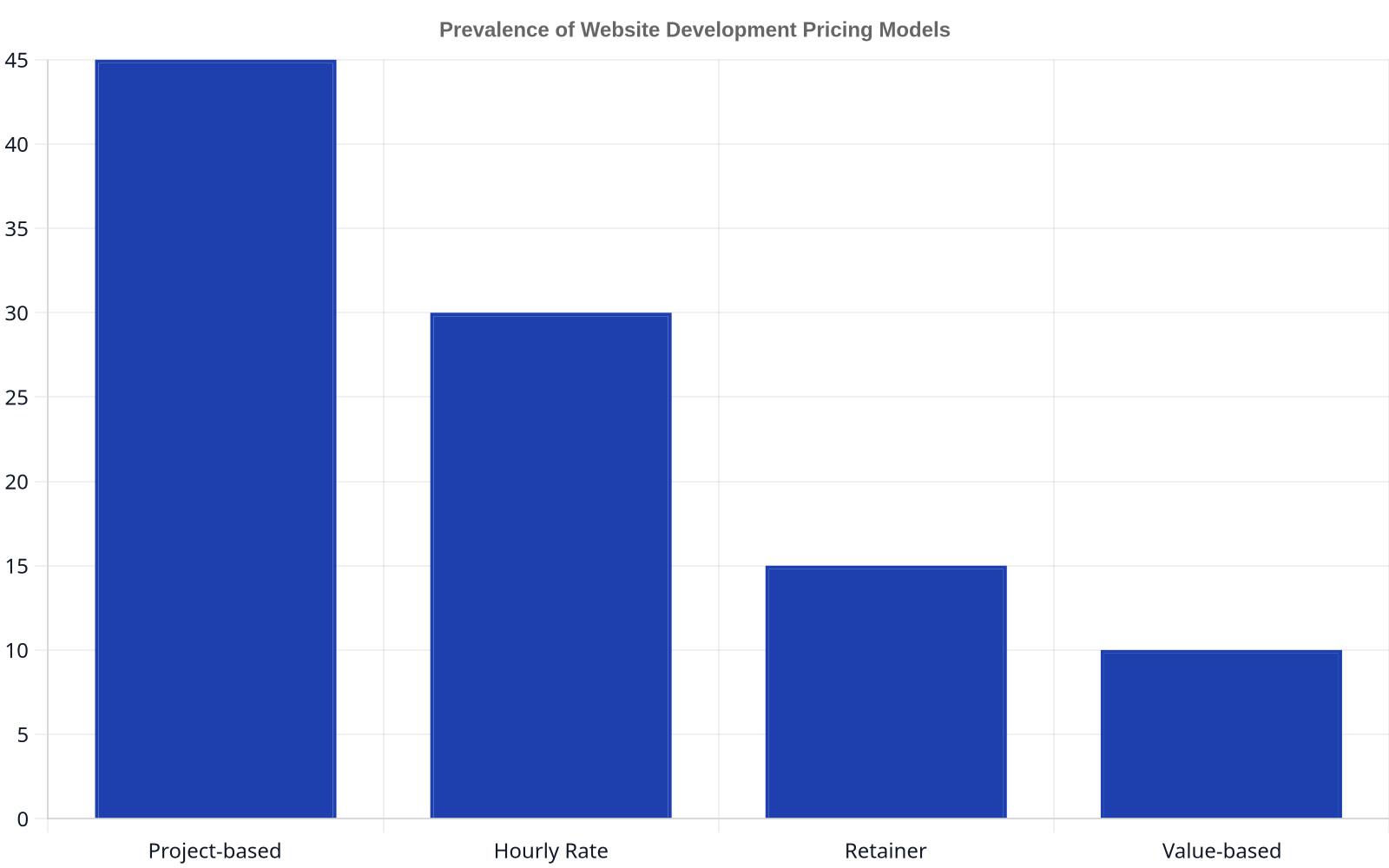
Understanding how a website development business charges for its services is as important as understanding the services themselves. Pricing isn’t just a number; it reflects the agency’s business model, its confidence in its value, and the type of relationship it seeks with clients. Common models include fixed-bid projects, hourly rates (time and materials), and monthly retainers for ongoing work.
Summary of Website Development Business Models
| Model | Core Strength | Best For | Typical Project Size |
|---|---|---|---|
| Niche Specialist | Deep industry knowledge | Regulated/specialized fields | $25k – $150k |
| Platform Guru | Speed & platform expertise | Businesses on Shopify, WP, etc. | $15k – $100k |
| Product Studio | Custom application logic | SaaS & digital products | $100k – $1M+ |
| SEO-First Firm | Organic traffic focus | Competitive search markets | $30k – $200k |
| Headless Architect | Omnichannel flexibility | Mature omnichannel retail | $150k – $750k |
Choosing the right website development business is about matching their model to your specific business reality. Are you building a simple online brochure or a complex digital product? Is your primary goal lead generation through search or creating a unique brand experience? The partner who is perfect for building a custom SaaS application is likely the wrong choice for a small law firm needing a simple, compliant web presence.
If your goals involve building a scalable, high-performance website that serves as a core engine for your business growth, then we should talk. Dynareach specializes in moving beyond the brochure and creating the digital platforms and e-commerce stores that define market leaders. Book a call with us to discuss your project.
FAQ
### How much does a business website cost in 2026?
Costs vary dramatically based on the model.
### What is the difference between a web developer and a web designer?
A web designer focuses on the visual and user experience aspects of a site—the layout, colors, typography, and how it feels to use (UX/UI). A web developer takes that design and brings it to life with code, building the functional structure, database connections, and server-side logic.
### How long does it take to build a custom website?
Again, it depends on complexity. A straightforward marketing site might take 8-12 weeks. A custom e-commerce site could be 4-6 months. A full SaaS application can take 6-12 months for a version 1.0, with ongoing development afterward. Anyone promising a complex custom site in under a month is a major red flag.
### What is “headless” web development?
Headless development decouples the front-end presentation layer (the “head”) from the back-end content management system. This allows for greater flexibility, as the same content can be served to a website, a mobile app, or any other digital device via APIs. It’s an approach built for omnichannel customer experiences.
### Why is website maintenance important?
Technology and security threats are constantly evolving. Maintenance retainers cover software updates, security patching, performance monitoring, and bug fixes. Neglecting maintenance is like never changing the oil in your car; the site will eventually suffer a critical failure or security breach.
### Should I use a website template or a custom design?
Templates are faster and cheaper, making them suitable for businesses with standard needs and tight budgets. A custom design is a better fit when you have unique business requirements, want to build a strong and distinct brand identity, or need to optimize user flows for specific conversion goals. A custom design is an investment in a tailored business tool.