Your SEO Strategy Is a Roadmap, Not a To-Do List. Here’s How to Execute It.
Too many teams confuse an SEO strategy with a list of tactics. They have a dozen keywords, a plan to publish four blog posts a month, and a technical audit that flags 47 different issues. That isn’t a strategy; it’s a collection of tasks. An effective SEO strategy and execution plan is a cohesive roadmap that connects specific business objectives to a prioritized sequence of actions, with clear KPIs to measure progress. It’s the difference between blindly following a recipe and understanding the culinary science that makes the dish work, allowing you to adapt and improvise for sustained growth.
An SEO strategy provides the ‘why’ and the ‘what,’ defining your goals and the competitive landscape. SEO execution is the ‘how’ and the ‘when,’ detailing the specific tactics, timelines, and resources needed to achieve those goals. One cannot succeed without the other. This framework ensures every action, from fixing a canonical tag to writing a pillar page, directly supports a larger business objective, like increasing qualified leads by 20% in the next fiscal year. Without this connection, you’re just making noise in a crowded digital space.

Understanding the Core Concepts: Strategy vs. Plan vs. Tactics
Before building a framework for SEO strategy and execution, it’s critical to define the terms. In my 12 years in this field, I’ve seen millions of dollars wasted because teams were executing tactics without a strategy or had a strategy with no actionable plan. They are three distinct, hierarchical concepts.
Defining SEO Strategy
Your strategy is the high-level vision. It’s the unifying theory that answers foundational questions:
- What business goal are we trying to achieve? (e.g., Increase market share in the SMB SaaS sector, drive 500 demo requests per month).
- Who is our target audience and what are their search behaviors? (e.g., Product managers searching for ‘project management integrations’).
- What is our unique value proposition in the market? (e.g., We are the only platform with a built-in compliance module).
- How will we win in search against our competitors? (e.g., By building more comprehensive, expert-led content on topics they only cover superficially).
Strategy is about direction and competitive positioning. For our client Slyte, a SaaS platform connecting creators with brands, the strategy wasn’t just to rank for ‘creator economy’ but to own the conversation around ‘brand-creator collaboration tools,’ a less competitive but higher-intent keyword ecosystem.
Defining SEO Planning
The plan translates the strategy into a structured project. If the strategy is the ‘what,’ the plan is the ‘how.’ It outlines the major initiatives, resource allocation, and timelines. An SEO plan typically includes:
- Initiatives: Broad projects like ‘Website Technical Overhaul’ or ‘Topical Authority Push for Q3.’
- Timelines: A 6-12 month roadmap showing when each initiative will start and end.
- Resource Allocation: Who is responsible for what? This involves content writers, developers, SEO specialists, and outreach coordinators.
- Budgeting: How much will be spent on tools, content creation, and potentially link acquisition?
This is the bridge between the big idea and the daily work.
Defining SEO Tactics
Tactics are the specific, concrete actions you take to execute the plan. These are the granular tasks that most people mistakenly call ‘SEO.’ Examples include:
- Fixing a broken redirect chain.
- Adding ‘FAQPage’ schema to a specific URL.
- Internally linking from a high-authority blog post to a new service page.
- Acquiring a backlink from a relevant industry publication.
Without a strategy and a plan, these tactics are just random acts of optimization. With them, each tactic is a deliberate step toward a defined goal.
Key Pillars of an Effective SEO Strategy
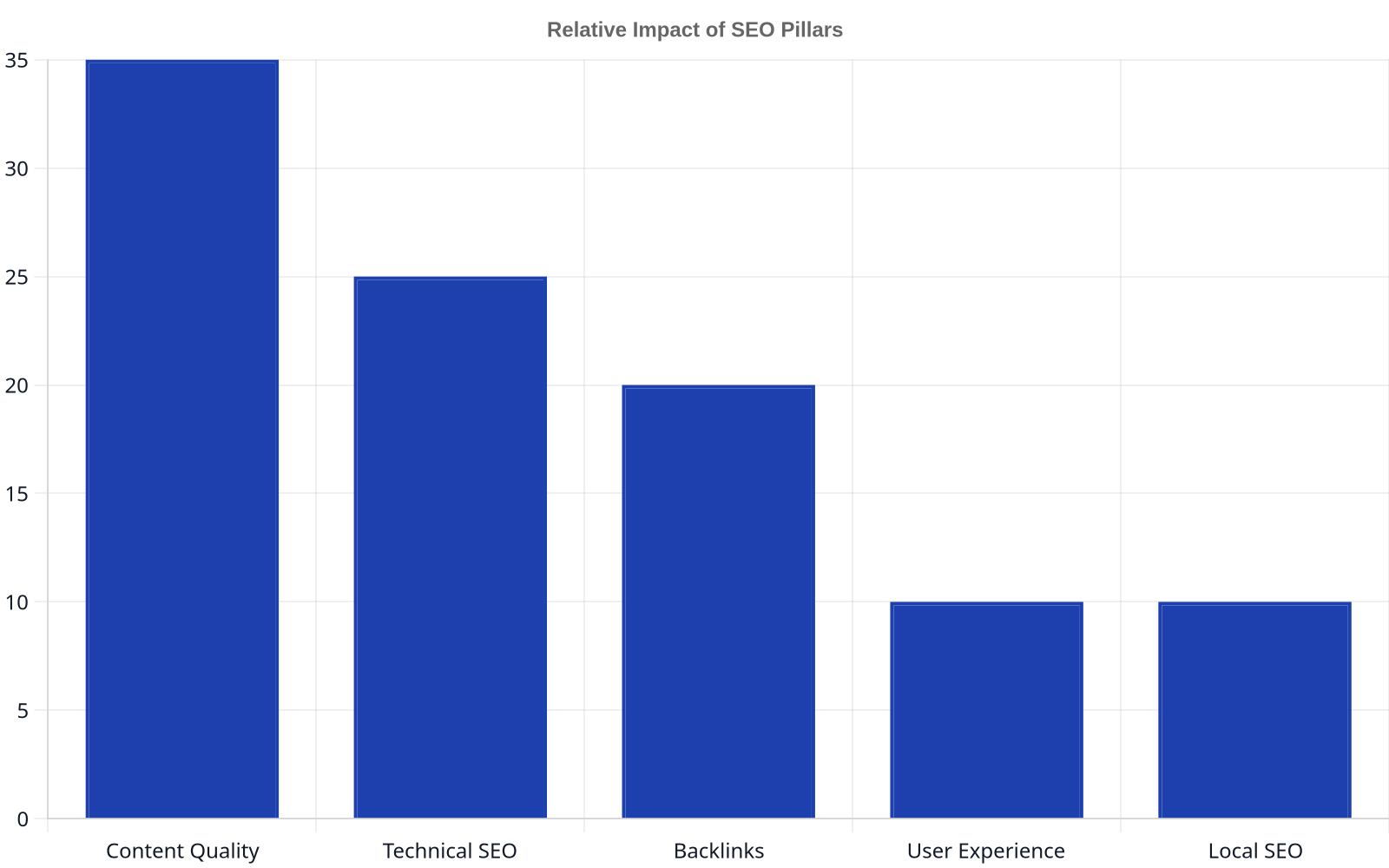
Every successful SEO strategy is built on a few core pillars. These aren’t just boxes to check; they are interconnected systems that work together to build a defensible moat around your search presence. Neglecting one will undermine the others.
Technical SEO: The Foundation of Your Website
Technical SEO is the price of entry. If search engine crawlers like Googlebot can’t efficiently find, understand, and index your content, nothing else matters. It’s about ensuring your site is structurally sound and accessible.
Key components include:
- Crawlability & Indexability: Are your key pages being crawled? Are they being indexed? Tools like Google Search Console’s URL Inspection tool are non-negotiable for diagnostics. Robots.txt files, meta robots tags, and sitemaps are the primary levers here.
- Site Architecture: A logical, shallow site structure helps distribute PageRank and makes it easier for both users and crawlers to navigate. Important pages should not be more than three clicks from the homepage.
- Core Web Vitals: Since 2021, these user experience metrics (Largest Contentful Paint, Interaction to Next Paint, Cumulative Layout Shift) are direct ranking factors. A slow site is a low-ranking site. Google’s PageSpeed Insights provides the data you need to address these issues.
Content Strategy: The Engine of Growth
Content is how you meet user intent. Your strategy must define what content to create, for whom, and what you expect it to achieve. A modern content strategy has two main components:
- New Content Creation: Targeting new keyword opportunities through blog posts, landing pages, tools, and other assets. This expands your topical footprint.
- Content Refreshes: Updating existing content is often the highest-ROI activity in SEO. A Zazzle Media study found that one B2B company saw a 106% increase in organic sessions just from updating old blog posts.
We provide search engine optimization that views content as an investment. The goal is to build a library of assets that appreciate in value over time, not a series of disposable articles.
On-Page SEO: Optimizing for Relevance
On-page SEO involves optimizing individual page elements to signal relevance and context to search engines. This goes beyond just placing keywords.
- Title Tags & Meta Descriptions: These are your digital storefront. They need to be compelling for users and descriptive for crawlers.
- Header Tags (H1, H2, H3): They create a logical hierarchy for your content, improving readability and helping search engines understand the structure of your information.
- Internal Linking: Strategically linking between your own pages spreads authority and helps establish semantic relationships between your content pieces.
Off-Page SEO: Building Authority
Off-page SEO refers to actions taken outside of your own website to impact your rankings. The most significant element is link building.
Don’t think of link building as acquiring links. Think of it as marketing your content. The goal is to create something so valuable that other authoritative sites want to reference it.
Authoritative backlinks from relevant sites are one of the strongest signals of trust and authority to Google. According to a comprehensive study by Backlinko on 11.8 million search results, the number of referring domains is strongly correlated with higher rankings. This involves digital PR, guest posting on reputable sites, and creating link-worthy assets.

Developing Your SEO Strategy

Crafting a strategy is a methodical process that moves from broad business objectives to specific SEO goals. This is where you connect marketing activity to financial outcomes.
Understanding Search Engine Mechanics
Before you can strategize, you must understand the machine you’re trying to influence. Search engines like Google perform three primary functions:
- Crawling: Discovering content on the web by following links.
- Indexing: Storing and organizing the content found during the crawling process.
- Ranking: Deciding which content best answers a user’s query and displaying it in order of relevance.
Your strategy must account for all three stages. A page that isn’t crawlable can’t be indexed, and a page that isn’t indexed can’t rank.
Setting Clear Objectives and Goals (OKRs)
SEO goals must be tied to business goals. Instead of ‘rank #1 for keyword X,’ a better goal is ‘increase non-branded organic traffic by 40% year-over-year to support a 15% growth in MQLs.’ Using the Objectives and Key Results (OKR) framework is highly effective.
- Objective: Become the leading online resource for financial planning for early-stage startup founders.
- Key Result 1: Achieve top 3 rankings for 15 core ‘startup finance’ keywords by EOY.
- Key Result 2: Increase organic sign-ups for our finance template by 50% in Q4.
- Key Result 3: Secure 20 high-authority backlinks from finance and startup publications.
This makes success measurable and connects SEO directly to business impact.
In-Depth Keyword Research and Targeting
Keyword research is not just about finding high-volume terms. It’s about understanding intent and mapping keywords to the buyer’s journey. We use tools like Ahrefs and Semrush to analyze:
- Search Volume: How many people are searching for this term?
- Keyword Difficulty: How competitive is it to rank for this term?
- Search Intent: What is the user trying to accomplish? (Informational, Navigational, Commercial, Transactional)
- Cost Per Click (CPC): A high CPC often indicates high commercial intent.
We build a keyword matrix that prioritizes terms based on a combination of relevance, volume, and difficulty.
Comprehensive Competitor and Gap Analysis
Your strategy doesn’t exist in a vacuum. You need to know who you’re up against. A competitor analysis involves:
- Content Gap Analysis: What keywords are your competitors ranking for that you are not? This is a direct roadmap for new content.
- Link Gap Analysis: Which websites are linking to your competitors but not to you? This is a high-value list of link-building prospects.
- Technical Benchmarking: How does your site speed and structure compare to top-ranking pages?
A good strategy exploits the weaknesses of competitors while neutralizing their strengths.
Executing Your SEO Strategy: Key Pillars

With a robust strategy in place, execution begins. This is where the plan turns into action, driven by dedicated teams, a clear budget, and the right technology stack.
Building the Right Team Structure
Effective SEO execution is rarely a one-person job. A mature team structure often includes:
- SEO Strategist/Manager: Owns the strategy, roadmap, and performance metrics.
- Content Writers/Managers: Create and refresh content based on the strategy.
- Technical SEO Specialist: Works with developers to implement technical fixes and improvements.
- Link Building/Outreach Specialist: Manages digital PR and backlink acquisition campaigns.
- Developer: Implements technical changes, from schema markup to site speed optimizations.
For smaller organizations, one person might wear multiple hats, but it’s crucial to acknowledge these distinct functions are all necessary for success.
Budgeting and Resource Allocation
Your SEO budget will typically be allocated across three main areas:
| Category | Description | Typical Allocation | Example Costs |
|---|---|---|---|
| Tools & Technology | Subscriptions for keyword research, rank tracking, technical auditing, and analytics. | 10-15% | Ahrefs/Semrush ($100-$400/mo), Screaming Frog ($259/yr), Sitebulb. |
| Content Creation | Cost for in-house writers or freelance content producers. This is often the largest expense. | 40-60% | Varies wildly based on quality. Expert content can run $500-$2000+ per article. |
| Link Building / PR | Cost for outreach specialists, campaign assets, and sometimes placement fees. | 20-40% | Can be time-based (agency retainer) or per-link. Varies greatly by industry. |
Budgeting isn’t a one-time decision. It should be reviewed quarterly based on performance and shifting strategic priorities.
Leveraging AI in SEO Execution
The role of AI in SEO has moved from a novelty to a necessity. Platforms like Google’s Search Generative Experience (SGE) are fundamentally changing how information is presented. AI tools can be used to:
- Scale Keyword Clustering: Group thousands of keywords into topically relevant clusters for content planning.
- Analyze SERP Intent: Use natural language processing to understand the dominant intent behind a query at scale.
- Generate Structured Data: Create valid schema markup for products, articles, and FAQs automatically.
- Draft Content Outlines: Speed up the briefing process by having AI generate a comprehensive outline based on top-ranking content.
However, AI is an assistant, not a replacement for human strategy. It can accelerate execution, but it cannot create a unique competitive position or build genuine brand authority.

Measuring and Refining Your SEO Performance
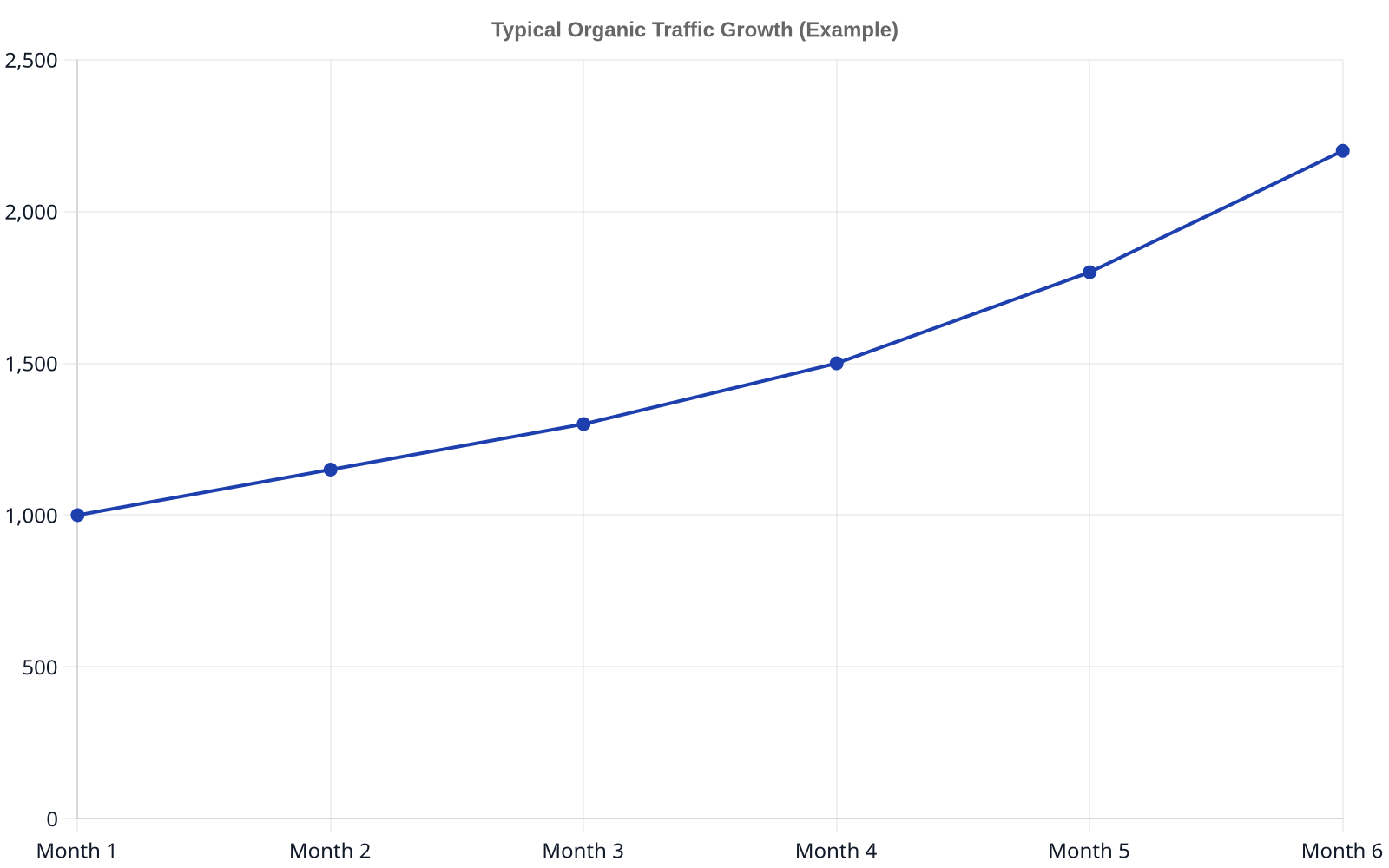

SEO strategy and execution is a cyclical process. You don’t just ‘set it and forget it.’ Constant measurement and refinement are what separate high-growth campaigns from stagnant ones. A 2022 survey by Databox showed that 78% of marketers primarily use organic traffic as their main SEO KPI, but a mature strategy looks deeper.
Key Performance Indicators (KPIs) to Track
Your KPIs should mirror your OKRs. They fall into a few categories:
- Traffic & Visibility Metrics:
* Organic Sessions/Users
* Keyword Rankings (especially for your core set)
* Impressions & Click-Through Rate (CTR)
* Share of Voice (SOV)
- Engagement Metrics:
* Bounce Rate / Engagement Rate (GA4)
* Time on Page / Average Engagement Time
* Pages per Session
- Conversion Metrics (The Most Important):
* Organic Goal Completions (e.g., form fills, demo requests)
* Conversion Rate from Organic Traffic
* Organic-Sourced Revenue
The Feedback Loop: Analysis and Iteration
This is the process for turning data into action:
- Report: Use dashboards (like Google Analytics 4, Looker Studio) to consolidate your KPIs.
- Analyze: Why did organic traffic drop 10% last month? Dig into the data. Was it a specific page? Did we lose a key ranking? Was it seasonality?
- Hypothesize: ‘We believe traffic dropped because a competitor published a more comprehensive guide, causing our ranking for ‘X’ to fall from #2 to #7.’
- Test: ‘We will update our page with two new sections, add a video, and build three new internal links to it.’
- Measure: Did the ranking and traffic recover? If yes, integrate that learning. If not, form a new hypothesis.
This iterative loop ensures your strategy adapts to the ever-changing search landscape and competitive pressures.
The most common failure point in SEO isn’t a bad strategy, but an abandoned one. Success comes from the relentless, iterative process of executing, measuring, and refining over years, not months.
Common Pitfalls and How to Overcome Them
Even with a solid plan, many challenges can derail your execution.
- Challenge: Lack of developer resources to implement technical fixes.
Solution: Create a business case. Don’t just give developers a list of fixes; show them the projected traffic and revenue loss from not* fixing the issues. Prioritize the highest-impact items.
- Challenge: Content production is too slow to meet goals.
* Solution: Create detailed content briefs that reduce the writer’s research time. Use AI to generate initial outlines. Batch similar content types together.
- Challenge: The strategy feels disconnected from business results.
* Solution: Your reporting is the problem. Stop sending ranking reports. Instead, send reports that start with ‘Organic traffic generated $X in pipeline last month, a Y% increase, driven by our new content on Z.’ Frame everything in the language of business.
By anticipating these challenges, you can build processes to mitigate them before they halt your progress.
FAQ
What is the difference between SEO strategy and SEO tactics?
An SEO strategy is your high-level plan for achieving a business goal through search, outlining your target audience, competitive positioning, and how you’ll win. SEO tactics are the specific, individual actions you take to execute that strategy, such as optimizing a title tag, fixing a broken link, or publishing a blog post.
How long does it take for an SEO strategy to show results?
While you can see minor results like indexation improvements in weeks, significant results from a well-executed SEO strategy, such as substantial increases in organic traffic and leads, typically take 6 to 12 months. SEO is a long-term investment; the most significant gains are cumulative and often appear after the first year.
What are the main components of an SEO strategy?
The key components are technical SEO (the foundation), content strategy (what you create), on-page SEO (relevance signals), and off-page SEO (authority building through backlinks). A complete strategy integrates all four pillars, aligning them with specific business objectives, a competitive analysis, and clear KPIs.
How much should I budget for SEO strategy and execution?
Budgets vary widely based on business size and goals. We help clients build a custom budget based on their specific growth targets.
How does AI affect SEO strategy in 2026?
AI is now integral to efficient SEO execution. It’s used for scaling keyword research and clustering, analyzing user intent, generating structured data, and drafting content outlines. However, it does not replace human strategy. The core strategic work of defining brand voice, identifying unique competitive advantages, and building genuine relationships for link acquisition remains a human endeavor.
Executing a powerful SEO strategy is a complex but manageable process. It requires a clear vision, a detailed plan, and the discipline to measure and refine your approach continuously. By connecting every tactic back to a core business goal, you transform SEO from a marketing expense into a predictable engine for growth.
Ready to build an SEO strategy that delivers real business results? Schedule a call with us today and let’s discuss how we can help you grow.