Is SEO just a list of boxes to check? A decade ago, maybe. You could stuff a keyword, build some directory links, and call it a day. That approach is now a guaranteed way to get ignored by Google. Effective SEO strategies and techniques are no longer a simple checklist; they are a complex, integrated system of understanding user psychology, technical infrastructure, and content quality. To truly connect goals to growth, it’s crucial to master seo strategies and execution. For a look at what’s next, explore future seo strategies that deliver compound returns. SEO is a set of practices designed to improve the appearance and positioning of web pages in organic search results. Because organic search is the most prominent way for people to discover and access online content, a good SEO strategy is essential for improving the quality and quantity of traffic to your website.

Understanding the Core Pillars of SEO
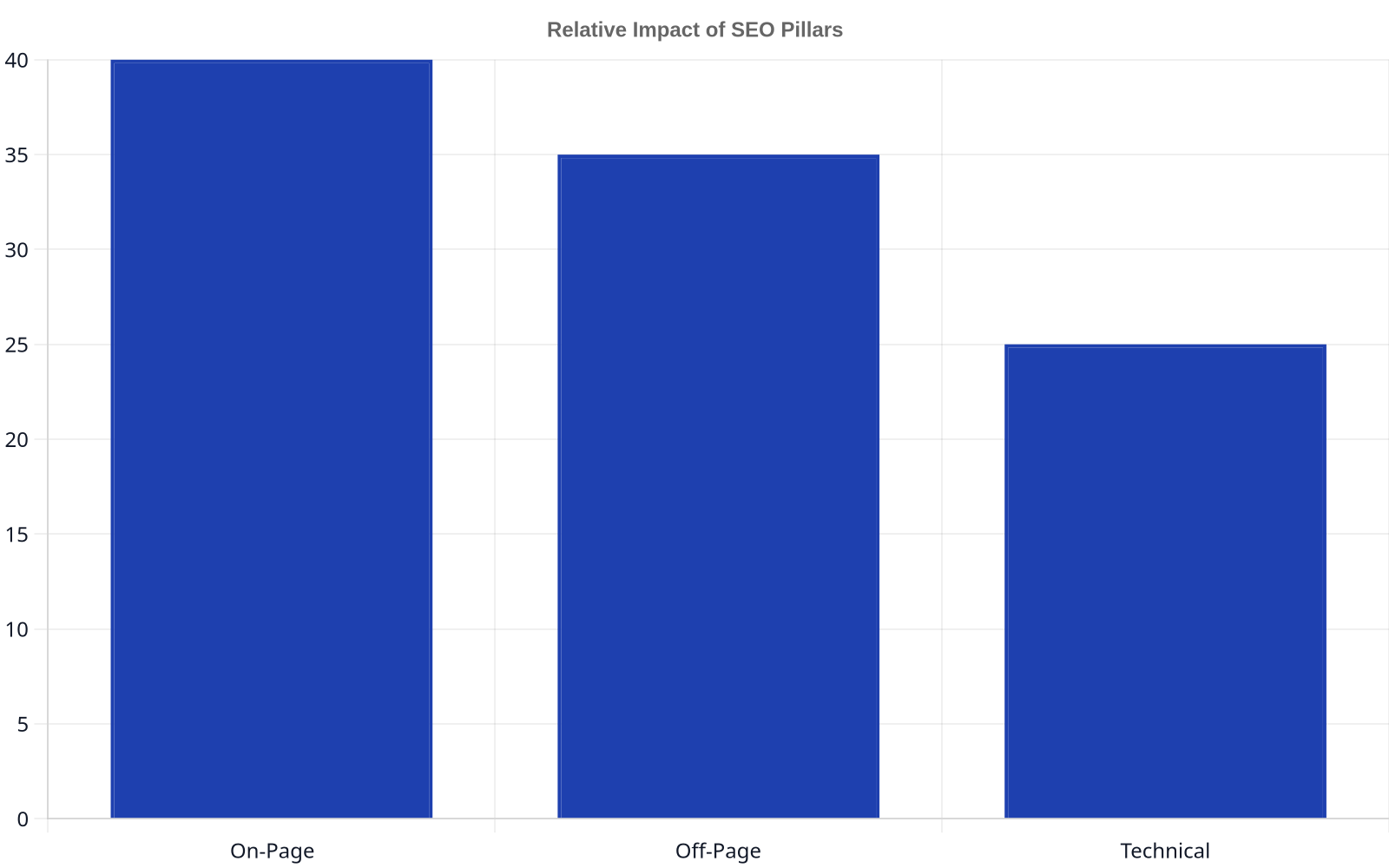

Thinking of SEO as one monolithic task is the first mistake. It’s actually three distinct but interconnected disciplines: On-Page, Off-Page, and Technical SEO. Ignoring one pillar is like trying to build a three-legged stool with only two legs. It might stand for a moment, but it will collapse under pressure. A balanced approach across all three is the only way to build a sustainable digital presence.
On-Page SEO: The Content Foundation
On-page SEO is what most people think of first: the words on the page. It’s about signaling to search engines what your content is about and which queries it’s relevant for. This goes far beyond simply repeating a keyword.
We start every project with keyword research, but not just to find high-volume terms. The real goal is to map out user intent. Is the searcher looking to buy (transactional), learn (informational), or find a specific site (navigational)? Answering this question dictates the entire content strategy. For example, targeting “buy running shoes” requires a product category page, while “how to choose running shoes” demands a detailed guide.
Content quality itself is paramount. Your content must be original, substantive, and demonstrate first-hand experience. Google’s E-E-A-T (Experience, Expertise, Authoritativeness, Trustworthiness) guidelines are not just suggestions; they are the core of how the algorithm evaluates content quality. We focus on creating content that is demonstrably better than what is currently ranking, often aiming for a readability score at a “7th grade level” to ensure broad accessibility without sacrificing depth.
Off-Page SEO: Building Authority and Trust
Off-page SEO comprises the actions taken outside your own website to impact your rankings within search engine results pages. The primary mechanism here is backlink acquisition. A backlink from a high-authority, relevant website is a powerful vote of confidence.
Effective link-building isn’t about quantity; it’s about quality. We’ve seen clients come to us with profiles full of toxic links from private blog networks (PBNs) that are actively harming their domain. Disavowing these links is often the first step. The goal is to earn links editorially from reputable sources through valuable content, digital PR, and strategic outreach. According to an extensive analysis by Ahrefs, there is a clear positive correlation between the number of referring domains a page has and the amount of search traffic it receives.
Technical SEO: The Website’s Engine
Technical SEO is the foundation upon which great content and strong authority stand. If a search engine crawler cannot efficiently find, render, and index your pages, all other efforts are wasted. Our work in technical SEO ensures the site is not just visible, but optimized for performance.
Key components include:
- Crawlability & Indexability: Using tools like Google Search Console to monitor crawl errors and ensure important pages are indexed.
- Site Speed: Optimizing for Core Web Vitals (CWV). A slow-loading page is a primary cause of high bounce rates. Google has confirmed that page experience is a ranking signal.
- Mobile-Friendliness: With mobile-first indexing, how your site appears on a phone is more important than how it looks on a desktop.
- Schema Markup: Implementing structured data to help search engines understand the content and context of your pages, which can lead to rich snippets in search results.
Keyword Research & Mapping User Intent
Bad keyword research focuses on vanity metrics like search volume. Professional keyword research is an exercise in applied psychology. You’re not just finding what people search for; you’re deciphering why they are searching for it. This is the concept of search intent.

The Long Tail Opportunity
Head terms like “running shoes” (high volume, high competition) are often not the best target. Long-tail keywords, such as “best trail running shoes for flat feet,” have lower volume but convert at a much higher rate. They capture users who are further down the purchasing funnel. A comprehensive strategy balances both, using pillar content for head terms and specific blog posts or product pages for the long tail.
From Keywords to Content Structure
A keyword isn’t just a string to be sprinkled into text. It’s a topic. We build topic clusters, where a central “pillar” page covers a broad topic (e.g., “E-commerce SEO”) and is internally linked to and from multiple “cluster” pages that address specific sub-topics in greater detail (e.g., “product schema for online stores,” “reducing cart abandonment with site speed”). This structure signals to Google that you have deep expertise on the subject, making your entire cluster more likely to rank.
Avoiding Common Pitfalls
Keyword stuffing is the most infamous amateur mistake. Forcing a keyword into a sentence where it doesn’t fit creates a terrible user experience and is easily detected by modern search algorithms. The same goes for duplicate content. Publishing the same block of text on multiple pages of your site can lead to search engines filtering one or all of them out of the results. Every page must have a unique purpose and largely unique content.
Comparing On-Page, Off-Page, and Technical SEO
| On-Page SEO | Off-Page SEO | Technical SEO | |
|---|---|---|---|
| Primary Focus | Content and user experience within the site | Building authority and reputation through external signals | Optimizing website infrastructure for search engine crawling and indexing |
| Key Activities | Keyword optimization, meta tags, content quality, heading structure, internal linking | Backlink building, social media marketing, brand mentions, guest posting | Site speed optimization, mobile-friendliness, XML sitemaps, robots.txt, canonicalization, structured data |
| Goal | Improve content relevance and user engagement | Increase domain authority and trustworthiness | Ensure search engines can effectively access, crawl, and index the site |
| Impact Area | Individual pages and content elements | Overall domain reputation and external influence | Website-wide performance and crawlability |
To clarify the roles and responsibilities of each SEO pillar, here is a direct comparison of their primary objectives, key activities, and metrics for success.
| Feature | On-Page SEO | Off-Page SEO | Technical SEO |
|---|---|---|---|
| Primary Goal | Demonstrate relevance and quality for specific queries. | Build authority, trust, and reputation across the web. | Ensure the site is crawlable, indexable, and fast. |
| Key Activities | Keyword research, content creation, title tag optimization, internal linking, image alt text. | Link building (earning backlinks), digital PR, brand mentions, guest posting. | Site speed optimization, mobile-friendliness, schema markup, XML sitemap management, fixing crawl errors. |
| Core Metrics | Organic rankings, time on page, bounce rate, keyword density (as a check). | Number of referring domains, domain authority/rating, backlink quality. | Page load speed (Core Web Vitals), crawl errors, indexation rate. |
| Analogy | The quality and clarity of a book’s content. | The number of citations and recommendations a book receives. | The quality of the paper, binding, and printing of the book. |
Don’t ask ‘What is the most important type of SEO?’ Ask ‘Which part of my SEO foundation is the weakest?’ That’s where you’ll find the most impactful work.
The SEO Strategy Lifecycle: From Audit to Optimization

An effective SEO campaign isn’t a one-time project; it’s a continuous cycle of analysis, implementation, and refinement. We structure our engagements around a clear, iterative process to ensure strategies adapt to a changing search landscape.
A Structured Framework for SEO Implementation:
- Discovery & Audit: The process begins with a comprehensive audit of all three pillars. We analyze existing analytics, conduct a full technical crawl, review the backlink profile, and perform a content gap analysis against key competitors.
- Strategy & Goal Setting: Based on the audit, we define clear, measurable goals. These aren’t vague objectives like “increase traffic.” They are specific targets like “Increase non-branded organic traffic to the ‘services’ section by 15% in 6 months” or “Achieve a top-3 ranking for the keyword ‘SaaS accounting software’.”
- Roadmap & Prioritization: With goals defined, we build a roadmap. Not all fixes have the same impact. Fixing a critical crawl error is a higher priority than rewriting a meta description on a low-traffic page. We prioritize tasks based on expected impact versus effort required.
- Execution & Implementation: This is where the roadmap becomes reality. Our team works on content creation, technical fixes, and outreach campaigns. For clients building e-commerce stores, this might involve optimizing thousands of product pages and implementing sophisticated schema.
- Measurement & Reporting: We use tools like Google Analytics, Ahrefs, and Semrush to track progress against our goals. Reporting isn’t just a data dump; it’s an analysis of what worked, what didn’t, and why.
- Refinement & Iteration: Based on the data, we refine the strategy. Perhaps a content format is resonating particularly well, or a new competitor has emerged. The lifecycle begins again as we adapt and build on our success.
Adapting to AI and Answer Engine Optimization (AEO)
Anyone who tells you they have AI in search all figured out is lying. However, the trajectory is clear. Google’s AI Overviews, now reaching over 2 billion users monthly as AI Mode becomes available in over 200 countries, are fundamentally changing the SERP. The game is shifting from just ranking links to becoming the citable source within the AI-generated answer. This is Answer Engine Optimization (AEO).
How AEO Changes the Game
The goal is no longer just to be the #1 blue link. The new goal is to be the citable source referenced in the AI Overview. This requires a fanatical focus on clarity, accuracy, and data. Your content needs to be structured in a way that an AI can easily parse and synthesize. Think clear headings, factual statements supported by data, and direct answers to specific questions.

Preparing Your Content for AI
- Factual Accuracy: Your content must be verifiably correct and cite authoritative sources. AI models are being trained to identify and reward trustworthy information.
- Structured Content: Use lists, tables, and clear Q&A formatting. These structures are easily digestible for language models.
- Be the Source: Instead of just reporting on a study, get the raw data and create your own unique charts and analysis. This makes you the primary source to be cited.
In the age of AI search, your content is no longer just for a human reader. It’s also a structured data packet for a machine. You have to write for both.
Measuring and Analyzing SEO Performance
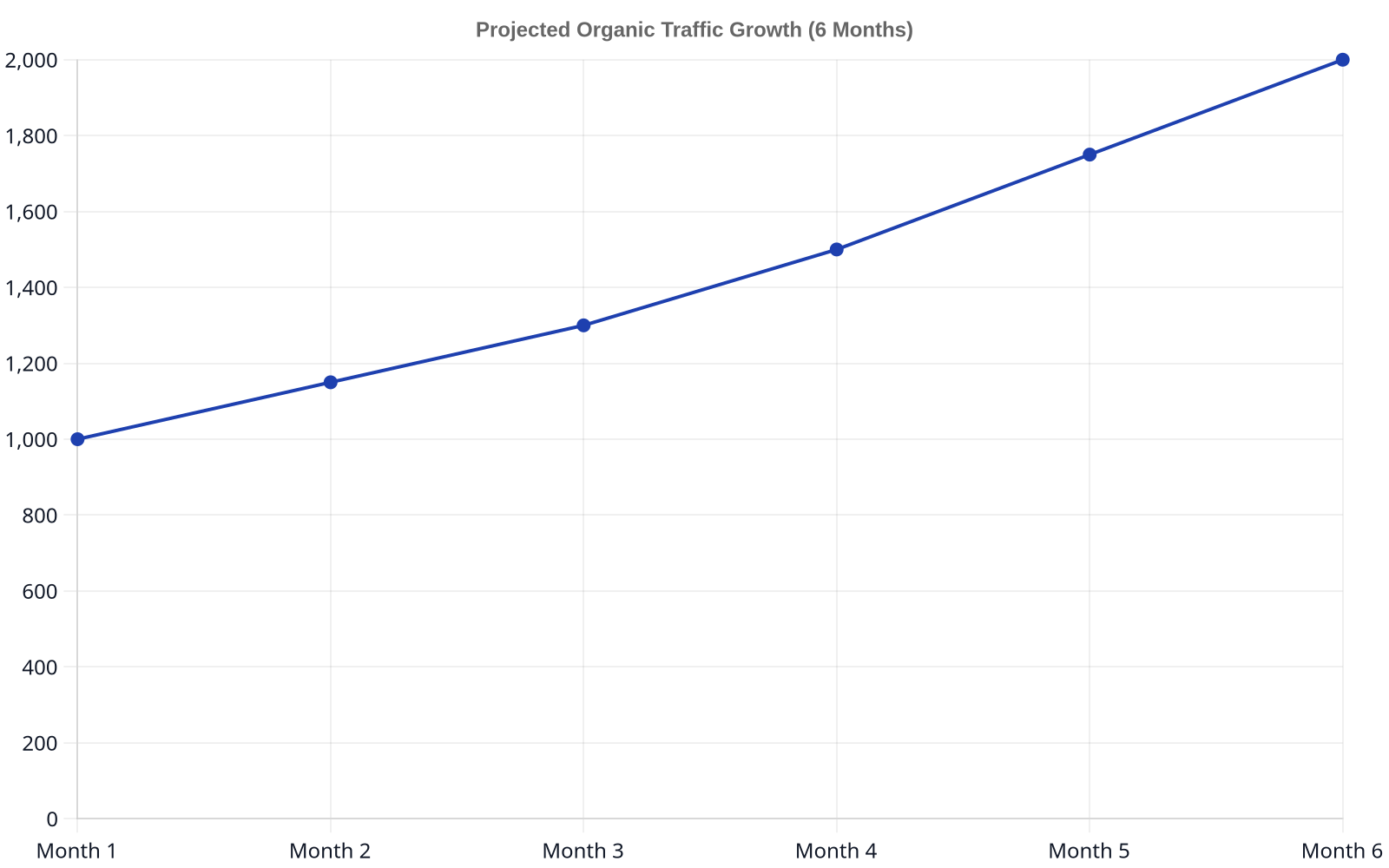
If you can’t measure it, you can’t improve it. Data and analytics are not just for proving ROI; they are essential tools for informing and refining your SEO strategy. While traffic and rankings are important, they are lagging indicators. The real insights come from leading indicators that show why your traffic is changing.
Key Metrics Beyond Traffic
- Click-Through Rate (CTR): A low CTR on a high-ranking page might indicate a poorly written title tag or meta description.
- Impressions: A sudden drop in impressions, viewable in Google Search Console, can be an early warning of a technical issue or penalty.
- Backlink Velocity: Are you earning links faster or slower than your competitors? Tools like Ahrefs can track this.
- Keyword Coverage: What percentage of your target keywords are ranking on the first page? This shows the breadth of your topical authority.
The Role of Analytics in Strategy
Analytics allow you to double down on what’s working. For instance, if you see a blog post about a specific topic is driving a disproportionate amount of conversions, that’s a signal to build a topic cluster around it. Conversely, if a section of the site has high traffic but zero conversions, it’s time to investigate user experience and content alignment with intent. A 2024 Gartner report highlights a 13% increase in average DM budgets, with a heavy emphasis on analytics to justify that spend.
Further reading
- SEO Tips for Content Writing | USAGov
- How Does SEO Work? 9 Elements for Beginners to Know
- Search Engine Optimization (SEO) – Office of Marketing
FAQ
What are the main types of SEO?
There are three core types. On-page SEO focuses on optimizing the content and structure of your actual web pages (e.g., keywords, titles, content quality). Off-page SEO involves actions taken outside your site to build its authority, primarily through earning high-quality backlinks. Technical SEO ensures your website’s foundation is sound, allowing search engines to crawl and index your site efficiently (e.g., site speed, mobile-friendliness, sitemaps).
How long does it take for SEO to work?
SEO is a long-term investment. While some technical fixes can produce results in weeks, foundational content and authority-building strategies typically take 4 to 12 months to show significant impact on traffic and rankings. The timeline depends heavily on the competitiveness of your industry, your starting point, and the intensity of the campaign. Beware of anyone promising guaranteed #1 rankings in a short timeframe.
What is the difference between SEO strategies and techniques?
A strategy is your overall plan and your ‘why.’ For example, a strategy might be to become the dominant authority for “local plumbing services” by creating the most comprehensive content resource. Techniques are the specific actions or ‘how’ you use to execute that strategy. Techniques for that strategy would include keyword research for plumbing queries, writing guides on fixing common leaks, and earning backlinks from local hardware store blogs.
Is keyword stuffing still a relevant concern?
Yes, absolutely. While search engines are much smarter at understanding context, unnaturally forcing keywords into your text is still penalized. It creates a poor user experience, which Google’s algorithms are designed to detect. The modern approach is to focus on writing naturally about a topic. If you cover a subject comprehensively, the relevant keywords and their semantic variations will appear naturally in the text.
Can I do SEO myself?
Business owners can certainly learn and implement basic SEO techniques, such as optimizing title tags and creating useful content for a blog. However, the complexity of technical SEO, the nuance of competitive analysis, and the time commitment required for effective link-building mean that most businesses will see a significantly greater return by working with a specialized agency or consultant. For most startups and businesses, focusing on their core product while an expert handles the growth strategy is a more efficient path.
From Checklist to Competitive Advantage
Moving beyond a simple checklist of SEO tasks is the first step toward building a durable digital asset. A real SEO strategy is a dynamic process rooted in understanding your customer, building a technically sound website, and creating content that genuinely earns authority. It’s not about tricking an algorithm; it’s about creating the best possible experience for the user, which in turn sends all the right signals to search engines. As an agency that specializes in Search Engine Optimization, we’ve seen this approach transform businesses from invisible to indispensable.
If you’re ready to move past the basics and build a comprehensive SEO strategy that drives real growth, let’s talk. Book a call with us to see how we can build a plan tailored to your business.