Stop asking if your SaaS marketing is working and start asking if it’s predictable. One-off wins are exciting, but they don’t build an enterprise. The best marketing services for SaaS create a system for growth, not a series of disconnected campaigns. You need an engine that turns investment into a measurable, repeatable stream of qualified leads and revenue. This means finding a partner who understands that for SaaS, marketing isn’t just promotion; it’s an integral part of the product experience, from acquisition to retention, often involving complex strategies like product-led growth (PLG).
This list identifies the top marketing services that build that engine. The services are ranked based on their direct impact on generating Monthly Recurring Revenue (MRR) and lowering Customer Acquisition Cost (CAC), supported by recent data from G2, Gartner, and successful SaaS case studies.

SEO and Content Strategy for SaaS Growth
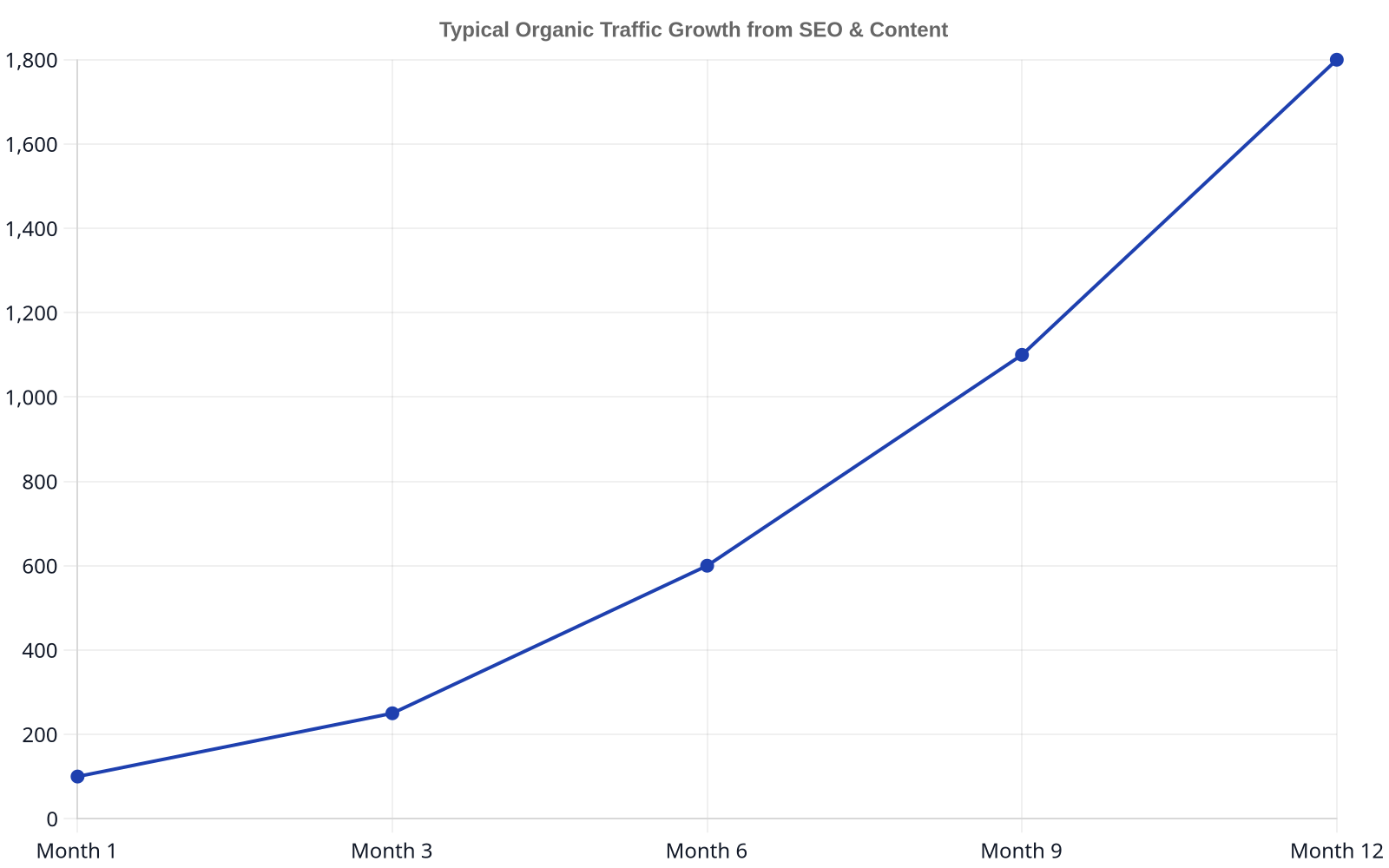
Search Engine Optimization (SEO) for a SaaS company is fundamentally different from SEO for an e-commerce store or a local business. The sales cycles are longer, the search intent is more informational and nuanced, and the goal is often to capture a lead for a free trial or demo, not an immediate sale. A successful strategy requires deep technical SEO to ensure complex platforms are crawlable, combined with content that addresses specific pain points at every stage of the buyer’s journey. This isn’t about vanity metrics; it’s about owning the search results for the problems your software solves.
This involves meticulous keyword research to understand user intent, building out topic clusters around core features, and creating long-form content (guides, whitepapers, case studies) that establishes authority. It’s a long-term play. While some channels provide quick bursts of traffic, a well-executed content and SEO strategy creates a durable asset that generates leads for years. One study found the average ROI from content-led SEO is 702%, with a break-even time of just seven months. As a firm that specializes in Web & Software Development, we know firsthand that a beautifully engineered SaaS product is invisible without a robust SEO foundation to bring the right users to it.
- Best for: SaaS companies with a long sales cycle and a high customer lifetime value (LTV) where establishing authority and trust is critical before a purchase decision.
- Watch out for: Agencies that promise #1 rankings in weeks or focus solely on basic on-page tweaks. True SaaS SEO is a comprehensive strategy that integrates with your product roadmap.
Paid Media and Demand Generation
While SEO builds your foundation, paid media (PPC) is the accelerator. For SaaS businesses, this means hyper-targeted campaigns on platforms like Google Ads, LinkedIn, Capterra, and G2. The focus isn’t on broad-stroke advertising but on surgical precision: reaching specific job titles in target industries with messaging that speaks directly to their business challenges. The goal is demand generation: creating a predictable pipeline of Marketing Qualified Leads (MQLs) or Product Qualified Leads (PQLs).
Effective SaaS PPC goes far beyond just bidding on keywords. It involves sophisticated audience segmentation, retargeting users based on their in-app behavior, and creating ad copy that aligns with specific use cases. Landing pages must be optimized for conversions, whether that’s a demo request, a whitepaper download, or a free trial signup. Successful agencies in this space can demonstrate a clear return on ad spend (ROAS) and often report achieving a 3-5X Return on investment for their clients by connecting ad spend directly to pipeline and revenue.
- Best for: Startups needing to generate initial traction quickly or established SaaS companies looking to scale lead generation for their sales team.
- Watch out for: Agencies that focus only on click-through rates (CTR) and cost-per-click (CPC). The only metric that matters is the cost to acquire a paying customer.

Account-Based Marketing (ABM)
Account-Based Marketing flips the traditional marketing funnel on its head. Instead of casting a wide net and hoping to catch qualified leads (a one-to-many approach), ABM focuses on a curated list of high-value target accounts and treats each one as a market of one (a one-to-one or one-to-few approach). This is especially potent for enterprise SaaS companies where deals are large, complex, and involve multiple stakeholders.
An ABM strategy involves deep collaboration between marketing and sales to identify these “dream” clients. Marketing then deploys personalized campaigns across multiple channels (email, social media, direct mail, targeted ads) to engage key decision-makers within those accounts. The content is not generic; it’s tailored to the specific industry, challenges, and even the individuals at the target company. It’s a resource-intensive approach, but the payoff can be enormous, with some companies reporting a 5X increase in qualified pipeline after implementing a focused ABM program.
- Best for: B2B SaaS companies selling high-ticket subscriptions to a finite number of enterprise-level clients.
- Watch out for: Simply rebranding your email list segmentation as “ABM.” True ABM requires deep personalization, sales and marketing alignment, and dedicated technology like platforms from Terminus or 6sense.
Don’t confuse activity with progress. A hundred blog posts that don’t rank and a thousand ad clicks that don’t convert are just noise. The right marketing service for your SaaS finds the one channel that works and scales it relentlessly.
Product-Led Growth (PLG) Strategy
PLG is a go-to-market motion where the product itself is the primary driver of customer acquisition, conversion, and expansion. Think of companies like Slack, Calendly, and Dropbox. Users sign up for a free version or a trial, experience the value of the product firsthand, and then upgrade to a paid plan. According to one definition, “product led growth is a go-to-market strategy that relies on product usage as the primary driver,” fundamentally changing how SaaS companies approach marketing.
Hiring a service for PLG strategy means you’re bringing in experts who can analyze your product’s user experience (UX) and identify friction points in the customer journey. They help design the onboarding flow, structure the freemium or trial limitations, and implement in-app messaging and triggers that encourage users to upgrade. This is a highly specialized service that blends product management, marketing, and data analysis. The goal is to make the product so compelling and easy to adopt that it effectively sells itself, reducing reliance on a traditional sales force for a large segment of your customers.
- Best for: SaaS companies with a product that can deliver value to a user quickly, often with a self-serve model and a potentially large user base.
- Watch out for: Consultants who only focus on the top-of-funnel acquisition. True PLG is a full-funnel strategy that includes user onboarding, activation, retention, and monetization.
The Most Effective Marketing Channels for SaaS
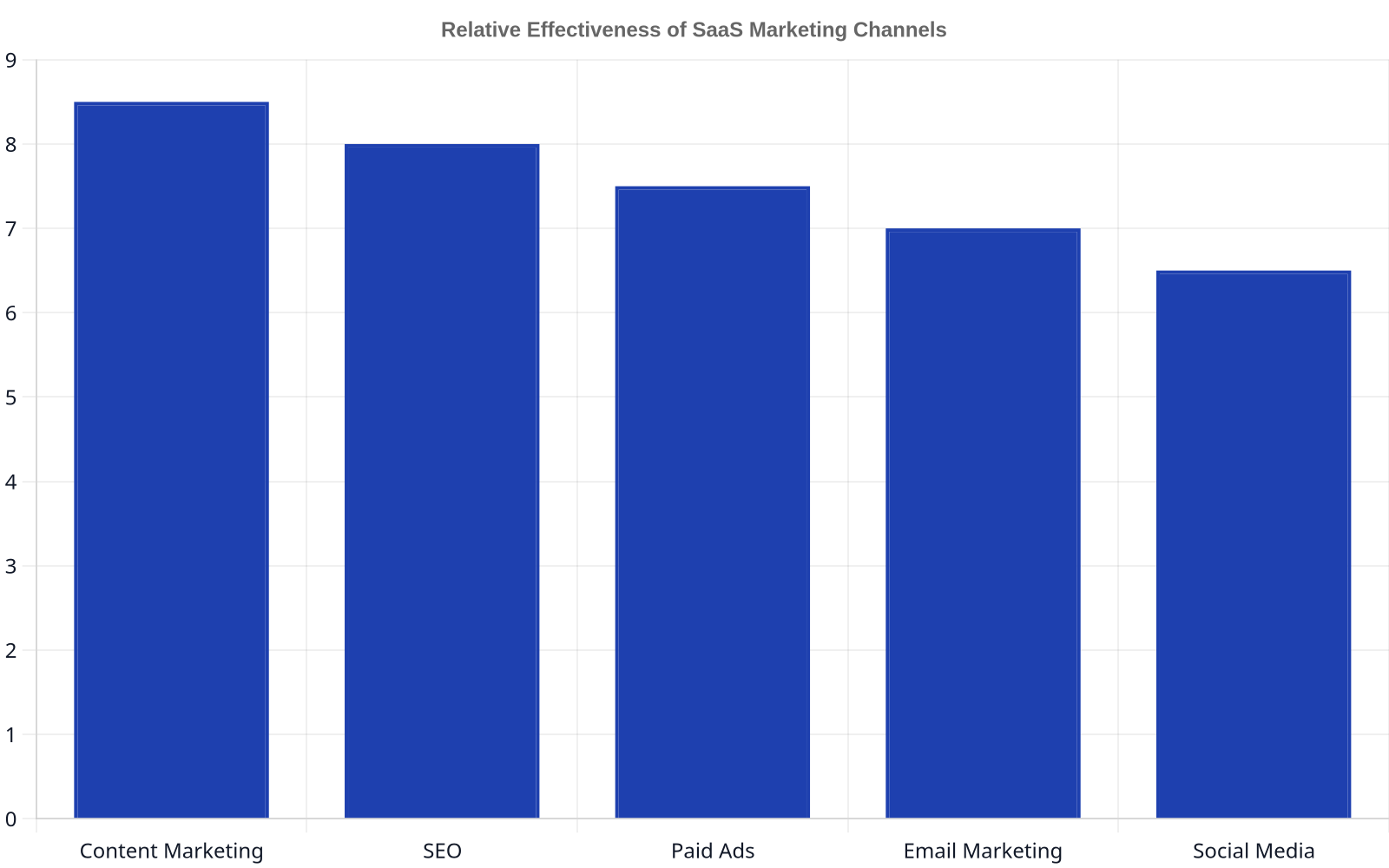
When evaluating where to invest, not all channels are created equal. The most effective channels are those that can be scaled predictably. While channel effectiveness varies based on the specific SaaS product, audience, and price point, general trends show a clear hierarchy.
Organic search (SEO) and content marketing consistently provide the highest long-term ROI. Paid channels like LinkedIn and Google Ads are crucial for generating immediate, targeted demand. For enterprise SaaS, ABM provides a focused path to high-value accounts. Finally, listing on review platforms like Gartner Peer Insights or Capterra is critical for capturing buyers who are at the final stages of their decision-making process. The key is to build a balanced portfolio of services that addresses both immediate needs and long-term, sustainable growth.
Revenue Operations (RevOps)
Revenue Operations, or RevOps, is a framework designed to break down the silos between your sales, marketing, and customer service departments. In a traditional structure, these teams often operate with different goals, different data, and different technologies. This creates friction and data gaps, leading to lost leads and a disjointed customer experience. A RevOps service provider comes in to unify these functions under a single, accountable strategy focused on one thing: revenue.
This is a deeply technical and strategic service. It involves integrating your tech stack (CRM, marketing automation, customer support software), cleaning and standardizing data across all departments, and creating unified dashboards that give a single source of truth for the entire customer lifecycle. By aligning teams, processes, and data, RevOps can dramatically improve efficiency and growth. It transforms data overload into marketing insight, ensuring that every marketing dollar can be tracked from initial click to final sale and beyond. Some firms have seen a 7X growth in quarterly MQLs by optimizing their RevOps function.
- Best for: Scale-up SaaS companies where departmental silos and data inconsistencies are starting to hinder growth and create a leaky funnel.
- Watch out for: Glorified CRM administrators. True RevOps is a strategic function that requires expertise in process optimization, data architecture, and change management, not just software configuration.
Benchmarking Your SaaS Marketing Performance
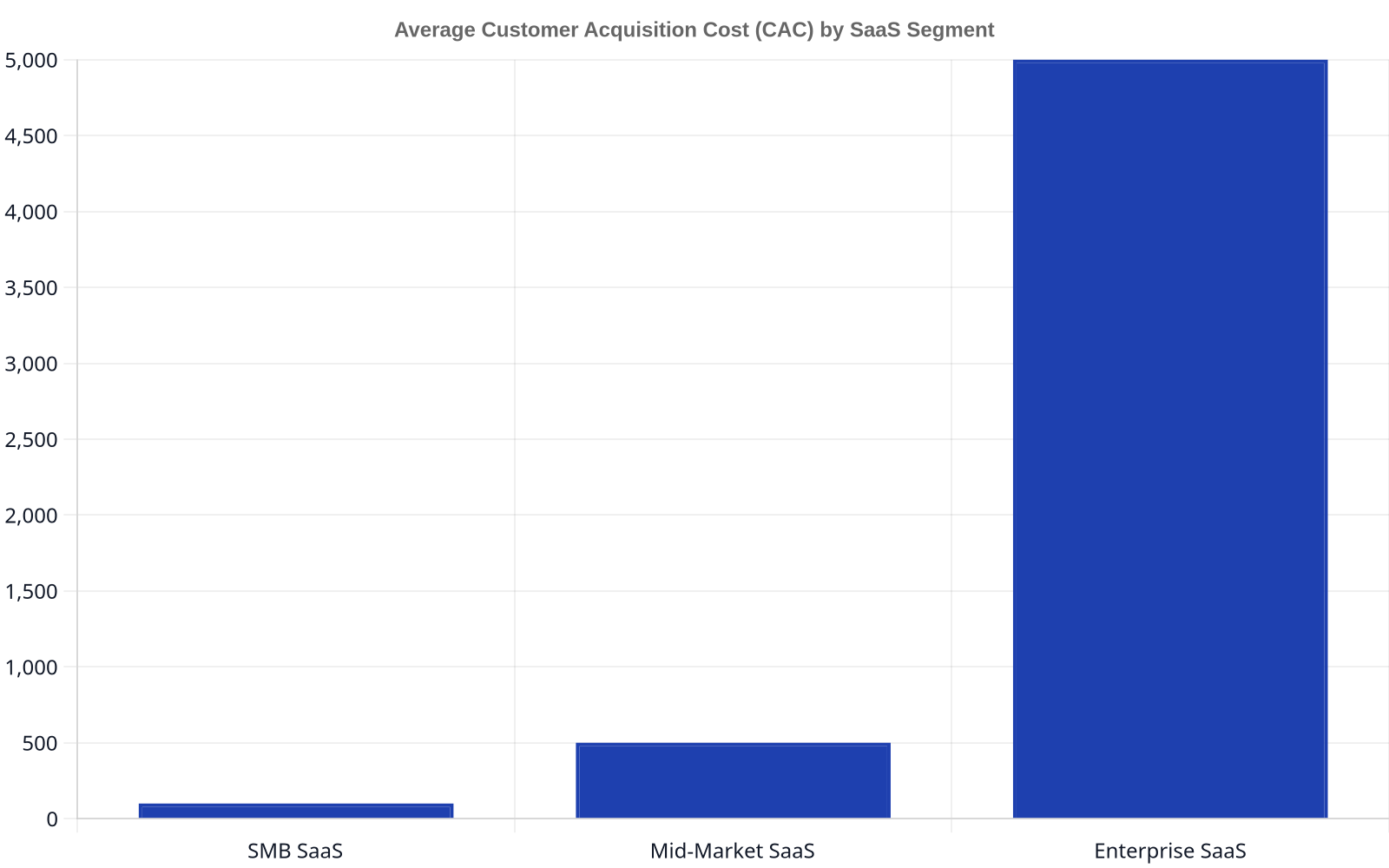
Understanding how your marketing performance stacks up against the competition is critical. Key metrics like Customer Acquisition Cost (CAC), Lifetime Value (LTV), and churn rate are the vital signs of a SaaS business. A marketing service should not only work to improve these numbers but also provide context by benchmarking them against industry averages.
For example, your CAC will vary wildly depending on your target market (SMB vs. Enterprise). A marketing partner should be able to tell you what a “good” CAC looks like for your specific segment and go-to-market motion. They should help you build a financial model for your marketing, ensuring your LTV-to-CAC ratio is healthy (a common benchmark is 3:1 or higher). This data-driven approach moves the conversation from “we got this many clicks” to “we generated this much pipeline at this specific cost,” which is the language of growth.
Comparison of Top Marketing Services for SaaS
| Service Type | Primary Goal | Best For | Key Metrics | Common Pricing Model |
|---|---|---|---|---|
| SEO & Content | Build sustainable, long-term organic traffic and authority. | High LTV products, long sales cycles. | Organic Traffic, Keyword Rankings, MQLs. | Monthly Retainer |
| Paid Media | Generate immediate, targeted leads and pipeline. | Startups needing traction, scaling sales teams. | Cost per Acquisition (CAC), ROAS, PQLs. | Retainer + % of Ad Spend |
| Account-Based Marketing | Penetrate high-value target accounts. | Enterprise SaaS with large deal sizes. | Account Engagement, Pipeline Velocity, Deal Win Rate. | Project-Based or Retainer |
| PLG Strategy | Use the product to drive acquisition and conversion. | Self-serve, freemium, or trial-based products. | Trial-to-Paid Conversion Rate, User Activation. | Project-Based or Consulting Retainer |
| Revenue Operations | Align sales, marketing, and service for efficiency. | Scale-ups hitting growth friction. | Funnel Conversion Rates, Data Accuracy, Sales Cycle Length. | Retainer or Project-Based |
At Dynareach, we focus on building the foundational assets that drive long-term success. Our expertise in creating custom SaaS platforms and implementing data-driven SEO strategies ensures your marketing efforts are built on a solid technical and strategic footing from day one.
Further reading
- B2b Saas Marketing Agency
- Insights into Lead Generation in Software-as-a-Service firms
- Best Global Digital Marketing Agencies Reviews 2026
FAQ
What are SaaS marketing services?
A SaaS marketing service is a specialized offering from an agency or consultant focused on the unique challenges of marketing software-as-a-service products. This includes strategies like content marketing for long sales cycles, product-led growth (PLG), managing paid ads on B2B platforms like LinkedIn and Capterra, and unifying data through Revenue Operations (RevOps).
How much do SaaS marketing agencies charge?
Pricing models for SaaS marketing agencies vary. Some paid media agencies also charge a percentage of ad spend.
What is the difference between B2B SaaS marketing and B2C marketing?
B2B SaaS marketing typically involves longer sales cycles, higher price points, and decisions made by a committee of stakeholders. The focus is on building trust, demonstrating ROI, and generating qualified leads for a sales team or a free trial. B2C marketing often targets individual consumers, has shorter sales cycles, lower price points, and focuses more on brand awareness and direct-to-consumer sales.
How do I choose the right SaaS marketing agency?
Look for an agency with demonstrable case studies and experience with SaaS companies at a similar growth stage to yours. Ask about their process for on-page optimization and technical SEO. They should be fluent in metrics like CAC, LTV, and churn, not just vanity metrics like traffic or impressions. Ensure their team has experience with your go-to-market strategy, whether it’s sales-led, product-led, or a hybrid.
When is the right time to hire a marketing agency for my SaaS?
The right time is when you have a validated product and are ready to build a repeatable engine for growth. Early-stage startups may hire an agency to generate their first wave of customers. Scale-ups often hire agencies to professionalize their marketing efforts, implement new strategies like ABM or RevOps, and free up their internal team to focus on core product development.
What are some common mistakes SaaS companies make with marketing?
One common mistake is focusing too much on top-of-funnel acquisition without a clear plan for user activation and retention. Another is failing to align marketing and sales teams, leading to lead leakage and wasted effort. Lastly, many SaaS companies underinvest in foundational work like technical SEO, resulting in a great product that no one can find.