7 Essential Marketing Services for Business Growth in 2026
Most businesses approach marketing services like a buffet, grabbing a little SEO, a scoop of social media, and a side of PPC. This à la carte method rarely produces a satisfying meal. Effective digital marketing isn’t about sampling every dish; it’s about a cohesive strategy where each service works in concert. The best marketing services for business are not just tasks to be checked off a list, but integrated components of a growth engine. For SaaS companies, specifically, understanding how to build predictable revenue engines is crucial. A successful approach requires a deep understanding of how different channels build on each other to drive measurable results, from initial brand awareness to final conversion.
To identify the most critical marketing services, I analyzed them based on three core criteria: potential for measurable ROI, scalability for growing businesses, and impact on long-term brand equity. This isn’t a list of fads; it’s a breakdown of the foundational pillars that support sustainable growth. I’ve ranked them based on my 12 years of experience seeing what actually moves the needle for businesses, from startups to established enterprises. We’ll look at what they are, who they’re for, and the common pitfalls to avoid.
The Core Marketing Services Your Business Needs
1. Search Engine Optimization (SEO)
SEO is the process of making your website more visible on search engines like Google for relevant queries. It’s non-negotiable in a world where the first five organic results on Google get 67.6% of all clicks. A website without a strong SEO foundation is like building a retail store with no sign and no roads leading to it. At its core, SEO involves on-page optimization (content, title tags), technical SEO (site speed, mobile-friendliness), and off-page signals (backlinks, authority). It’s a long-term investment that builds a compounding asset: organic traffic that you don’t have to pay for with every click.
Many businesses mistakenly chase rankings for high-volume keywords without considering user intent. True SEO success comes from a comprehensive keyword research process that maps what your audience is searching for to the solutions you provide. This ensures the traffic you attract is qualified and more likely to convert. For instance, a SaaS company shouldn’t just target “project management software”; it should also target long-tail keywords like “project management tool for small creative teams,” which captures users much further down the purchase funnel.
- Best for: Businesses with a long-term growth perspective that want to build a sustainable, owned-media channel.
- Watch out for: Agencies promising “#1 rankings overnight.” Real SEO takes 6-12 months to show significant results. Be wary of those focusing solely on vanity metrics like raw traffic instead of conversions and lead quality.
2. Pay-Per-Click (PPC) Advertising
PPC is the accelerator pedal to SEO’s steady engine. With platforms like Google Ads and Bing Ads, you bid to have your ads appear at the top of search results for specific keywords. Unlike SEO, the results are almost immediate. It’s a powerful tool for businesses that need to generate leads or sales quickly, test new market messaging, or target specific demographics with precision. One company, for example, saw +212% ad conversions by refining their PPC campaigns, showing the direct impact optimization can have.
However, running a profitable PPC campaign is complex. It requires constant monitoring, bidding adjustments, and ad copy testing. The biggest mistake is the “set it and forget it” approach, where budgets are drained by broad, non-converting keywords. A successful strategy involves rigorous A/B testing of ad creative, landing page optimization, and a deep understanding of quality score—Google’s rating of the quality and relevance of your keywords and ads. High-quality scores lead to lower costs per click and better ad positions.
- Best for: Businesses needing immediate traffic and leads, e-commerce stores promoting specific products, and companies testing the viability of a new offer.
- Watch out for: Unmonitored campaigns that burn cash on irrelevant clicks. Demand full transparency on metrics like cost per acquisition (CPA) and return on ad spend (ROAS), not just clicks and impressions.
3. Content Marketing
If SEO is the technical foundation, content is the substance that earns audience trust and search engine authority. Content marketing involves creating and distributing valuable, relevant articles, videos, podcasts, and other media to attract and retain a clearly defined audience. It’s not direct advertising; it’s about educating and informing your prospects so they come to see you as a credible expert. This approach builds brand affinity and drives organic traffic over time. For example, a 2021 Semrush report found that 78% of companies that succeeded with content marketing had a documented strategy.
Effective content marketing isn’t just about publishing a blog post every week. It requires a strategy rooted in your audience’s pain points. A financial advisor might create a guide on “Retirement Planning for Gig Economy Workers,” while a software company could produce case studies showing how they helped a client increase efficiency by 40%. The goal is to provide utility, not just a sales pitch. This builds trust that pays dividends when the prospect is finally ready to make a purchase decision.
Don’t think of content as filling a bucket. Think of it as building a library of resources that your ideal customer will find indispensable, a reference point they return to again and again.
- Best for: B2B companies with longer sales cycles, businesses in complex industries that require customer education, and any brand that wants to build long-term authority and trust.
- Watch out for: “Content farms” that produce generic, low-quality articles. Great content requires subject matter expertise and a deep understanding of your audience. Focus on quality over quantity.
4. Social Media Marketing
With nearly 4.5 billion active users on social platforms, ignoring social media is no longer an option. However, its role is often misunderstood. For most businesses, social media isn’t a primary sales channel; it’s a tool for brand building, community engagement, and top-of-funnel awareness. It’s where you can inject personality into your brand, interact directly with customers, and share your content with a wider audience.
The key is to choose your platforms wisely. A B2B tech company will find more value on LinkedIn than on TikTok. A visual brand like a clothing line or a restaurant will thrive on Instagram and Pinterest. The mistake is trying to be everywhere at once with a generic message. Tailor your content to the platform and the audience. On LinkedIn, share industry insights; on Instagram, showcase your product in action with high-quality visuals.
- Best for: B2C brands, companies with a strong visual identity, and businesses looking to build a community around their brand.
- Watch out for: Vanity metrics like follower count. Focus on engagement rates (likes, comments, shares) and website clicks. A small, engaged audience is far more valuable than a large, passive one.
5. Email Marketing
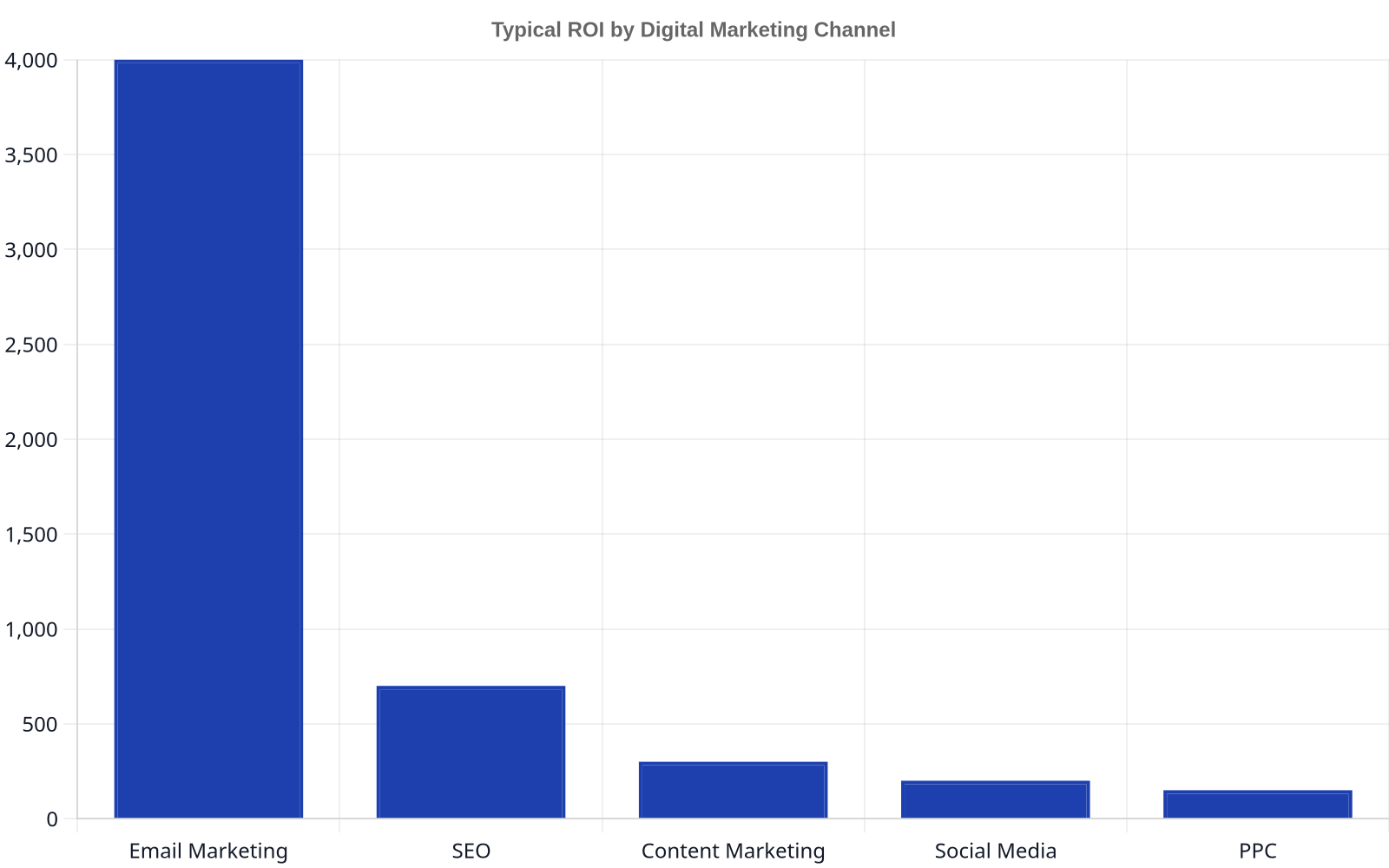
Despite the rise of social media, email remains one of the most effective marketing services for business. With an estimated average ROI of $36 for every $1 spent, it provides a direct line to your most engaged audience: people who have explicitly opted in to hear from you. Email is crucial for nurturing leads, announcing new products, and driving repeat business.
Successful email marketing is built on segmentation and personalization. Blasting your entire list with the same generic message is a recipe for high unsubscribe rates. Instead, segment your audience based on their behavior, interests, and purchase history. A customer who recently bought running shoes should receive emails about running apparel or upcoming races, not your new line of basketball sneakers. This level of personalization makes your communication feel like a helpful service rather than an intrusive advertisement.
- Best for: E-commerce businesses, companies with a lead-nurturing process, and any business that wants to build direct relationships with customers.
- Watch out for: Building a list without permission (buying lists) and failing to provide an easy unsubscribe option. This can damage your sender reputation and land your emails in the spam folder.
Understanding ROI: What to Expect from Your Marketing Spend
6. Website Development and Design
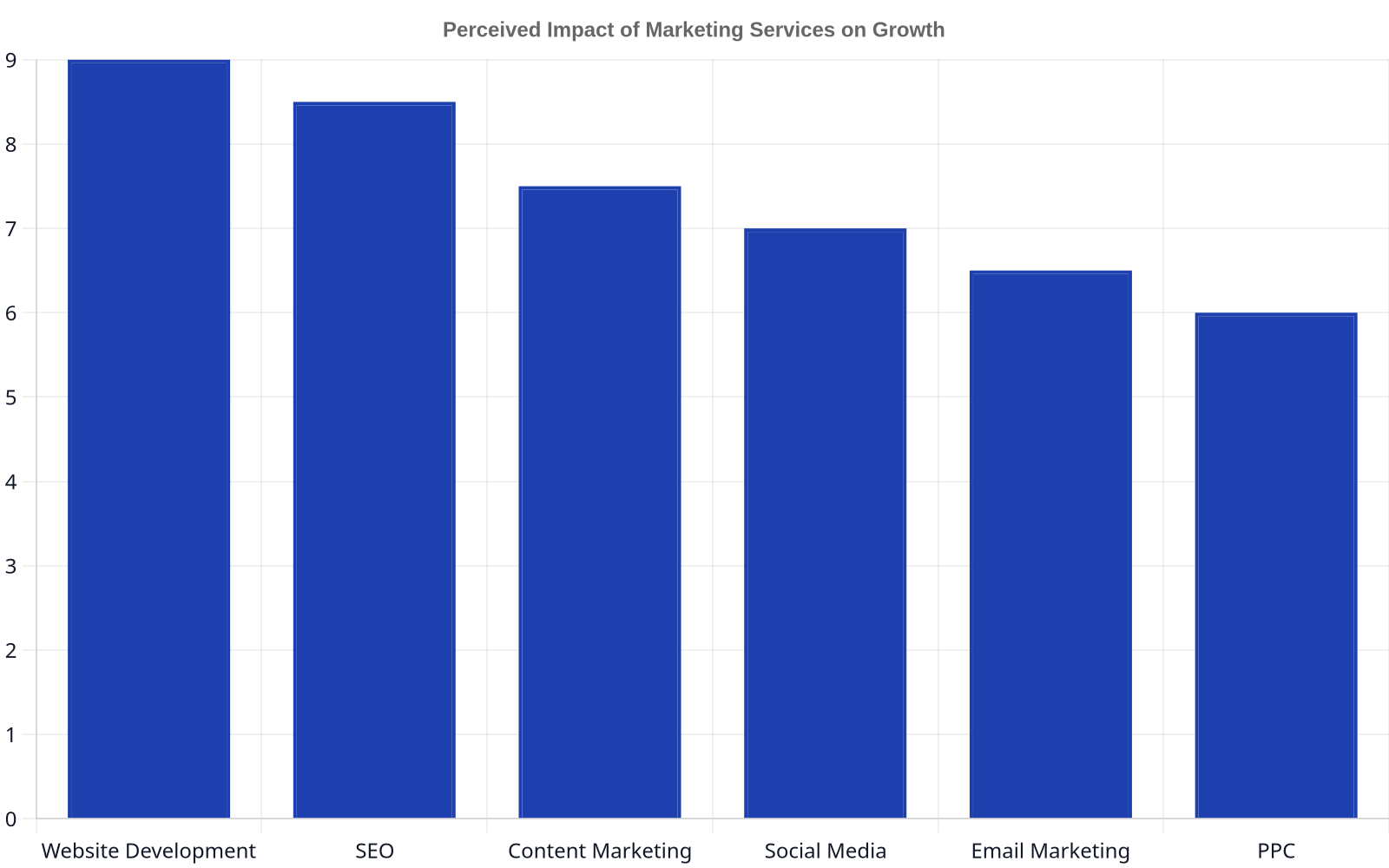
Your website is the central hub of all your marketing efforts. It’s where PPC ads direct traffic, where your SEO-optimized content lives, and where conversions happen. A slow, confusing, or outdated website will undermine even the best marketing campaigns. Professional web development ensures your site is not only visually appealing but also fast, secure, mobile-friendly, and optimized for user experience (UX). Over 50% of users say they won’t consider a business with a poorly designed mobile site.
Modern website development isn’t just about aesthetics; it’s about performance and conversion rate optimization (CRO). This means designing clear calls-to-action (CTAs), simplifying navigation, and ensuring pages load in under three seconds. For example, we build custom websites on scalable platforms, ensuring they are designed from the ground up to support growth. A well-built website turns the traffic generated by your other marketing efforts into tangible business outcomes like leads and sales.
Your website is not a digital brochure. It is your most powerful sales tool, your primary lead generation engine, and the foundation of your entire online presence.
- Best for: All businesses. A professional, high-performing website is a fundamental requirement for any serious digital marketing endeavor.
- Watch out for: Template-based sites that can’t be customized or scaled. Ensure you own your domain and have full control over your site’s backend. Avoid proprietary platforms that lock you in.
How to Choose the Right Marketing Partner
7. Branding and Identity
A brand is not a logo. A brand is the gut feeling a person has about your business. Branding & Identity services help shape that perception. This involves creating a cohesive visual identity (logos, color palettes, typography) and a consistent brand voice that resonates with your target audience. Strong branding makes you memorable and differentiates you from your competition. It’s the thread that ties all your marketing materials together.
A common pitfall is treating branding as a one-off project. Your brand identity should be a living system, guided by a comprehensive style guide that dictates how your brand looks and sounds across all channels—from your website and social media profiles to your email signatures and sales decks. This consistency builds recognition and trust. Think of iconic brands like Apple or Nike; their branding is so strong that you can recognize them from a color or a font alone.
- Best for: Startups needing to establish a market presence, businesses undergoing a pivot or rebrand, and established companies looking to solidify their market position.
- Watch out for: Designers who focus only on a logo. True branding is a strategic process that considers your mission, audience, and competitive landscape. It should result in a full brand system, not just a single graphic.
Summary Comparison of Marketing Services
| Service | Primary Goal | Time to Results | Best For |
|---|---|---|---|
| SEO | Organic Traffic, Authority | 6-12 Months | Long-term, sustainable growth |
| PPC | Immediate Leads, Sales | < 24 Hours | Quick results, testing offers |
| Content Marketing | Trust, Education, SEO | 3-6 Months | B2B, complex sales cycles |
| Social Media | Brand Awareness, Community | Ongoing | B2C, visual brands |
| Email Marketing | Lead Nurturing, Retention | Immediate | E-commerce, relationship building |
| Web Development | Conversions, User Experience | 1-3 Months (build) | All businesses |
| Branding | Differentiation, Recognition | 1-2 Months (initial) | Startups, rebranding efforts |
Choosing the right marketing services for your business depends on your goals, timeline, and budget. Most businesses benefit from an integrated approach. SEO and Content Marketing build your long-term foundation, while PPC can deliver short-term wins. All of these efforts are unified by strong Branding and a high-performing Website. The key is to stop thinking in silos and start building a cohesive marketing machine where each part supports the others.
Further reading
- Market Your Business | LA Business Navigator
- Division of Marketing Services – CDFA
- What are the 8 Types of Digital Marketing?
- 10 Effective Marketing Strategies for 2025
- 8 Types of Digital Marketing for Promoting a Business
FAQ
What are the most important marketing services for a small business?
For most small businesses, the highest-priority services are professional Website Development and foundational Search Engine Optimization (SEO). Your website is your digital storefront, and SEO ensures customers can find it. After that, a combination of local SEO and a targeted service like Google Ads (PPC) can provide the best initial return on investment.
How much should a business budget for marketing services?
Pricing models also differ; agencies may charge a monthly retainer, an hourly rate, or a fixed fee per project.
How long does it take to see results from digital marketing?
It depends on the service. PPC advertising can generate traffic and leads within hours of a campaign launch. In contrast, SEO and Content Marketing are long-term strategies. It typically takes 6 to 12 months to see significant, measurable results from organic efforts as you build authority and rankings.
How do you measure the ROI of marketing services?
ROI is measured by comparing the revenue generated from a marketing campaign to the cost of that campaign. Key metrics include Customer Acquisition Cost (CAC), Lifetime Value (LTV), and Return on Ad Spend (ROAS) for paid channels. For channels like SEO, you can track organic traffic growth, keyword rankings, and, most importantly, the number of leads or sales generated from organic search.
What’s the difference between digital marketing and traditional marketing?
Digital marketing uses online channels like search engines, social media, and email to reach customers. It is highly measurable and allows for precise targeting. Traditional marketing uses offline channels like print (newspapers, magazines), broadcast (TV, radio), direct mail, and billboards. While still effective for certain goals, its reach and results are often harder to measure than digital methods.
What should I look for when hiring a marketing agency?
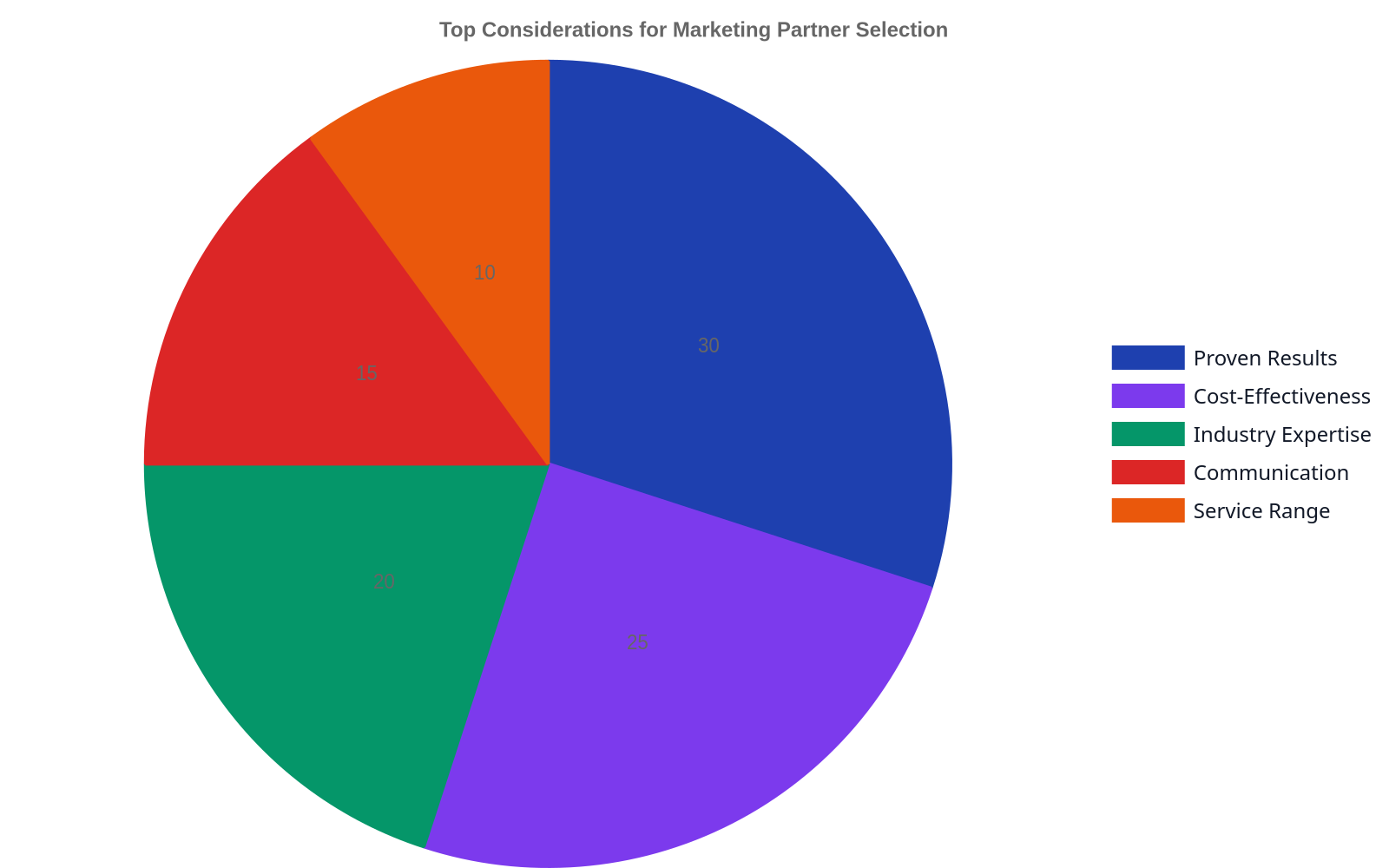
Look for an agency that seeks to understand your business goals, not just sell you a list of services. Ask for case studies and references from clients in a similar industry. A good partner will be transparent about their process, provide regular reporting on key metrics (not just vanity stats), and define what success looks like from the beginning.