
Stop asking how much a logo costs. That’s like asking a home builder for the price of a doorknob. The real question is: what is the total cost to build a brand that actually drives business growth? Brand strategy consulting costs vary dramatically, from a $3,000 project-based fee for a startup logo to over $200,000 for a comprehensive corporate rebrand. For a mid-sized business seeking a full strategy, expect to invest between $25,000 and $75,000. This investment isn’t for a deliverable; it’s for a strategic foundation that informs every marketing dollar you spend afterward.
Understanding Brand Strategy Consulting Costs
Most founders and marketers dramatically underestimate the scope of brand strategy. They fixate on the visual assets, like the logo or the website design. But a proper brand strategy engagement is a deep, analytical process that precedes any design work. It’s the foundational logic upon which your entire market presence is built. The cost reflects the expertise, research, and strategic thinking required to get this right. Misunderstand this, and you’ll end up overpaying for a pretty logo that doesn’t connect with customers or differentiate you from competitors.
What a Brand Strategist Actually Does
A brand strategist operates more like an architect than a decorator. They don’t just pick colors; they analyze the terrain (your market), understand the inhabitants (your customers), and design a blueprint for a structure (your brand) that will function effectively for years. This involves several core activities:
- Audience & Market Research: This is the bedrock. It includes quantitative surveys, one-on-one interviews with customers, focus groups, and deep analysis of competitor positioning. A strategist needs to uncover not just who your customers are, but why they buy. Companies that excel in customer intimacy generate faster growth. That intimacy begins with research.
- Brand Positioning & Messaging: Based on the research, the strategist defines your unique place in the market. What do you do better than anyone else? Who are you for? Who are you not for? This work results in a clear positioning statement, a value proposition, and a messaging framework that outlines key themes and talking points. It ensures your story is consistent everywhere.
- Brand Architecture: For companies with multiple products or sub-brands, this is critical. The strategist determines how they all relate. Is it a “branded house” like Google (Google Maps, Google Docs) or a “house of brands” like Procter & Gamble (Tide, Pampers, Gillette)? A clear architecture prevents customer confusion and internal conflict.
- Strategic Roadmap: The final output isn’t just a document; it’s an action plan. It details how the brand strategy will be rolled out across all touchpoints, from marketing campaigns to employee training. It provides a guide for making future decisions.
Deliverables vs. Outcomes
Clients often get hung up on the list of deliverables. “How many pages is the brand guide?” “Will I get five logo concepts or three?” These are the wrong questions. The true value isn’t in the PDF document; it’s in the clarity and direction the process provides. A 10-page strategy deck that leads to a 20% increase in market share is infinitely more valuable than a 100-page binder that gathers dust.
Instead of focusing on deliverables, focus on the business outcomes you want to achieve. Are you trying to enter a new market? Increase your pricing power? Attract top talent? A good brand strategy is a tool to achieve these business goals. As an agency that has developed full brand style guides, we know the guide itself is just the codification of the hard strategic work that comes before it.
A brand strategy isn’t an expense on your marketing budget. It is an investment in the core asset of your business: your reputation in the market.
Factors Influencing Brand Strategy Consulting Costs
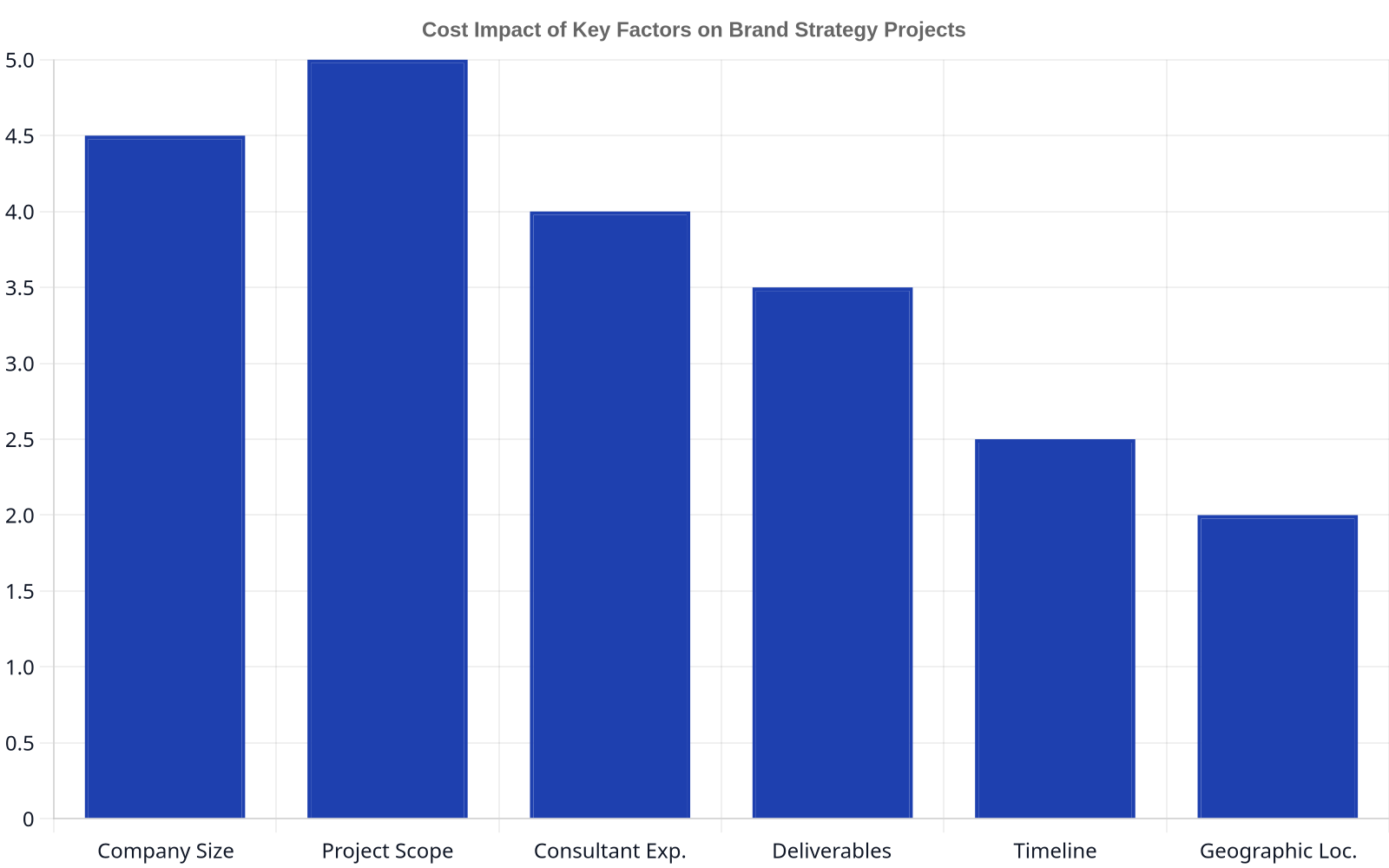
The price tag for brand strategy consulting is a function of complexity, scope, and risk. No two projects are the same, and the cost will be tailored to your specific situation. Here are the primary variables that determine the final quote you receive from an agency or consultant.

Company Size & Complexity
This is the most significant cost driver. A solo founder with a single product has a much simpler branding challenge than a 500-employee company with multiple business units operating in different countries. The research required for a global enterprise is exponentially greater.
- Startups (Pre-Seed/Seed): Typically need foundational branding: a core identity, messaging, and a basic visual system. The focus is on speed and getting a minimum viable brand to market.
- Mid-Sized Businesses ($10M – $100M revenue): Often face challenges of brand inconsistency, market expansion, or competitive pressure. They may need a brand refresh or a more sophisticated brand architecture to manage a growing product portfolio. We’ve worked with clients like OPP-HUB CONSULTANCY as they scale, and their needs evolve from basic identity to more complex digital branding ecosystems.
- Enterprises ($100M+ revenue): Engagements are complex, often involving global teams, extensive market research across multiple segments, and navigating internal politics. Rebranding a large corporation is a multi-year effort that can easily run into the high six or even seven figures.
Project Scope & Deliverables
What are you actually asking the consultant to do? A narrow project will cost less than a comprehensive one. Here’s a breakdown of common service tiers:
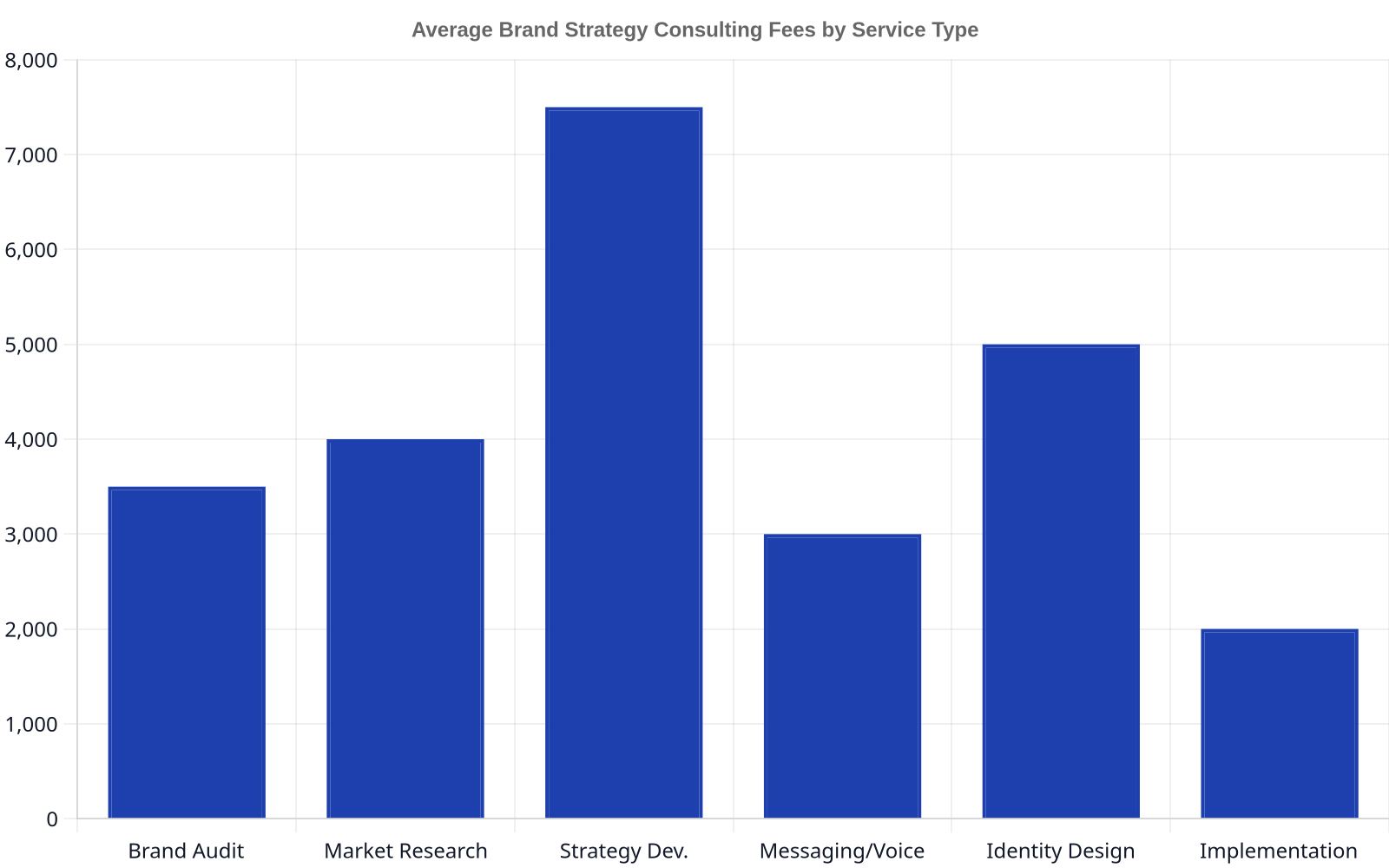
- Brand Audit & Positioning: A diagnostic project that analyzes your current brand health and defines a new strategic direction. It might cost $15,000 – $35,000.
- Full Brand Strategy & Identity: This includes the audit and positioning, but adds the creation of the visual and verbal identity: logo, color palette, typography, tone of voice, and a comprehensive brand style guide. This is often in the $25,000 – $75,000 range.
- Rebranding: A complete overhaul of an existing brand. This is the most intensive type of project, as it involves changing an established identity and managing the transition. A full rebrand for a mid-sized company can cost anywhere from $50,000 to $150,000 or more, not including the cost of implementation (e.g., new website, signage, packaging).
Agency vs. Freelancer vs. Big Consulting Firm
Who you hire has a massive impact on the price. You are paying for their overhead, process, and reputation.
- Freelance Strategists: A talented solo strategist might charge between $100 and $300 per hour. For a project, this could translate to $10,000 – $30,000. You get direct access to their expertise, but they may have limited capacity for large-scale research or design execution.
- Boutique Branding Agencies: A specialized agency of 5-50 people will typically charge project fees ranging from $25,000 to $100,000. You get a dedicated team with a proven process that integrates strategy, design, and writing. We fall into this category, building everything from brand identities to the SaaS platforms that run them.
- Global Advertising Agencies / Management Consultancies: The likes of Ogilvy, Wolff Olins, or the strategy arms of McKinsey and Deloitte operate at the highest end of the market. Engagements are rarely less than $250,000 and can exceed $1,000,000. They are hired by Fortune 500 companies for their global reach and deep analytical rigor.
A Deep Dive into Pricing Models
Consultants use a few common pricing structures. Understanding them will help you compare proposals and negotiate better terms. Each model aligns incentives in different ways, and the best one depends on the clarity of the project scope.
Fixed Project Fees
This is the most common model. The agency or consultant provides a single, all-in price for a clearly defined scope of work. For example, a $50,000 fee for a brand strategy and identity project.
- Pros: Predictable budget. You know exactly what you will pay, which is great for financial planning. It incentivizes the agency to be efficient.
- Cons: Can be inflexible. If the project’s needs change (a phenomenon known as “scope creep”), it will require a new contract or change order, which can be contentious. Agencies price in a buffer for this risk, so you might pay slightly more than the “perfect” hourly cost.
Hourly or Day Rates
With this model, you pay for the time the consultants spend on your project. Rates can vary widely:
- Junior Strategist: $75 – $150/hour
- Senior Strategist / Agency Principal: $200 – $500+/hour
- Team Blended Rate: An agency might quote a blended rate of $225/hour that averages out the cost of different team members.
- Pros: High flexibility. You only pay for the work that is done, which is ideal for projects with uncertain scopes or for ongoing advisory work.
- Cons: Unpredictable budget. The total cost is unknown upfront, which can be stressful for clients. It can also incentivize inefficiency if not managed closely.
Retainer Agreements
A retainer is a fixed monthly fee for ongoing access to a strategist or agency team. This is common for “outsourced CMO” arrangements or for brands that need continuous strategic guidance during a period of high growth or transition. Retainers can range from $2,000 per month for a few hours of an individual consultant’s time to $20,000+ per month for a dedicated agency team.
- Pros: Builds a deep, long-term partnership. The agency becomes an extension of your team, deeply understanding your business. It allows for proactive, continuous improvement rather than one-off projects.
- Cons: Can be a significant ongoing expense. You need to ensure you are getting consistent value to justify the monthly fee.
Comparison of Brand Strategy Engagement Tiers
To make this concrete, here is a table comparing what you can generally expect at different budget levels. These are industry averages; your specific quotes will vary.
| Feature | Startup Package ($5k – $15k) | Mid-Market Refresh ($25k – $75k) | Corporate Rebrand ($100k – $250k+) |
|---|---|---|---|
| Core Service | Foundational Identity | Comprehensive Strategy & Redesign | Full Transformation & Rollout |
| Research | 1-2 Competitor Reviews, Founder Interviews | Customer Surveys, 10+ Stakeholder Interviews, Full Competitive Landscape | Global Quantitative Studies, Focus Groups, Ethnographic Research |
| Strategy Output | Basic Positioning Statement, Key Messages | Detailed Brand Platform, Messaging Matrix, Brand Architecture, Tone of Voice | C-Suite Strategic Narrative, Multi-Segment Positioning, Brand Portfolio Strategy |
| Identity Design | Logo, Color Palette, Typography | Full Visual Identity System, Expanded Palette, Custom Icons, Photography Direction | Comprehensive Global Identity System, Motion Branding, Sonic Branding, Environmental Design |
| Deliverable | 10-20 Page Style Guide | 50-100 Page Brand Book + Digital Asset Library | Multi-Part Digital Brand Center with Global Guidelines & Training Modules |
| Team | Freelancer or Junior Agency Team | Senior Team at a Boutique Agency | Partner-Led Team from a Global Firm |
| Timeline | 2-4 Weeks | 3-6 Months | 6-18+ Months |
How to Budget for Brand Strategy Consulting
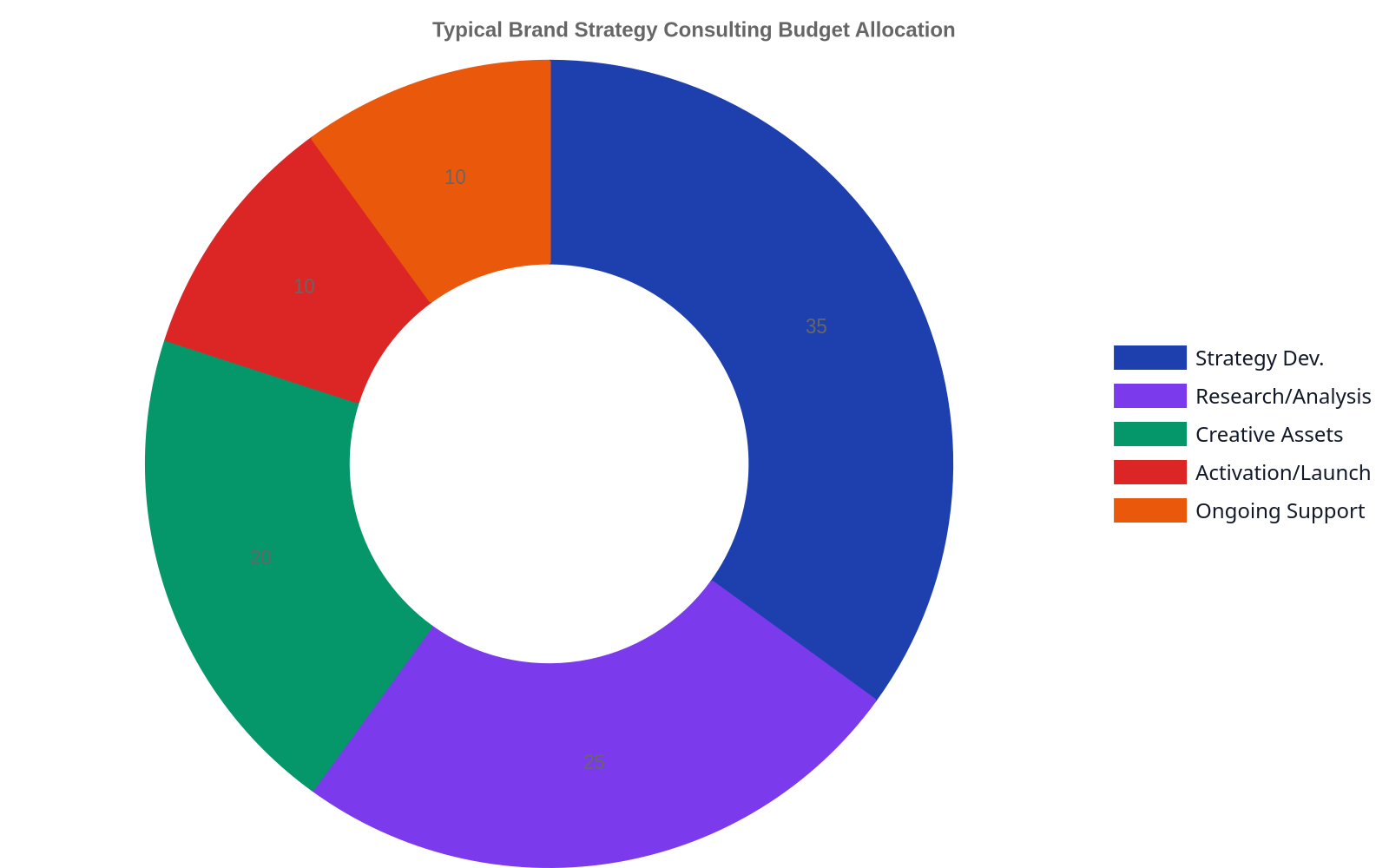
Budgeting feels like a black box, but it can be approached systematically. Instead of picking a number out of thin air, your budget should be a reflection of the value you expect to create. A the most relevant brands outperform the S&P 500 by a significant margin, underscoring the financial impact of strong branding.
The “Percentage of Marketing Budget” Method
A common rule of thumb is to allocate a portion of your annual marketing budget to brand-building. For an established company, this might be 5-10%. For a startup trying to establish itself, it could be much higher. If your annual marketing spend is $500,000, then a budget of $25,000 – $50,000 for a one-time brand strategy project is a reasonable starting point. This ensures your brand investment is proportional to your overall growth efforts.

The “Value-Based” Method
This is a more sophisticated approach. Instead of looking at costs, you look at the potential return. What is the prize? If a rebrand allows you to increase your prices by 10%, what is that worth in annual revenue? If it helps you break into a new market segment worth $5 million, what is a fraction of that worth as an investment?
For example, if your company has $2M in annual revenue and a successful brand strategy could plausibly increase that by 15% ($300,000) in year one, investing $50,000 for that return (a 6x ROI) looks very attractive. This reframes the cost from an expense to an investment in future cash flow.
The “Cost of Not Doing It” Calculation
Sometimes, the most powerful motivator is the pain of the status quo. What is the cost of not fixing your brand? Consider the following:
- Wasted Ad Spend: Marketing campaigns with unclear messaging have lower conversion rates. How much are you wasting now?
- Sales Team Inefficiency: If your sales team struggles to explain what you do, every sales call takes longer and is less effective.
- Low Employee Morale: A weak or confusing brand can make it hard to attract and retain top talent. Glassdoor research consistently shows that mission and culture are key drivers of employee satisfaction.
- Losing to Competitors: Are you consistently being outsold by a competitor with a clearer, more compelling brand story?
Summing up these hidden costs often reveals that the price of a professional brand strategy engagement is a bargain compared to the alternative.
How to Evaluate a Brand Strategy Proposal
Once you have a few proposals in hand, how do you choose? Don’t just look at the price tag. The cheapest option is rarely the best. A weak strategy can cost you far more in missed opportunities than you save on the initial fee. A strong proposal should demonstrate a clear understanding of your business and a structured process for getting to a solution.
Red Flags to Watch For
- A Fixation on Logos: If the proposal talks more about logo design than about your business challenges, the agency is a design shop, not a strategy firm.
- Lack of a Research Phase: A proposal without a dedicated discovery or research phase is a major warning sign. They are planning to design based on assumptions, not insights.
- Vague Process: “We’ll collaborate to create a powerful brand.” What does that mean? Look for a detailed, phased process (e.g., Phase 1: Research, Phase 2: Strategy, Phase 3: Identity Design, Phase 4: Guideline Development). A great agency sells you their process because their process is what creates results.
- No Access to Senior Strategists: Who is actually doing the work? You want to ensure you have direct access to the senior strategic thinkers, not just a junior account manager.
The goal of a brand strategy engagement isn’t to get a better logo. The goal is to get a clearer, more powerful business.
Questions to Ask a Potential Partner
During your calls with potential agencies, go beyond their portfolio. Dig into their thinking.
- “Can you walk me through your process for a project like ours?”
- “How do you measure the success of a branding project?” (Look for answers that tie back to business metrics, not just client happiness.)
- “What was your most challenging branding project, and why? How did you handle it?”
- “Based on what you know about our business so far, what do you see as our biggest branding challenge or opportunity?”
- “Who will be on our team, and what will their roles be?”
Their answers will tell you more about their strategic depth than any polished case study. You’re not just buying a service; you’re entering a partnership that will shape the future of your company. Choose your partner wisely.
FAQ
How much should a startup spend on brand strategy?
This usually covers market positioning, core messaging, and the creation of a basic visual identity (logo, colors, fonts). The goal is to establish a professional, credible brand that can be used to attract initial customers and investors, not to build a comprehensive global brand system.
Can I get a good brand strategy for under $5,000?
It is challenging but not impossible. At this price point, you are most likely hiring a junior freelance designer or strategist. The scope will be very limited, likely focusing on a logo and a simple one-page style guide. You will need to provide a lot of the strategic direction yourself. Be cautious of offers that seem too good to be true, as they often skip the critical research and strategy phases entirely.
Does the cost of brand strategy consulting include the website?
No, it typically does not. The brand strategy consulting cost guide covers the strategic and identity work. The implementation of that brand on a new website is a separate project with its own scope and cost. However, the brand strategy and style guide are essential inputs for the web design process. A good agency, like Dynareach, can often handle both, ensuring a smooth transition from strategy to execution.
How long does a brand strategy project take?
A foundational brand strategy project for a small to medium-sized business typically takes between 2 to 4 months. This timeline allows for proper research, stakeholder interviews, strategic development, creative exploration, and feedback rounds. A simple logo project might be done in a few weeks, while a major corporate rebrand can easily take over a year from start to finish.
Is a retainer better than a project fee?
It depends on your needs. A fixed project fee is better for a well-defined outcome, like a rebrand or a new brand launch. A monthly retainer is more suitable for ongoing strategic support, where you need continuous access to a branding expert to help navigate growth, new product launches, or market changes. For most companies undertaking a branding initiative for the first time, a project-based fee is the most common and effective model.
Investing in your brand is one of the most fundamental decisions a business can make. It clarifies your purpose, aligns your team, and builds a lasting connection with your customers. While the cost can be significant, the cost of a weak or nonexistent brand is always higher. If you’re ready to build a brand that drives real business results, let’s talk. Book a call with Dynareach today to discuss how we can create a powerful brand strategy for your business.