Stop chasing algorithm updates. The secret to durable SEO results isn’t about frantic reactions to every Google announcement, but about building a high-quality, technically sound website that deserves to rank. These SEO tips and tricks are designed to create long-term value, focusing on user experience and demonstrating expertise. To rank well in 2026, you must provide the best answer, not just the most keyword-optimized one. This means focusing on user intent, creating genuinely helpful content, ensuring your site is technically flawless, and building authority through verifiable proof, not just backlinks. For a comprehensive guide to these principles, explore modern seo strategies and techniques. The most effective strategies are those that make your site better for users, which in turn makes it more attractive to search engines.
This list isn’t a random collection of tactics. I’ve prioritized these 11 tips based on a combination of impact and effort, informed by my 12 years in the trenches of SEO. The ranking considers three main factors: recent performanceand Ahrefs showing what moves the needle today, our own agency experience helping clients like Jaora build their online presence from the ground up, and the long-term sustainability of each strategy. The goal is to give you actions that will deliver results now and compound over time, not just fleeting boosts from temporary loopholes.
1. Master Topical Authority, Not Just Keywords
Keyword stuffing has been dead for a decade, but many still approach content with a “one keyword, one page” mentality. This is a losing battle. Google’s algorithms, especially with the Helpful Content Update (HCU), now prioritize sites that demonstrate deep expertise on a given topic. This is called topical authority. Instead of writing one article on “SaaS marketing,” you need to build a comprehensive cluster of content covering every related sub-topic: “SaaS content strategy,” “SaaS link building,” “PLG marketing funnels,” “enterprise SaaS sales,” and so on. By creating an interconnected web of expert content, you signal to Google that you are a definitive source for that entire subject area.
We apply this strategy for our clients by starting with in-depth keyword research to map out an entire topic cluster, not just a few high-volume terms. A 2023 study by Backlinko found that pages with high topical authority rank faster and higher. Your goal is to own the conversation, not just a single search query.
- Best for: Businesses in competitive niches where expertise is a key differentiator (e.g., finance, healthcare, B2B tech).
- Watch out for: Spreading yourself too thin. It’s better to be an authority on one or two core topics than to have a superficial presence across ten.
2. Refresh and Relaunch Existing Content
Too many marketers are stuck on a content treadmill, constantly publishing new posts while old ones decay. Your existing content is a goldmine. An “historical content update” or “content relaunch” involves identifying pages with declining traffic or outdated information and giving them a complete overhaul. This is more than just changing the date. It means updating stats, adding new sections to answer user questions, replacing old images, and improving internal linking. We recently did this for a client and saw a significant increase in organic traffic to the updated pages within a few weeks.
Use Google Search Console to find pages that have lost the most clicks over the last 6-12 months. Tools like Ahrefs’ Site Explorer can show you “content decay.” A report from Ahrefs details how to identify these opportunities. Relaunching content is one of the highest-ROI SEO activities you can perform because you are improving an asset that already has some level of authority and indexing history.
- Best for: Sites with a large existing library of blog posts or articles (50+).
- Watch out for: Simply changing the publication date without making substantial improvements. Google’s algorithms are smart enough to detect low-effort updates.
The Impact of SEO: Why It Matters
3. Prioritize Internal Linking for “Link Equity” Flow
Backlinks get all the attention, but a strategic internal linking structure is arguably more important for on-page SEO. Internal links do two things: they help Google crawl and understand the relationship between your pages, and they distribute “link equity” (ranking power) throughout your site. A page with many high-quality backlinks pointing to it can pass that authority to other pages it links to. This is fundamental to building topical authority clusters.
When you publish a new blog post, you should immediately find at least 3-5 older, relevant articles on your site to link from. Use descriptive, natural anchor text, not just “click here.” For example, instead of linking on a generic phrase, you could write “our guide to advanced SEO strategies provides more detail.” This helps users and search engines understand what the linked page is about. We make this a core part of our on-page optimization service, as it directly impacts how both users and crawlers navigate a site.
- Best for: All websites, but especially large sites with hundreds or thousands of pages (e.g., e-commerce, publications).
- Watch out for: Over-optimizing anchor text. Don’t use the exact same keyword for every link; vary it naturally to avoid looking manipulative.
4. Optimize for “People Also Ask” and Featured Snippets
More than 12% of search results now display a People Also Ask (PAA) box, according toboxes, along with Featured Snippets (the answer boxes at the top of the results), are a direct line to Position Zero. To capture them, you need to structure your content to provide direct, concise answers to common questions. Start by looking at the PAA boxes for your target keywords. What questions are being asked?
Answer those exact questions in your content using a clear heading (H2 or H3) followed by a direct, paragraph-long answer. Use question-based headings whenever possible. For example, instead of a generic H2 like “Keyword Strategy,” use “How Do I Find Keywords for My Niche?” This formatting makes it easy for Google to parse your content and pull it into a snippet. This is a core SEO tip that directly targets high-visibility SERP features.
- Best for: Informational content that answers specific user questions (blogs, guides, FAQs).
- Watch out for: Answering questions with overly long or complex sentences. Snippets favor brevity and clarity.
5. Implement Schema Markup for Rich Results
Schema markup is a form of microdata that you add to your website’s HTML to help search engines understand your content more effectively. It’s like giving Google a labeled diagram of your page. Implementing schema can lead to “rich results” in the SERPs, such as star ratings for reviews, cooking times for recipes, or event dates. These visually enhanced listings can improve click-through rates (CTR).
There are hundreds of schema types available at Schema.org, but some of the most impactful for businesses include Organization, LocalBusiness, Product, Review, FAQPage, and Article. While it sounds technical, plugins like Rank Math or Yoast SEO for WordPress can automate much of the implementation. For custom websites, our team often handles this as part of our technical SEO services to ensure everything is structured perfectly.
- Best for: E-commerce sites, local businesses, publishers, and any site with reviews or structured data.
- Watch out for: Using the wrong schema type or having errors in your implementation. Use Google’s Rich Results Test tool to validate your code.
6. Conduct a SERP Analysis Before You Write a Single Word
So many SEO campaigns fail because they are built on assumptions. Before creating a piece of content, you must analyze the current first-page results for your target keyword. This is the only way to understand what Google considers a “good” result for that query. What is the dominant content format (blog posts, videos, product pages)? What is the average word count? What specific sub-topics are the top-ranking pages covering? What is the user intent?
For example, if you search for “best running shoes” and the entire first page is e-commerce category pages and group reviews, your single-product review blog post will likely fail. You have to match the intent and format that Google is already rewarding. Tools like SurferSEO or Clearscope can automate this analysis, but you can do it manually by simply studying the search results page. This single step will save you from wasting countless hours on content that was destined to fail from the start.
- Best for: All content creation efforts, without exception.
- Watch out for: Copying the top results. The goal is to understand the successful template and then create something even better, more comprehensive, or with a unique perspective.
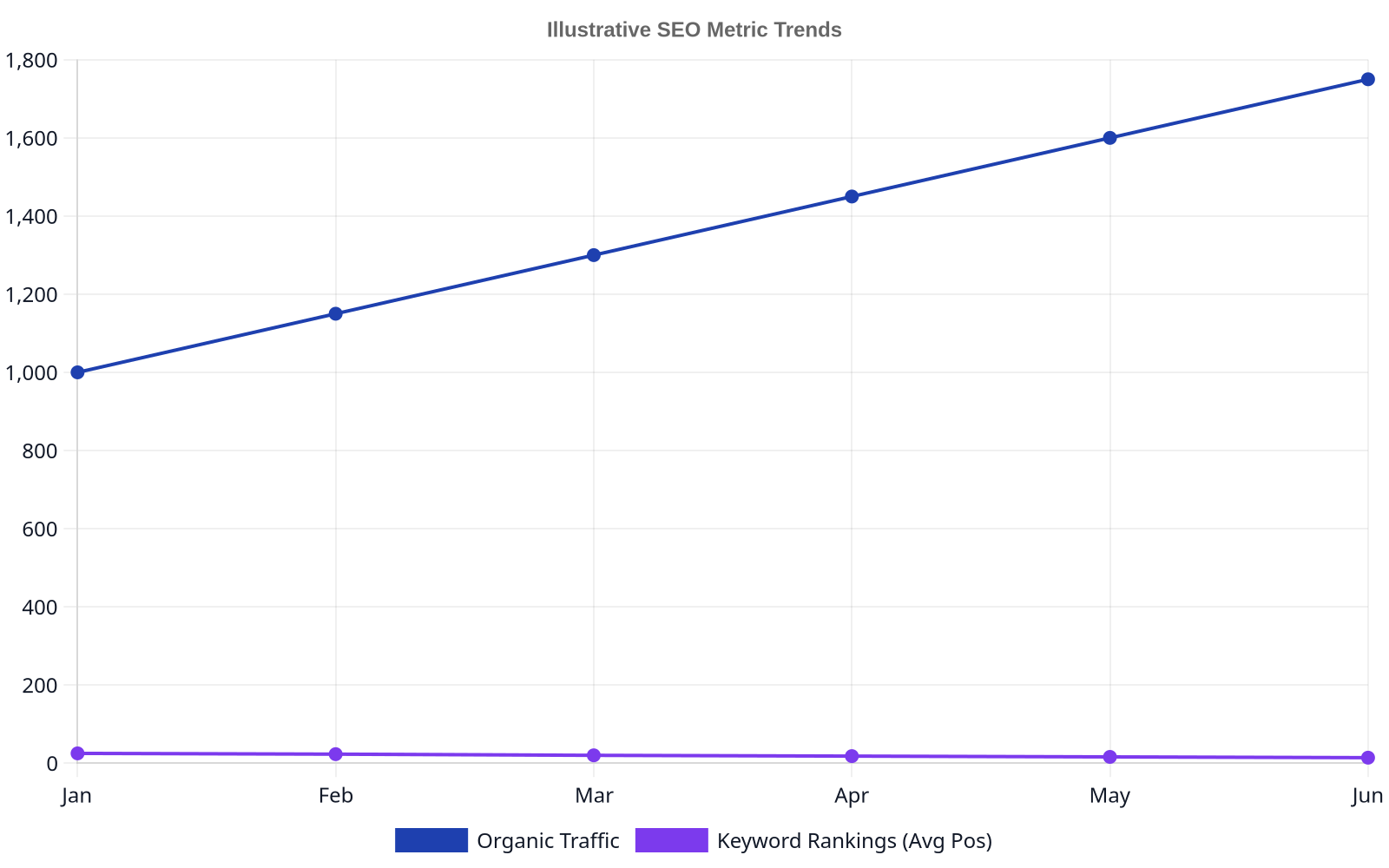
Key SEO Metrics to Track for Success
7. Build Authority with Digital PR and Unlinked Mentions
High-quality backlinks from authoritative websites remain a powerful ranking signal. But begging for guest posts is a slow, painful process. A more scalable approach is “digital PR,” where you create link-worthy assets (like data studies, infographics, or free tools) and promote them to journalists and bloggers. When they write about your asset, they link to you. This builds powerful, editorially given links.
Another underutilized tactic is finding “unlinked brand mentions.” This is where a website has written about your company, product, or spokesperson but hasn’t linked back to your site. You can use tools like Ahrefs’ Content Explorer or BuzzSumo to set up alerts for your brand name. When you find a mention, you simply reach out to the author or editor and politely ask them to add a link. It’s one of the easiest ways to build high-quality links, with a good success rate.
- Best for: Brands that want to build high-authority links at scale.
- Watch out for: Creating “linkbait” that has no real connection to your business. The asset should be relevant to your products or services to attract the right audience.
8. Optimize for Core Web Vitals and Page Experience
Google has been clear: user experience is a ranking factor. The Page Experience update, which includes the Core Web Vitals (CWV), measures how users perceive the experience of interacting with a web page. The three main metrics are:
- Largest Contentful Paint (LCP): How long it takes for the main content to load. Aim for under 2.5 seconds.
- First Input Delay (FID): How long it takes for the page to become interactive. Aim for under 100 milliseconds.
- Cumulative Layout Shift (CLS): How much the page layout unexpectedly moves around during loading. Aim for a score of less than 0.1.
A slow, janky website isn’t just annoying for users; it’s a direct signal to Google that your site is low-quality. Fixing technical issues is no longer optional for serious SEO.
A 2021 study by Deloitte showed that even a 0.1-second improvement in site speed can boost conversions by 8%. Use Google’s PageSpeed Insights tool to check your scores. Common culprits for poor CWV include large images, slow server response times, and render-blocking JavaScript. Addressing these technical issues is foundational.
- Best for: All websites. This is a universal ranking factor.
- Watch out for: Focusing only on desktop. Google uses mobile-first indexing, so your mobile performance is what truly matters for ranking.
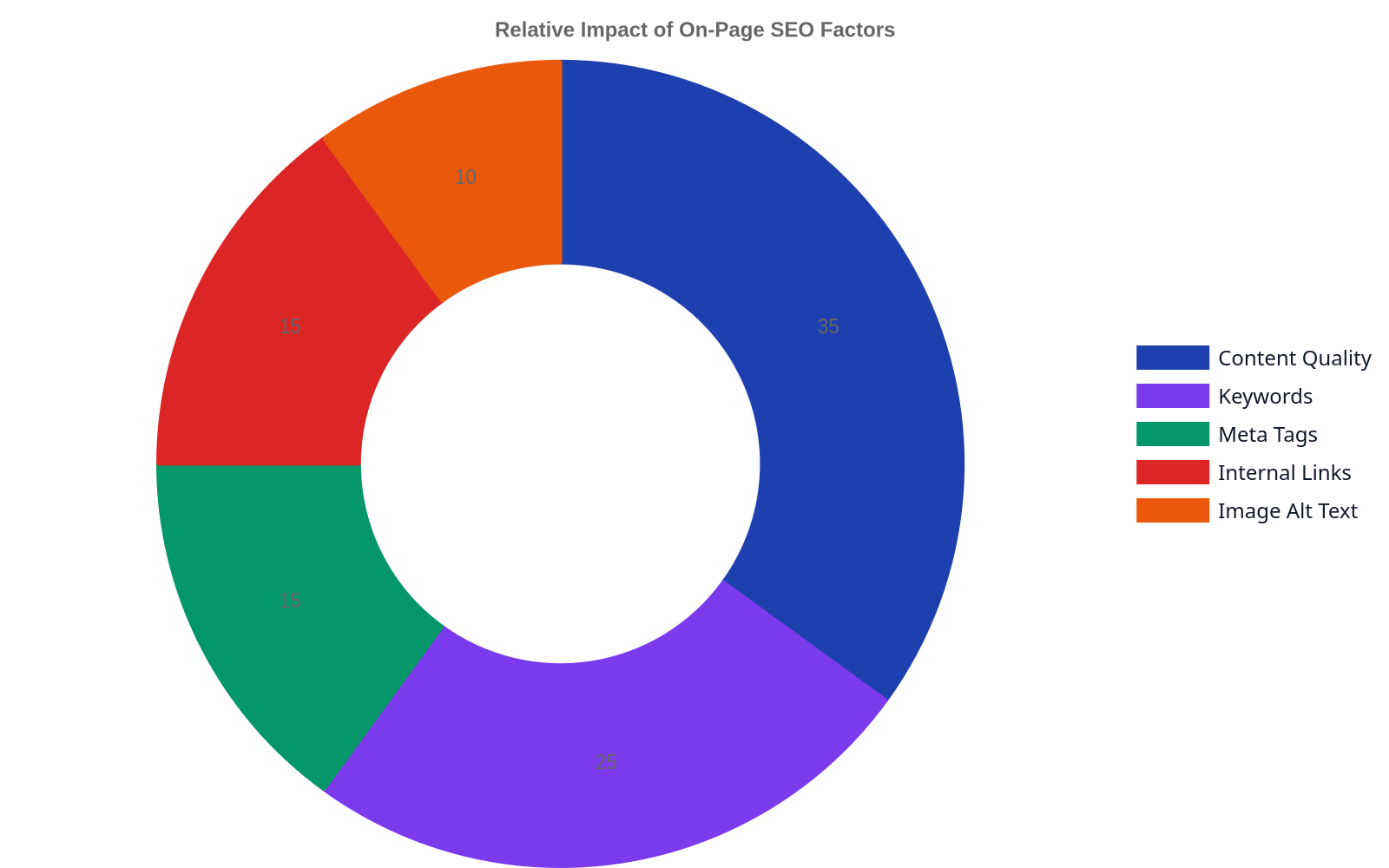
Understanding On-Page SEO Best Practices
9. Write SEO-Driven Title Tags and Meta Descriptions
Your title tag and meta description are your sales pitch in the search results. They are the first thing a user sees and are critical for earning the click. A high-ranking position is useless if no one clicks on your result. Your title tag should include your primary keyword (ideally near the beginning) and be between 50-60 characters to avoid truncation. Your meta description doesn’t directly impact rankings, but it heavily influences CTR. It should be a compelling, 150-160 character summary of what the page offers and why the user should click.
Test different title and description formats to see what works best. Include calls to action (“Learn more,” “Shop now”), mention your unique value proposition, and use the target keyword naturally. A higher CTR signals to Google that your page is a good match for the query, which can indirectly lead to higher rankings over time.
- Best for: Every single page on your website.
- Watch out for: Keyword stuffing. “SEO Tips, SEO Tricks, SEO Guide | SEO Company” is a terrible title tag that will deter users and may get rewritten by Google anyway.
10. Use Video to Dominate SERPs and Engage Users
Video is a powerhouse for SEO. Google owns YouTube, and it frequently features video carousels in the search results, especially for “how-to,” review, and informational queries. By creating video content, you open up a second front for ranking on Google, in addition to ranking directly on YouTube, the world’s second-largest search engine. Embedding relevant videos on your pages can also increase “dwell time”the amount of time users spend on your page. Increased dwell time is a positive user engagement signal.
You don’t need a Hollywood production studio. A simple, well-lit video explaining a concept from your blog post can be incredibly effective. Make sure to optimize your video on YouTube with a keyword-rich title, a detailed description (with a link back to your website), and relevant tags. This dual-platform strategy can significantly expand your search footprint.
- Best for: How-to guides, product demonstrations, expert interviews, and complex topics that are easier to show than to tell.
- Watch out for: Slowing down your page. Ensure your embedded videos are lazy-loaded so they don’t impact your Core Web Vitals.
11. Focus on E-E-A-T: Experience, Expertise, Authoritativeness, Trustworthiness
This isn’t a single tactic but an overarching principle that governs modern SEO. Google’s Quality Rater Guidelines emphasize the importance of E-E-A-T. This means your content must be created by a credible source, be accurate, and be trustworthy. The latest addition of “Experience” means Google wants to see that the content is based on real, first-hand use of a product or a deep understanding of a process.
How do you demonstrate E-E-A-T?
- Author Bios: Show who wrote the content and why they are qualified.
- Cite Sources: Link out to authoritative studies and data to back up your claims.
- Show Your Work: Use case studies, testimonials (like the one from our client, Jaora), and original research. Show, don’t just tell.
- First-Hand Experience: Use phrases like “in our experience,” “when we tested,” or “our data shows” to demonstrate hands-on knowledge.
Sites that lack E-E-A-T are the primary targets of Google’s helpful content and core updates. Building a brand that users and Google can trust is the ultimate SEO strategy.
- Best for: All websites, but especially critical for “Your Money or Your Life” (YMYL) topics like health, finance, and law.
- Watch out for: Anonymous, low-quality content. It will be actively suppressed by Google’s systems.
Getting found on Google in 2026 isn’t about finding secret loopholes. It’s about building a better, more helpful, and more authoritative website than your competitors. By focusing on these durable strategies, from mastering topical authority to demonstrating real experience, you can build a powerful engine for organic growth.
At Dynareach, we help businesses implement these very strategies to build a professional brand and a website that gets found. If you’re ready to move beyond temporary tricks and build a real SEO asset, let’s talk. Book a call with our team today.
FAQ
How long does it take for SEO to work?
For new websites, it typically takes 6 to 12 months to see significant traction from SEO. The timeline depends on factors like your industry’s competitiveness, your budget, and the quality of your execution. Results aren’t immediate; SEO is a long-term investment where momentum builds over time as you build authority and a library of quality content.
What is the most important SEO factor?
There is no single “most important” factor. Modern SEO is a holistic discipline. However, high-quality, helpful content that satisfies user intent and demonstrates expertise (E-E-A-T) is the foundation. Without it, technical optimizations and backlinks will have a limited impact. Google’s primary goal is to provide users with the best possible answer to their query.
Can I do SEO myself?
Yes, you can absolutely handle many aspects of SEO yourself, especially on-page and content-related tasks. Using the tips above and resources like Google’s own Search Central documentation, you can build a solid foundation. However, more complex areas like technical SEO, advanced schema, and large-scale link building often require specialized expertise.
What is the difference between on-page and off-page SEO?
On-page SEO refers to optimizations you make on your website, such as improving content, title tags, internal links, and page speed. You have direct control over these factors. Off-page SEO refers to actions taken outside your website to improve its authority, primarily through earning high-quality backlinks from other reputable sites.
How many keywords should I focus on?
Instead of focusing on a specific number of keywords, focus on topics. For each core service or product you offer, develop a “topic cluster” of content that covers all related user questions. A single page can rank for hundreds of related long-tail keywords if it comprehensively covers a topic. Your goal is to build topical authority, not just rank for a handful of vanity terms.