
Stop chasing algorithm updates. The most effective SEO strategies to generate traffic aren’t about fleeting tricks; they are about building a durable asset that serves user needs so well that Google has no choice but to rank you. For a deeper dive into these methods, explore modern seo strategies. The best approach involves creating a comprehensive content moat, supported by strong technical fundamentals and authoritative signals, which together drive sustainable organic growth. This means focusing on pillar pages for core topics, producing original research that earns links, and ensuring your site’s architecture is flawless for crawlers and users alike. It’s a long-term investment, not a quick fix.
Methodology: How We Ranked These SEO Strategies
To create this list, we didn’t just pull the most common advice from other blogs. We ranked these 11 strategies based on a weighted analysis of three factors: Impact , Effort , and Durability . Impact was gauged by the potential for significant organic traffic growth, measured by case studies and industry data. Effort considers the man-hours and resources required for successful implementation. Durability assesses how resilient the strategy is to algorithm changes. Understanding the difference between strategy and tactics is crucial for effective implementation, which is why we also focus on seo strategy execution. We drew on our own experience helping clients like Wolverine Assemblies rebuild their online presence and on aggregated data from leading SEO platforms to prioritize what delivers real-world results, not just theoretical gains.

Key Pillars of Effective SEO
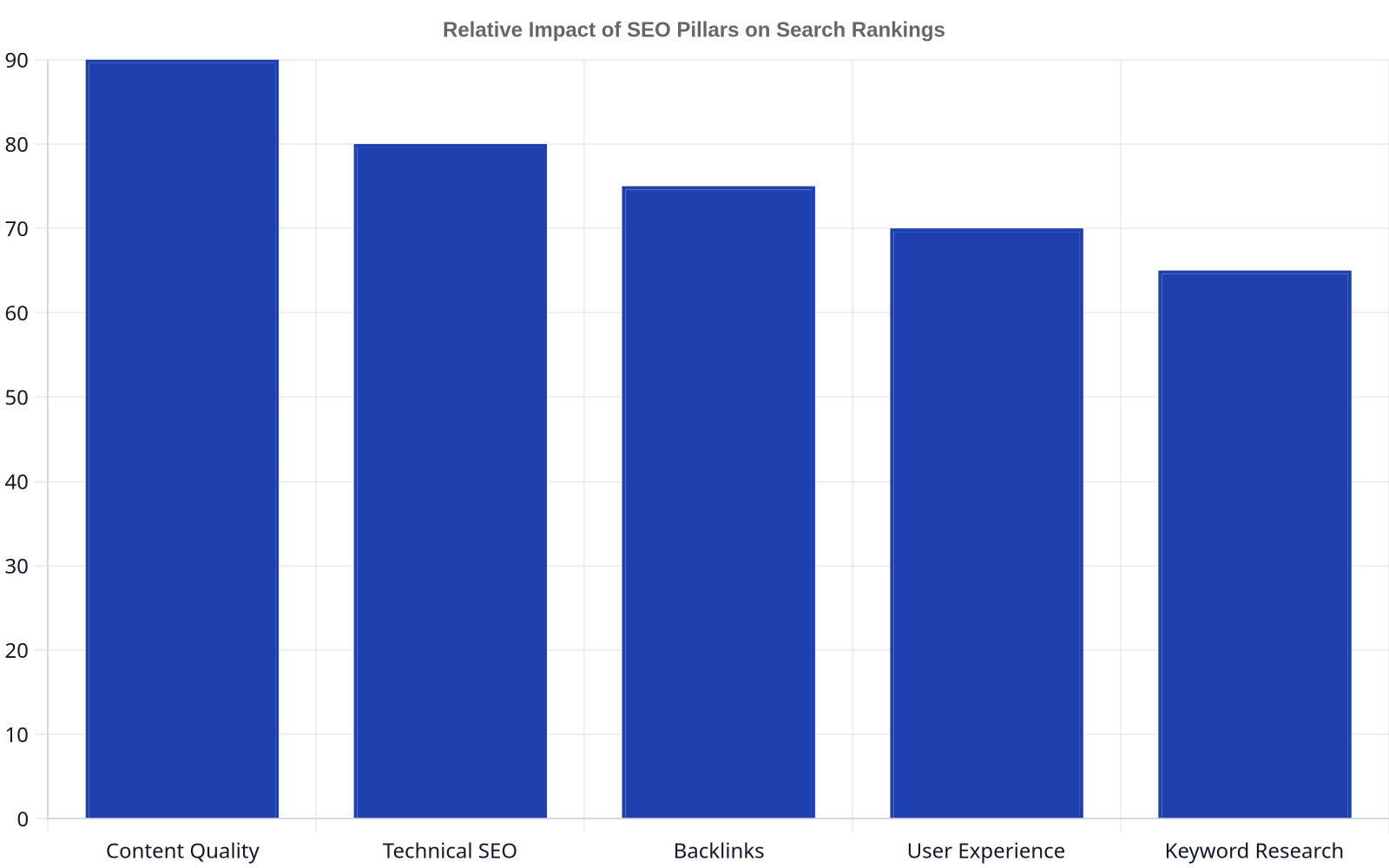
Before we get into specific tactics, it’s critical to understand the foundation. Success in SEO rests on three core pillars: Content, Technical SEO, and Authority (backlinks).
Content: This is the what and why* of your site. It’s the information that answers a searcher’s query, solves their problem, or entertains them. High-quality content is the price of entry.
Technical SEO: This is the how*. It ensures search engines can efficiently find, crawl, understand, and index your content. Without a solid technical base, even the best content can be invisible.
- Authority: This is your site’s reputation. It’s largely built through high-quality backlinks from other reputable websites, signaling to Google that your content is trustworthy and valuable.
No single strategy works in a vacuum. The tactics below work best when they reinforce each other across these three pillars.
1. Create a Pillar Page and Topic Cluster Model
Instead of writing one-off blog posts, organize your content around core topics. A pillar page is a comprehensive, central resource on a broad subject (e.g., SaaS Marketing). This page links out to more specific “cluster articles (e.g., Pricing Strategies for SaaS,” Content Marketing for SaaS Startups). This structure signals to Google that you have deep expertise on the topic. Study, this model improves rankings because it creates a clean, organized site architecture and passes authority between related pages.
This approach works because it mirrors how search engines are evolving. Google’s algorithms, particularly with advancements like BERT and MUM, are better at understanding context and topical relationships. By creating a dense web of internal links around a central theme, you’re providing clear signals about what your site is about, making it easier for Google to rank you for high-value, broad keywords.
- Best for: Businesses in complex industries or those wanting to establish authority on a core business topic.
- Watch out for: Pillar pages require significant content investment and must be updated regularly to remain the authoritative source.
- Statistic: An Ahrefs study found that pages with more internal links pointing to them tend to rank higher in Google.
2. Publish Original Research and Data Studies
Want to build authority and attract high-quality backlinks organically? Stop regurgitating what everyone else is saying and create new knowledge. Conduct a survey, analyze your internal data, or perform a novel experiment and publish the findings. This positions you as a primary source and a thought leader. Other blogs, journalists, and academics will cite and link to your study, building your site’s domain authority.
For example, Backlinko’s analysis of 11.8 million Google search results is a masterclass in this strategy. It’s a definitive piece of research that has earned thousands of backlinks because it provides unique, data-driven insights that others want to reference. You don’t need that scale to succeed. Even a small, niche-specific survey can become a valuable linkable asset if it offers fresh data. We have used this approach as part of our core Search Engine Optimization services to build our clients’ domain authority.
- Best for: Any business with access to unique data or the resources to conduct a survey.
- Watch out for: This requires a real investment in data collection, analysis, and design. Poorly executed research can damage credibility.
- Statistic: According to a 2020 survey by BuzzSumo and Mantis Research, 56% of marketers who use original research say it met or exceeded their expectations.
3. Master On-Page SEO Fundamentals
On-page optimization is the practice of optimizing individual web pages to rank higher and earn more relevant traffic. It goes beyond just putting a keyword in the title. It involves crafting compelling title tags and meta descriptions that increase click-through rates (CTR), using header tags (H1, H2, H3) to structure content logically, and writing clear, concise URLs.
For example, optimizing your images with descriptive alt text isn’t just an accessibility best practice; it helps your images rank in Google Images, a significant source of traffic for many sites. Similarly, ensuring your primary keyword appears naturally in the first 100 words signals relevance to search engines immediately. These small, page-level details compound to create a powerful overall effect, telling search engines exactly what your content is about and which queries it satisfies.
- Best for: All websites. This is a non-negotiable, fundamental practice.
- Watch out for: Keyword stuffing. The goal is natural language that serves the user, not forcing keywords where they don’t belong.
- Statistic: Google itself states that a good title tag “is a critical piece of information that helps us to understand what the page is about.” A high CTR is a known ranking signal for Google.

4. Conduct a “Content Gap” Analysis
A content gap analysis identifies topics your competitors are ranking for, but you aren’t. Using a tool like Semrush or Ahrefs, you can enter the domains of several competitors and find the keywords they rank for that you don’t. This process gives you a pre-vetted list of content ideas that have proven demand in your market.
This is one of the most efficient ways to expand your organic footprint. Instead of guessing what your audience wants, you’re using competitor data to find valuable keywords with existing search volume. For instance, if you sell project management software and your top three competitors rank for “best Gantt chart software,” but you have no content on the topic, that’s a high-priority content gap to fill.
- Best for: Businesses in competitive markets looking for an edge.
- Watch out for: Don’t just copy your competitor’s article. The goal is to identify the gap, then create a piece of content that is significantly better, more comprehensive, or offers a unique perspective.
- Statistic: A content gap analysis is a core part of a successful Keyword research Strategy, allowing you to find dozens or even hundreds of new keyword opportunities.
Don’t just aim to match your competitors’ content. Your goal should be to create the definitive resource on the topic, making their version obsolete.
5. Focus on Core Web Vitals and Page Experience
Google’s Page Experience update made technical SEO elements like site speed and mobile-friendliness direct ranking factors. The Core Web Vitals (CWV) are a specific set of metrics that measure this experience: Largest Contentful Paint (LCP), First Input Delay (FID), and Cumulative Layout Shift (CLS). In simple terms, Google wants to rank sites that load fast, are responsive, and are visually stable.
A slow, clunky website doesn’t just frustrate users; it actively harms your rankings. Delays in mobile load times can impact conversion rates. Use Google’s PageSpeed Insights tool to audit your site and get a prioritized list of technical fixes, such as compressing images, enabling browser caching, and minimizing JavaScript.
- Best for: All websites, but especially crucial for e-commerce and media sites where user experience directly impacts revenue.
- Watch out for: Chasing a perfect 100/100 score. Aim for “good” scores across the board and focus on the fixes that provide the biggest user-facing improvements.
- Statistic: Google confirmed that sites must meet “good” thresholds for all three Core Web Vitals to gain the full ranking benefit.
6. Update and Relaunch Old Content
Not all SEO strategies to generate traffic require creating something from scratch. Your existing content is a valuable asset. Identify pages that have decent rankings but have lost traffic over time, or articles that are factually outdated. Update them with new information, fresh statistics, and better examples. Then, relaunch the post as if it were new, even changing the publish date.
We call this “historical optimization.” By adding new sections, improving the accuracy, and adding new internal links, you can often achieve a significant ranking boost with a fraction of the effort of a new post. A HubSpot case study showed they more than doubled the monthly leads generated from old posts they optimized. Look for posts ranking on page two or three of Google; these are often prime candidates for an update and relaunch.
- Best for: Businesses with an established blog or content library.
- Watch out for: Don’t just change the date. The content must be substantially improved with new value for the user.
- Statistic: Found that republishing and updating content can lead to a significant increase in organic traffic.
7. Build Topic Authority with Supporting Content
Ranking for highly competitive “head” terms is difficult. A more effective strategy is to build topical authority by creating a series of in-depth articles that answer specific, long-tail questions related to that topic. For example, instead of just trying to rank for “email marketing,” write detailed guides on “how to write a welcome email sequence,” “A/B testing email subject lines,” and “improving email deliverability.”
This approach works because it captures users at all stages of the funnel and shows Google you have comprehensive expertise. These long-tail keywords are often less competitive and have higher conversion intent. By thoroughly covering a subject, you create a web of supporting content that boosts the authority of your main pillar page and helps you rank for the bigger terms over time.
- Best for: SaaS companies, educational platforms, and service businesses.
- Watch out for: Creating thin or repetitive content. Each supporting article must provide unique, standalone value.
- Statistic: Long-tail keywords, despite their lower individual search volume, make up around 70% of all web searches, according to
8. Optimize for People Also Ask (PAA) Boxes
“People Also Ask” boxes are a treasure trove of user intent. These are the questions Google shows in the search results that are related to the original query. They tell you exactly what other information users are looking for. By creating clear, concise answers to these questions in your content and using them as H2 or H3 subheadings, you can capture these featured snippet opportunities.
Answering a PAA question directly on your page can get you featured in the search results, driving highly qualified traffic and establishing your site as an authority. Use a tool to scrape PAA questions related to your target keywords, and incorporate them into your content outline. The best answers are typically a single, dense paragraph (40-60 words) that directly answers the query.
- Best for: Any content-driven website looking for quick wins and featured snippet placements.
- Watch out for: Don’t just list questions and answers. Integrate them naturally into a well-structured, readable article.
- Statistic: “People Also Ask” boxes appear on many Google searches.
9. Pursue “Help a Reporter Out” (HARO) Link Building
Help a Reporter Out (HARO) is a service that connects journalists with sources for their stories. Three times a day, you get an email with queries from reporters at publications ranging from local blogs to The New York Times. By providing a timely, expert quote, you can earn a high-authority backlink and media mention.
This is a proactive way to build powerful links from news and media sites that would otherwise be difficult to acquire. The key is to respond quickly with a genuinely helpful, non-promotional answer. A single link from a major publication can have a more significant impact on your domain authority than dozens of links from smaller blogs.
- Best for: Experts and business leaders who can provide genuine insights on topics in their industry.
- Watch out for: It’s highly competitive. Your response must be fast, well-written, and directly answer the reporter’s request.
- Statistic: While success rates vary, consistent effort with HARO is a widely cited tactic for earning links from publications with high Domain Authority (DA).
10. Optimize for Google Discover
Google Discover is a personalized content feed that appears on the Google mobile app and Chrome’s mobile homepage. It pushes content to users based on their interests, even if they aren’t searching for it. Getting your content into Discover can drive a massive, albeit sometimes unpredictable, surge of traffic.
To optimize for Discover, you need high-quality, visually appealing content. The most crucial factor is a large, high-resolution featured image. Your headlines should be compelling but not clickbait. While there’s no “Discover” section in Google Search Console to target directly, enabling it for your site and producing engaging, evergreen, and trending content increases your chances of being featured.
- Best for: Media sites, blogs, and e-commerce stores with visually compelling products.
- Watch out for: Discover traffic can be inconsistent. Don’t build your entire traffic strategy around it, but treat it as a powerful bonus channel.
- Statistic: Google requires images to be of a sufficient width to be eligible for the large-format Discover preview, which has a higher click-through rate.
Understanding Organic Traffic Growth
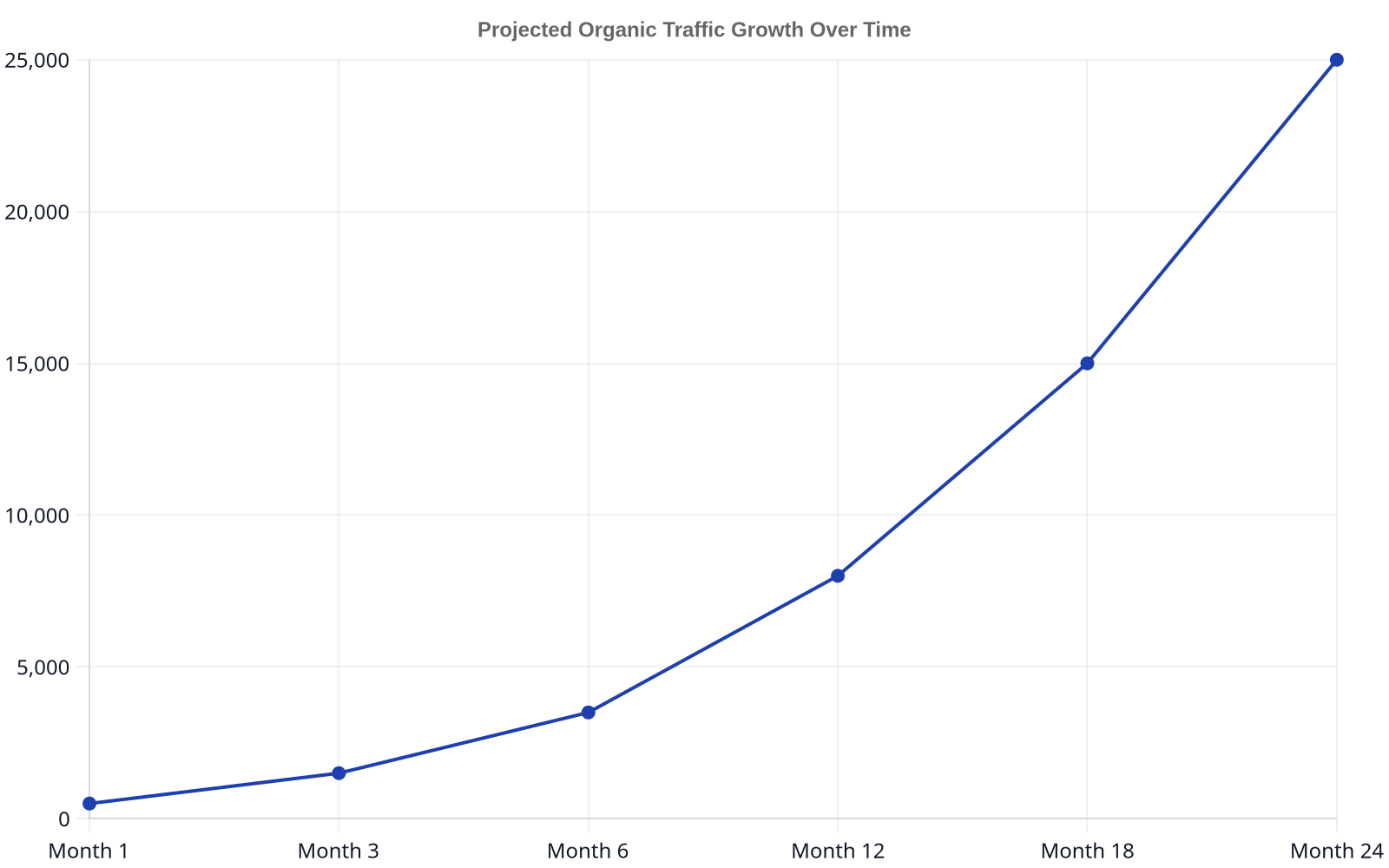
Many of these strategies require patience. SEO is not an overnight fix. Organic traffic growth is a compounding process. Initial efforts may show slow results, but as you build content, earn links, and establish authority, the growth curve steepens. A consistent, strategic approach over 6-12 months is where you see transformative results. This is how a site goes from obscurity to a reliable engine for leads and sales, just as we saw with our client Wolverine Assemblies after we rebuilt their site with an SEO-first approach.
Summary of SEO Strategies
| Strategy | Best For | Key Metric to Watch |
|---|---|---|
| Pillar & Cluster Model | Establishing deep authority | Rankings for broad head terms |
| Original Research | Building high-authority links | Number of referring domains |
| On-Page SEO | All websites (foundational) | Click-Through Rate (CTR) |
| Content Gap Analysis | Competitive niches | New keyword rankings |
| Core Web Vitals | E-commerce & media sites | PageSpeed Insights scores |
| Content Relaunch | Sites with existing content | Traffic to updated pages |
| Supporting Content | Building topical authority | Long-tail keyword traffic |
| “People Also Ask” | Quick traffic & snippet wins | Featured snippet ownership |
| HARO Link Building | Experts seeking media links | Links from high-DA sites |
| Google Discover | Visually-driven content | Clicks from Discover in GSC |
| Internal Linking | All websites | Pages per session |
Measuring SEO Success: Key Metrics
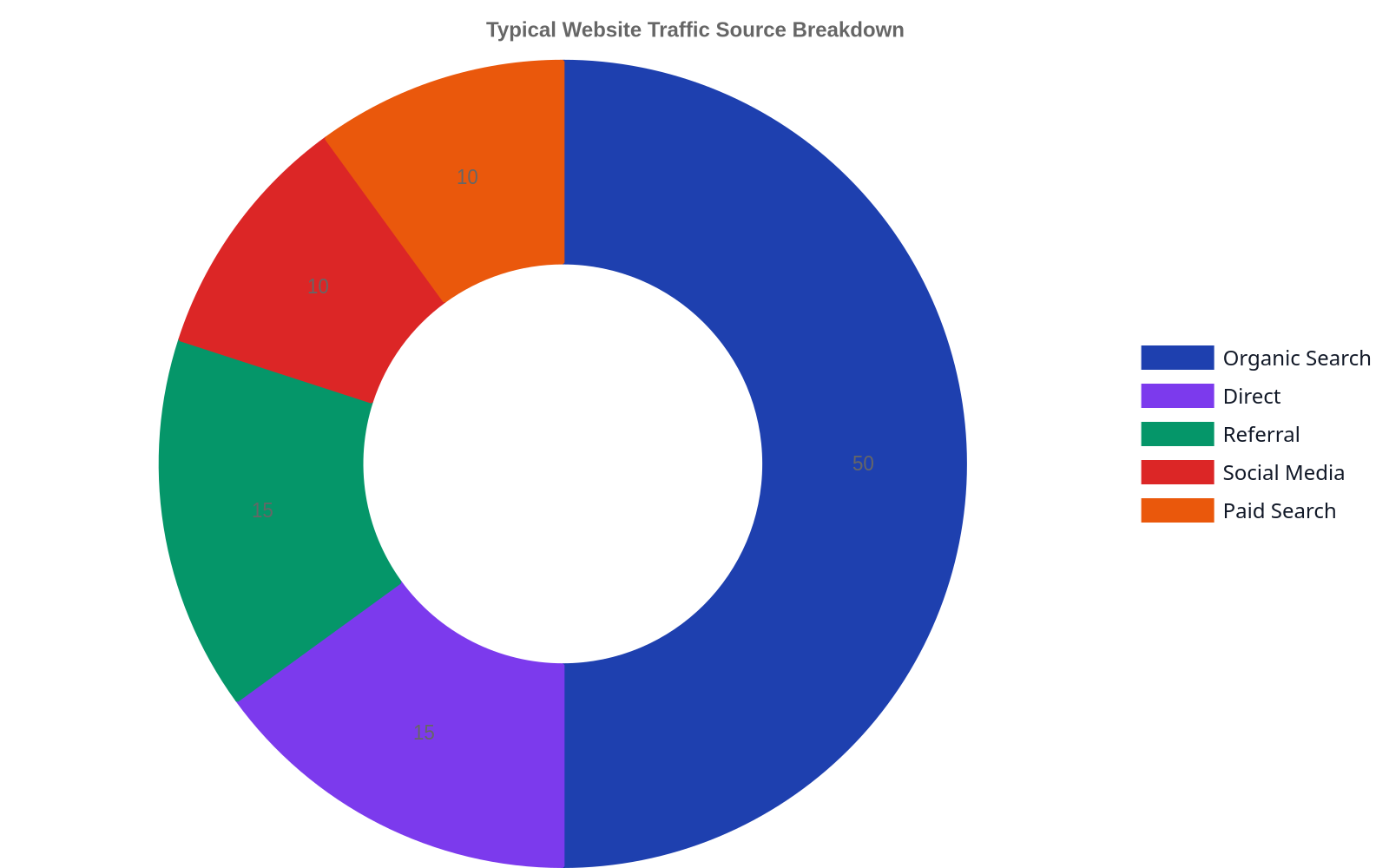
Generating traffic is the goal, but how do you know if it’s working? Track these key performance indicators (KPIs) in Google Analytics and Google Search Console:
- Organic Traffic: The total number of visits from search engines.
- Keyword Rankings: Your position in the search results for your target keywords.
- Click-Through Rate (CTR): The percentage of people who see your site in search results and click on it.
- Backlinks: The number and quality of sites linking to you.
- Conversions: The number of visitors who take a desired action (e.g., fill out a form, make a purchase).
Take the Next Step
Implementing these SEO strategies to generate traffic takes expertise and consistent effort. A website without a clear SEO plan is like a storefront on a deserted street. If you’re ready to build a strategic foundation that brings in real traffic and customers, let’s talk. Dynareach specializes in creating custom SEO and web development plans that drive growth.
Book a call with us to see how we can apply these strategies to your business.
FAQ
How long does it take for SEO to generate traffic?
For a new website, it typically takes 6 to 12 months to see significant organic traffic from SEO efforts. The timeline depends on the industry competitiveness, the budget, and the consistency of execution. Results compound, so initial growth is often slow and then accelerates.
What is the difference between on-page and off-page SEO?
On-page SEO refers to optimizations you make on your website, such as improving content, title tags, and site speed. Off-page SEO refers to actions taken outside of your own website to impact your rankings, with the most important being building backlinks from other reputable sites.
Do I need to do keyword research before writing content?
Absolutely. Keyword research is the foundation of any successful content strategy. It ensures you are creating content about topics that people are actually searching for, allowing you to align your content with user intent and demand. To truly maximize your efforts, learn to build an seo strategy that guides your content creation. Writing without this research is a shot in the dark.
How many times should I use a keyword on a page?
There is no magic number. Modern SEO is not about keyword density. Instead, focus on creating high-quality, comprehensive content that naturally covers a topic. Your primary keyword should appear in the title, the first paragraph, and a few subheadings, but the main goal is readability and user value, not hitting a specific keyword count.
Are backlinks still important for SEO in 2026?
Yes, backlinks remain one of the most powerful ranking signals for Google. They act as third-party votes of confidence, telling Google that your content is credible and valuable. The focus, however, is on quality over quantity. A single link from a highly authoritative site is worth more than hundreds of low-quality links.
What is the most important SEO strategy for a small business?
For a small business, the most impactful starting point is a combination of local SEO (if they have a physical location) and solid on-page SEO. This means optimizing their Google Business Profile, ensuring their website is technically sound, and creating content that answers the specific questions of their local customer base.