Most people think the future of website design is about slicker animations, bolder fonts, or new color palettes. They are wrong. Focusing on aesthetics is like admiring the paint job on a car while ignoring the engine entirely. The real revolution isn’t visual; it’s architectural and intelligent. The future of website design in 2026 is not about visual trends but about architectural intelligence. It’s a fundamental shift from static pages to composable, AI-driven digital experiences delivered via headless systems. These systems will use predictive personalization, multimodal interfaces like voice, and near-native performance through WebAssembly to create hyper-relevant, accessible user journeys. The focus is moving from what a site looks like to what it knows and does for the user.
The End of the “Page”: The Shift to Composable, Headless Architectures
For two decades, the “website” has been synonymous with a collection of pages built on a monolithic platform like WordPress or traditional Drupal. This model is broken. It’s slow, inflexible, and creates a technical debt nightmare that stifles growth. In 2026, thinking in “pages” is an outdated concept holding businesses back.
Why Monolithic CMS is Obsolete for Growth
A monolithic Content Management System (CMS) bundles the back-end (where you create and manage content) with the front-end (what the user sees). This tight coupling was fine for the blog-centric web of 2010, but it’s a disaster for today’s multi-channel reality. Every new “head”—a mobile app, a smartwatch display, a digital kiosk, an IoT device—requires a custom, hacky integration or a completely separate system. You end up with content silos, brand inconsistencies, and a development cycle that moves at a glacial pace. We see this constantly with businesses that come to us after trying to scale complex e-commerce stores on platforms never designed for that level of complexity.
Headless CMS and the API-First Approach
A headless CMS decapitates the system. It provides a pure content repository and a robust Application Programming Interface (API). That’s it. There is no “head,” no default front-end. This frees your content to be whatever it needs to be. You can have one central source of truth for your content and then deliver it to a React-based website, an iOS app, a VUI-powered smart speaker, and an in-store display simultaneously.
This API-first philosophy is the bedrock of modern Web & Software Development. Instead of building a “website,” you build a content engine and then create distinct, optimized experiences for each channel. This is how modern, scalable applications are built, and websites are finally catching up.
The Rise of Composable DXPs
The next evolution is the Composable Digital Experience Platform (DXP). A traditional DXP is another monolith, a massive, expensive suite of tools from a single vendor (think Adobe Experience Manager or Sitecore). A composable DXP, by contrast, is a curated ecosystem of best-in-class microservices connected by APIs. You might use Contentful for your headless CMS, Algolia for search, Stripe for payments, and a custom Next.js front-end. You pick the best tool for each job instead of being locked into a single vendor’s mediocre offerings. This approach gives you unparalleled flexibility and allows you to swap components in and out as your business needs change or better technology emerges.
Key Technologies Shaping Web Design’s Future
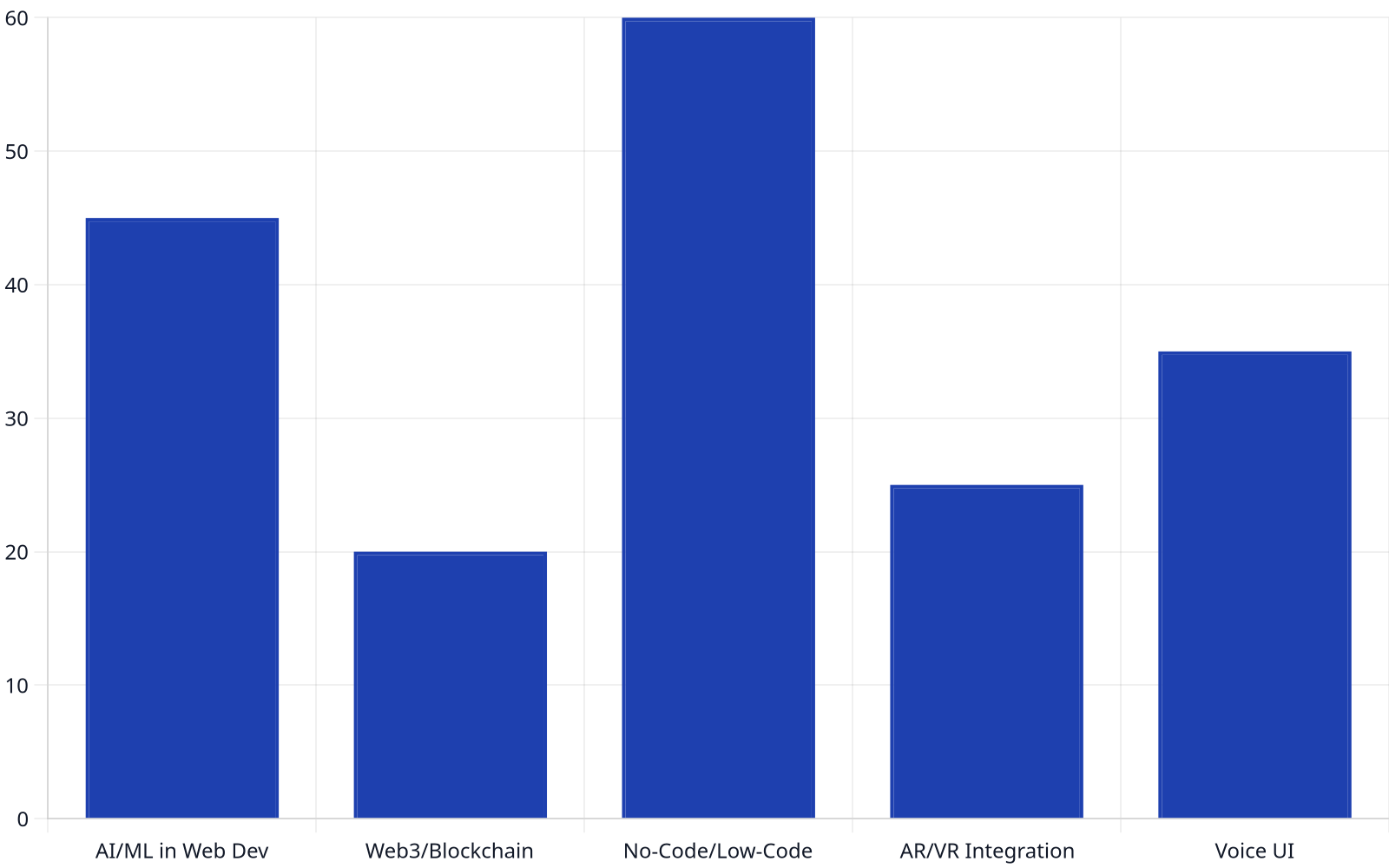
Beyond the architectural shift, a handful of key technologies are defining the user-facing future of website design in 2026. These aren’t gimmicks; they are foundational technologies that change what a website can do.
AI-Driven Personalization and Generative UI
Basic personalization—like showing a user products related to their previous purchases—is table stakes. The future is predictive personalization driven by machine learning. This involves anticipating a user’s needs before they explicitly state them, reordering an entire page layout to match their likely intent, or dynamically changing calls-to-action based on their behavior score. A recent McKinsey analysis highlights that companies that excel at personalization generate 40% more revenue from those activities than average players.
We’re also seeing the dawn of Generative UI, where AI doesn’t just populate content but generates novel interface elements on the fly, creating truly unique, 1:1 experiences for every single visitor.
The Immersive Web: Beyond AR and VR
While Virtual Reality (VR) and Augmented Reality (AR) have dominated the immersive conversation, their true impact on the web is more subtle and integrated. Think less about wearing a headset to browse a website and more about using your phone’s camera to see how a couch would look in your living room directly from a product page. This is web-native AR via technologies like WebXR. The barrier to entry is vanishing, and for e-commerce, real estate, and education, these immersive try-before-you-buy experiences are becoming a significant conversion driver.
WebAssembly (WASM) for Near-Native Performance
For years, the performance of web applications has been limited by the interpreted nature of JavaScript. WebAssembly (WASM) changes that. WASM is a binary instruction format that allows code written in languages like C++, Rust, and Go to run in the browser at near-native speeds. This is a profound shift. It means computationally intensive applications—like video editors, 3D renderers, and even complex SaaS platforms—that previously required a desktop download can now run entirely within a browser tab. According to the Web Almanac by HTTP Archive, WASM adoption is steadily growing, particularly for performance-critical tasks, signaling its move from a niche technology to a core web standard.
The Evolution of User Experience (UX)
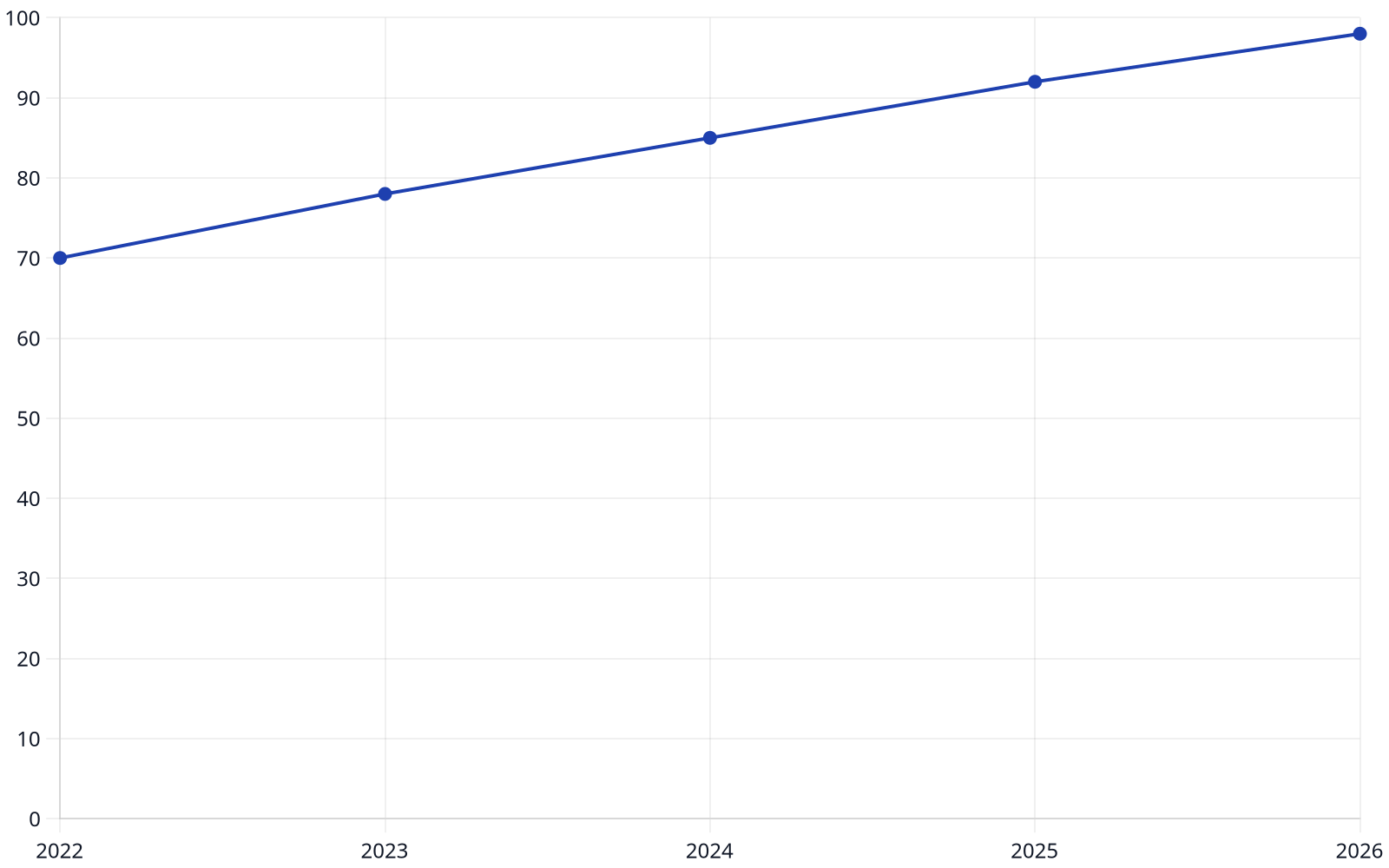
As the underlying technology evolves, so do our expectations for user experience. The future of UX is invisible, predictive, and accessible to everyone. It’s about reducing friction to the point of elimination.
Predictive UX: Anticipating User Needs
Predictive UX is the practical application of AI in interface design. It’s about using data to make informed assumptions and streamline user journeys. Examples include:
- Smart Defaults: Pre-filling forms not just with saved data, but with logical inferences based on context.
- Contextual Navigation: Dynamically promoting navigation links that a specific user segment is most likely to need.
- Proactive Assistance: Offering a chatbot or help documentation at the precise moment a user’s behavior indicates they might be struggling.
This isn’t just about convenience; it’s about showing the user you respect their time by making the experience as efficient as possible.
Voice User Interface (VUI) and Multimodal Interactions
Typing and tapping are no longer the only ways to interact with the web. The rise of smart speakers and voice assistants has normalized voice commands. In 2026, VUI is a critical component of web design. This means your website needs to be navigable and operable via voice. The global voice assistant market size is projected to reach hundreds of billions of dollars, and users will expect to use that modality on the web, not just on their smart speakers.
This leads to multimodal design, where users can seamlessly switch between touch, type, and voice in a single session. You might start a search by speaking to your phone, refine the filters by tapping on the screen, and complete the purchase using a typed password.
A 3PL isn’t a vendor you call when you have a box to ship. They are a partner you embed in your operations, a team that should know your production schedule as well as you do.
Accessibility by Default: Inclusive Design Becomes Law
For too long, web accessibility has been an afterthought—a box to check for compliance. That era is over. With regulations like the European Accessibility Act becoming fully enforceable, accessibility is no longer optional. But more importantly, designing for accessibility from the ground up leads to better products for everyone. High-contrast color schemes, clear typography, and keyboard-navigable interfaces don’t just help users with disabilities; they help a user on a sun-glared mobile screen or a power user who prefers keyboard shortcuts.
In 2026, a website that is not accessible is, by definition, a poorly designed website. It’s a legal liability and a failure of user experience. Building a truly inclusive web is essential for any business aiming to grow, and it is a core principle for us, just as we explained in our guide on how to build seo authority.
Comparison of Web Architectures
To understand the shift, it helps to see the architectures side-by-side. The differences in flexibility, scalability, and performance are stark.
| Feature | Monolithic Architecture | Headless Architecture | Composable DXP |
|---|---|---|---|
| Front-end Coupling | Tightly Coupled | Decoupled (API-driven) | Decoupled (API-driven) |
| Flexibility | Low: Locked into a single vendor and tech stack. | High: Any front-end can be used. | Very High: Best-in-class tools for each function. |
| Scalability | Poor: The entire application must scale as one. | Excellent: Front-end and back-end scale independently. | Superior: Each microservice scales independently. |
| Developer Experience | Restrictive: Limited to the platform’s ecosystem. | liberating: Developers use modern, preferred frameworks. | Optimal: Teams work in parallel on specialized services. |
| Cost | High upfront, high maintenance. | Moderate, scales with usage. | Variable, optimized for specific needs. |
| Best For | Simple blogs, small brochure sites. | Content-rich sites, multi-channel brands. | Enterprise-level businesses with complex needs. |
Impact on Business and ROI
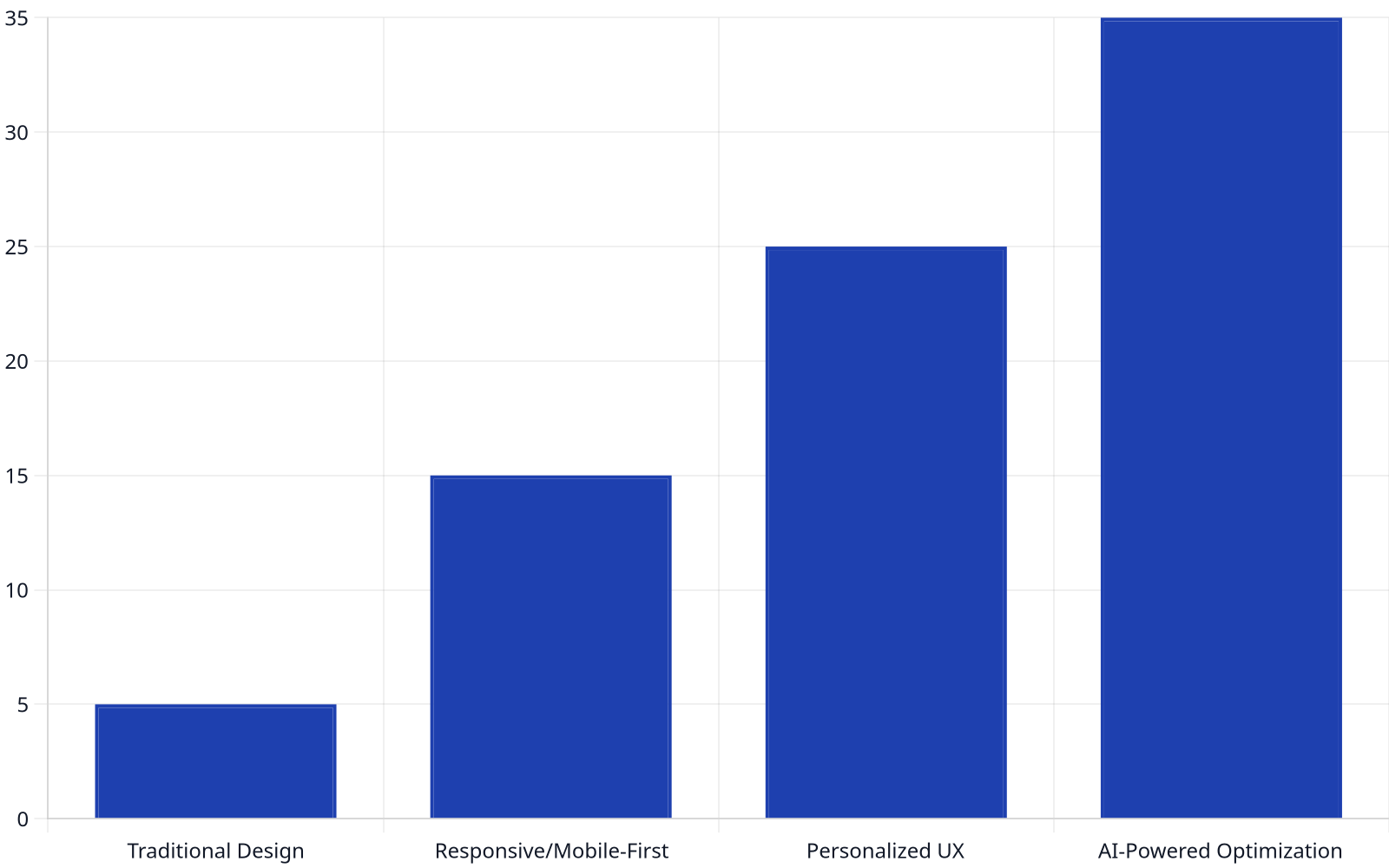
These technological and architectural shifts are not just academic exercises. They have a direct and measurable impact on a company’s revenue, brand perception, and competitive standing.
How Future-Proofing Your Site Affects Your Bottom Line
Investing in a modern, composable architecture is not an expense; it’s an investment in agility. When a new channel like “smart glasses” emerges, you don’t need to rebuild your entire website. You simply build a new “head” that consumes your existing content API. This drastically reduces your time-to-market for new initiatives. Faster performance from technologies like WASM directly correlates with higher conversion rates. A flexible platform allows you to run more A/B tests and iterate on your UX faster, leading to continuous optimization and revenue growth. Our experience with clients like Regal Castle shows that a modern site isn’t just about aesthetics; it’s about making it easier for customers to find, engage, and convert.
Your website isn’t a digital brochure anymore. It’s a predictive, revenue-generating engine. Measuring its success with last-decade’s metrics like ‘pageviews’ is like measuring a Tesla’s performance by its horsepower alone.
Measuring Success Beyond Pageviews and Bounce Rates
In the era of intelligent, personalized websites, traditional metrics are insufficient. Pageviews are irrelevant when a user can get what they need from a single, dynamically generated interface. Bounce rate is meaningless when a user can complete a conversion via a voice command without navigating to a second “page.”
Future-facing metrics will focus on:
- Task Completion Rate: Did the user achieve their primary goal?
- Customer Lifetime Value (CLV): How does the site experience contribute to long-term loyalty and repeat business?
- Personalization Efficacy: Are personalized experiences leading to higher conversion rates or average order values compared to generic ones?
- Channel Engagement: How are users interacting with your brand across all touchpoints, not just the website?
Choosing the right partner to help you define and track these metrics is crucial, a process we detail in our guide on selecting a digital marketing agency.
Building for the Future: A Practical Roadmap
Transitioning to a modern web architecture can feel daunting, but it can be approached systematically.
- Conduct a Tech Stack and Content Audit: Before you build anything new, you must understand what you have. Map out your existing systems, identify content silos, and analyze your current performance metrics. Identify the biggest points of friction in your current setup.
- Adopt an API-First Design Philosophy: Start thinking of your content as a structured, channel-agnostic asset. Begin modeling your content not as “pages” but as reusable components. Choose a headless CMS and start migrating content, even if your legacy front-end remains in place for a short time.
- Decouple Your Front-end and Back-end: Begin the process of building a new, separate front-end application using a modern framework like React (Next.js) or Vue (Nuxt.js). This new front-end will consume content from your new headless CMS via its API.
- Implement a Staged Rollout: You don’t have to switch everything at once. You can start with a single section of your site, like the blog or a specific product category. Run the new and old systems in parallel, gathering data and iterating before migrating the entire experience.
- Integrate Best-in-Class Services: Once your core content is decoupled, start integrating other API-driven services for search, e-commerce, personalization, and analytics. This is the path to a fully composable DXP.
Frequently Asked Questions
What is a headless CMS?
A headless CMS is a back-end only content management system that acts as a content repository. It makes content accessible via an API for display on any device or front-end, without a built-in presentation layer. This decouples the content from its presentation, allowing for greater flexibility.
Will AI replace web designers in 2026?
No, AI will not replace web designers. It will, however, change their role. AI will automate repetitive tasks and generate initial design variations, but human designers will be needed more than ever for strategy, creative problem-solving, user empathy, and curating the outputs of AI systems. The role will shift from a pure creator to a director and editor.
How important is mobile-first design in 2026?
Mobile-first is no longer a trend; it is the absolute baseline. In 2026, the concept is evolving into an “AI-first” or “context-first” approach. You design the core experience and content structure, and then adapt it intelligently for every context, whether that’s a 4-inch watch screen or a 40-inch desktop monitor. Assuming your user is on mobile is the default starting point for all design.
What is the difference between AR and VR in web design?
In the context of the web, VR (Virtual Reality) typically requires a headset and immerses the user in a completely digital environment. AR (Augmented Reality) overlays digital information or objects onto the real world, usually through a smartphone camera. For most businesses, AR has more immediate practical applications on the web, such as product visualization in a customer’s home.
How do I budget for a future-ready website?
Budgeting for a modern website moves away from a large, one-time project cost to a more continuous investment model. The initial build of a decoupled architecture might be comparable to a traditional site, but the real benefit is in the lower long-term cost of ownership. You will spend less on painful, large-scale redesigns and more on iterative improvements and adding new channel experiences, which provides a more predictable and ROI-focused budget.
Moving to a modern, intelligent web architecture is the single most important investment you can make in your digital future. It’s the foundation for growth in a world where your website is more than just a destination—it’s the engine of your business. If you’re ready to stop wrestling with an outdated platform and start building a true digital experience, let’s talk. Book a call with Dynareach today to discuss your vision for the future.