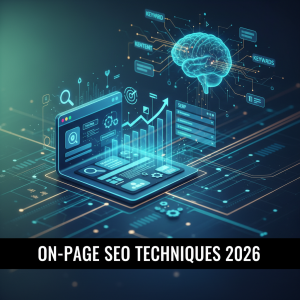
Introduction: Mastering On-Page SEO in 2026 for Unmatched Visibility
In the hyper-competitive digital arena of 2026, simply having a website is like having a storefront with no sign. If your audience can’t find you, you don’t exist. The key to unlocking your digital front door and inviting in a steady stream of qualified traffic lies in mastering on-page SEO. It’s no longer an optional marketing activity; it’s the bedrock of sustainable online growth.
The Evolving Landscape of Search: Why 2026 is Different
Search engines have evolved beyond simple keyword matching. Today, AI and machine learning algorithms prioritize user experience. They understand context, intent, and user interaction. Old-school keyword stuffing and thin content tactics are detrimental. In 2026, search visibility is earned by providing genuine value, demonstrating expertise, and creating a seamless user journey. The search landscape rewards helpful, authoritative pages built for humans first.
What is On-Page SEO and Why is it Crucial for Your Business?
On-page SEO optimizes individual web pages to rank higher and attract relevant traffic. It encompasses everything on your site you control, from content quality and HTML structure to site speed and mobile-friendliness. For businesses, this isn’t just technical; it’s a foundational business strategy. Effective on-page SEO communicates your relevance and authority to users and search engines, leading to higher rankings, increased brand trust, and more conversions. It’s the most powerful lever for sustainable organic growth.
How This Guide Will Transform Your Digital Strategy
This guide cuts through the noise to deliver the most effective on-page SEO techniques 2026. We’ll move beyond basics into nuanced strategies for a true competitive advantage. From advanced content optimization and schema markup to core web vitals and user intent mapping, you’ll gain actionable insights. Implementing a robust strategy like this requires expertise, which is why many businesses partner with specialists like Dynareach to build high-performing websites. This guide provides the blueprint to optimize your existing site or lay the perfect foundation for a new one, ensuring you’re not just participating online, but leading the pack.
Keyword Research Beyond the Basics: Finding Your Audience in 2026
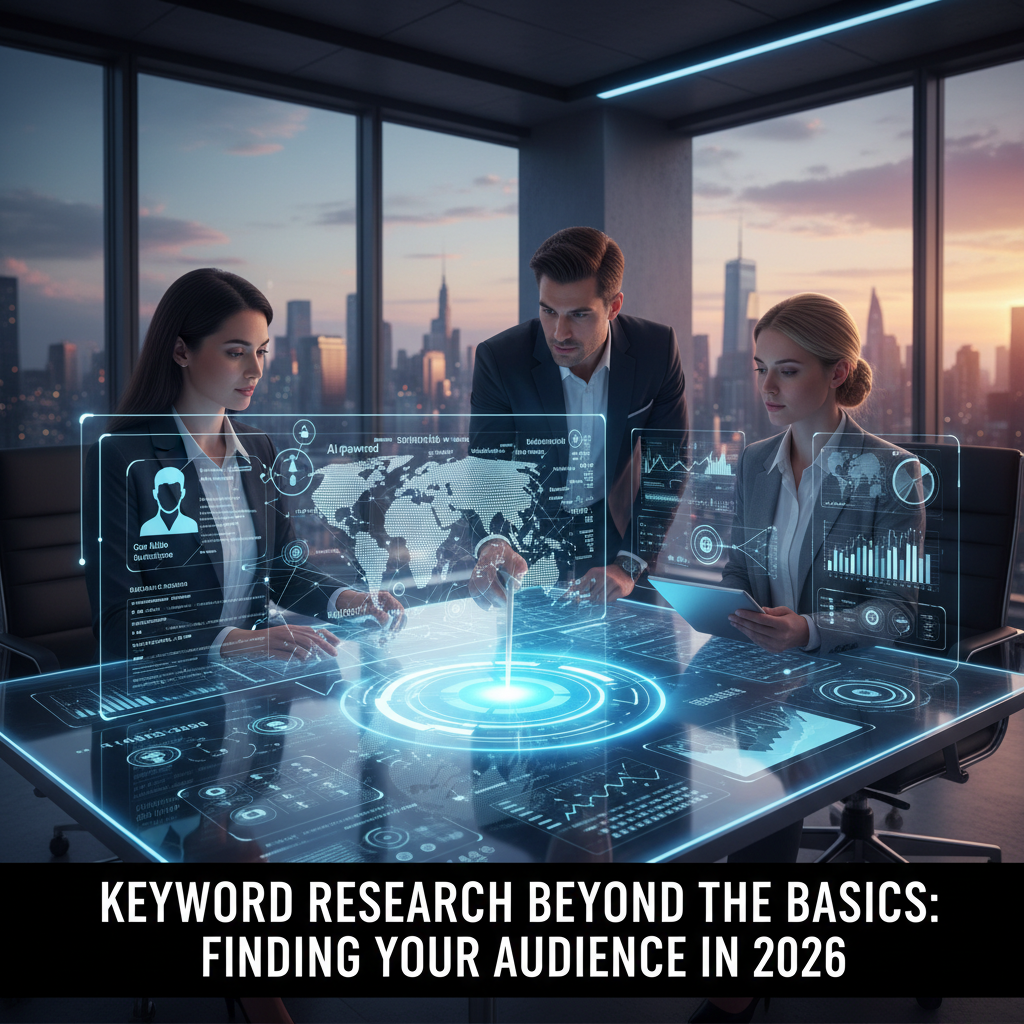
In 2026, foundational keyword research is no longer enough. To connect with your audience and dominate search results, you must dig deeper into the context and intent behind every query. Simply targeting high-volume words misses the nuance of the modern customer journey. A sophisticated keyword strategy is the bedrock of all effective on-page SEO techniques 2026, driving not just traffic, but qualified leads.
Uncovering Semantic Keywords and User Intent
Search engines understand topics contextually. Your focus must shift from a single keyword to a cluster of semantically related terms that fully address a user’s problem. Ask yourself why a person is searching. Are they seeking information (“how to start an online store”), considering options (“best e-commerce platforms”), or ready to buy (“custom Shopify developer”)? Understanding this intent is critical. This process mirrors a detailed user journey mapping for website design, ensuring content meets users exactly where they are. This deep alignment between content and user purpose is a critical component of mastering on-page SEO techniques 2026.

Long-Tail vs. Short-Tail: A Balanced Approach
A successful strategy requires a mix of both short-tail and long-tail keywords.
- Short-Tail Keywords: Broad, 1-2 word phrases (e.g., “branding services”). They boast high search volume but face intense competition and often have ambiguous intent.
- Long-Tail Keywords: Longer, more specific phrases (e.g., “visual identity design for tech startups”). They have lower search volume but carry highly specific intent, leading to better conversion rates.
Your core service pages should target broader short-tail terms, while blog posts, case studies, and niche landing pages should capture highly qualified traffic with long-tail keywords. This balanced approach, a specialty at Dynareach, builds both broad authority and targeted conversions.
Leveraging AI-Powered Keyword Tools
In 2026, AI-powered platforms are essential for keyword research. These advanced tools don’t just show search volume; they analyze top-ranking content, identify semantic gaps, predict emerging search trends, and cluster topics automatically. They help you build a content plan that is relevant today and resilient as search patterns evolve. We leverage these sophisticated analytical tools to build forward-thinking keyword strategies that give our clients a distinct competitive advantage.
Crafting Compelling Content: Engaging Users and Algorithms
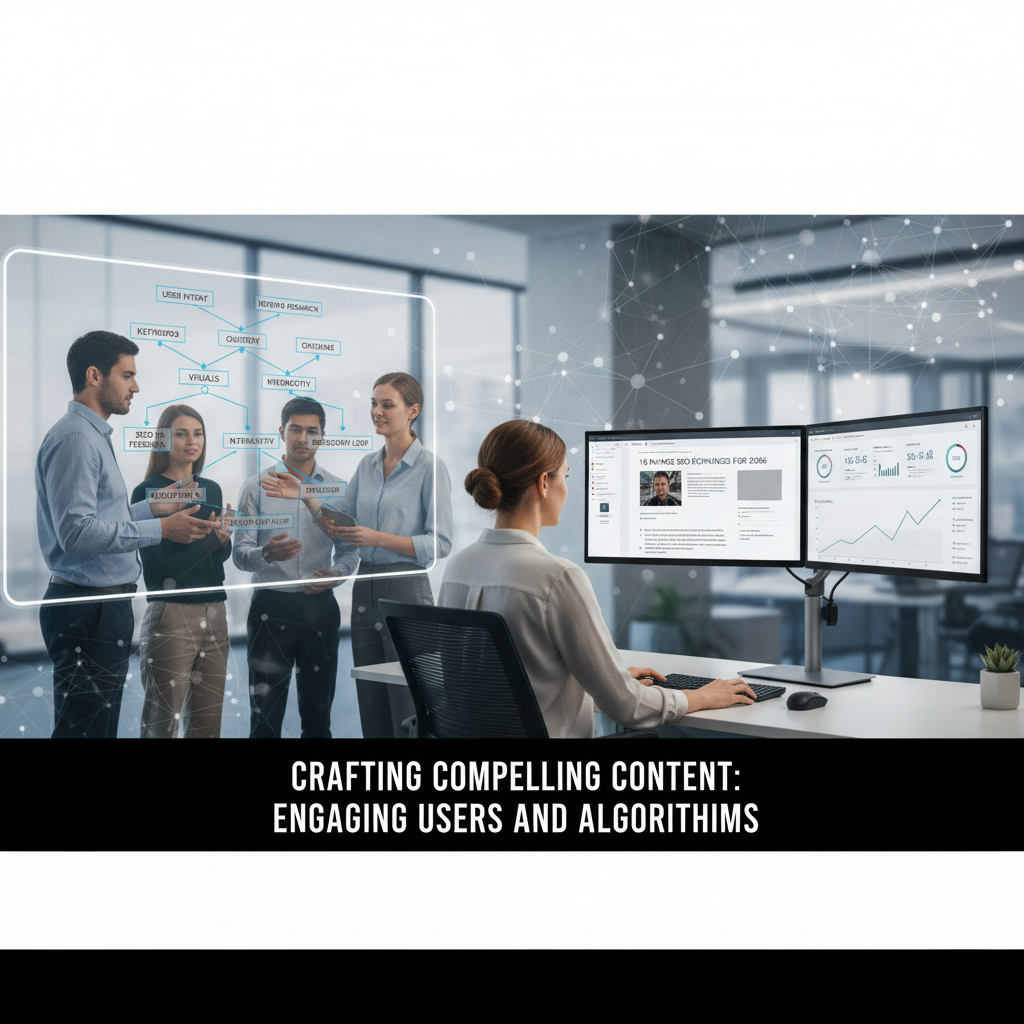
While technical elements are crucial, the heart of any successful SEO strategy is high-quality content. The goal is no longer just to please algorithms with keywords but to provide genuine value that satisfies user intent. The most effective on-page SEO techniques 2026 are deeply rooted in creating content that is helpful, engaging, and trustworthy. By focusing on your audience’s needs, you naturally send the right signals to search engines.
The Power of E-E-A-T in Content Creation
Google’s quality standards, known as E-E-A-T (Experience, Expertise, Authoritativeness, and Trustworthiness), are paramount. To rank well, your content must demonstrate these qualities.
- Experience: Write from a first-hand perspective. Share unique case studies, client results, or personal anecdotes.
- Expertise: Support claims with evidence. Back up your points with credible sources and showcase author credentials.
- Authoritativeness: Become a recognized voice in your industry. Building a strong brand, like those we develop at Dynareach, helps establish your site as a go-to resource.
- Trustworthiness: Be transparent. Display clear contact information, have a secure website (HTTPS), and write honestly.
Optimizing for Readability and User Engagement
A wall of text will deter visitors. Structure your content for effortless consumption. Use clear, descriptive headings (H2s, H3s). Write in short paragraphs, and use bullet points or numbered lists. A conversational tone often works best. The ultimate goal is a seamless flow that aligns with excellent user experience design best practices in 2026, guiding the reader without friction.
Integrating Multimedia for Enhanced Experience
Content isn’t just about words. Integrating multimedia elements like images, infographics, and videos enhances user engagement. Visuals make content more compelling, break up text, and explain complex topics. This improves user experience and boosts key SEO metrics. When users spend more time interacting with your content (higher dwell time) and are less likely to leave immediately (lower bounce rate), search engines interpret these as strong signals of quality.
Technical On-Page Essentials: The Foundation of High Rankings
While compelling content is king, it can’t rule without a strong castle. Technical on-page SEO provides the solid foundation your website needs to compete in search results. These elements work behind the scenes to help search engines understand and prioritize your content, directly impacting your visibility and user experience. Getting them right is non-negotiable.
Optimizing Meta Titles and Descriptions for Click-Through Rates
Your meta title and description are the digital storefront window for your webpage. Displayed in search results, they entice clicks. In 2026, a generic, keyword-stuffed title isn’t enough. Your title tag (ideally 50-60 characters) should be a compelling headline including your primary keyword and communicating value. The meta description (around 150-160 characters) is your micro-advertisement. It should expand on the title, answer a potential user question, and include a call to action. A high click-through rate (CTR) signals to Google that your page is relevant, positively influencing rankings.
Structuring Your Content with Schema Markup
Schema markup, or structured data, is a powerful vocabulary you add to your website’s code to translate your content for search engines. It helps them understand not just what your content says, but what it is. Is it a product review, an event, a recipe, or an FAQ section? Implementing schema makes you eligible for rich snippets—enhanced search results with star ratings, images, and interactive Q&A dropdowns. These eye-catching features make your listing stand out, command more space, and significantly boost CTR.
Ensuring Mobile-First Indexing and Page Speed
Google now operates on a mobile-first indexing model, primarily using the mobile version of your website for ranking. A poor mobile experience leads to poor rankings. This makes responsive design and lightning-fast page speed critical components of modern on-page SEO techniques 2026. Your site must load quickly and function flawlessly on all devices. Factors like Core Web Vitals—loading performance, interactivity, and visual stability—are direct ranking signals. At Dynareach, every website we build is optimized for speed and mobile performance from day one, ensuring a seamless user experience. For a comprehensive overview, review our Technical SEO Checklist for Your Website Launch in 2026.
Internal Linking Strategies: Guiding Users and Search Engines
Effective internal linking is more than connecting pages; it’s the invisible architecture that guides both users and search engines through your website. A thoughtful linking strategy establishes a clear hierarchy, distributes authority (“link equity”) to important pages, and helps Google understand content relationships. Neglecting this is a common mistake in on-page SEO.
Building a Robust Internal Link Structure
The goal is a logical, topic-focused structure. Think of it as a hub-and-spoke model. Your most important pages, “pillar content,” act as hubs for specific topics. These pillars link out to more detailed, related articles known as “cluster content.” Each cluster article links back to its parent pillar page and to other relevant clusters. This creates a powerful topical network, preventing “orphan pages” and ensuring every content piece has a clear purpose. A strong internal link structure is foundational to the best on-page SEO techniques 2026, signaling to search engines which content is most significant.
Anchor Text Optimization for Internal Links
Anchor text—the clickable text in a hyperlink—signals to users and search engines about the linked page’s content. Avoid generic phrases like “click here.” Instead, use descriptive, keyword-relevant anchor text. For example, instead of “learn more,” link with “explore our comprehensive eCommerce SEO strategy 2026.” This provides immediate context. However, be natural. Vary your anchor text with synonyms to avoid being robotic and prevent over-optimization flags.
Leveraging Internal Links to Boost Pillar Content
Your pillar pages are your authoritative cornerstone assets. To reinforce their importance, funnel authority toward them. Each time you publish new cluster content, find natural opportunities to link back to the main pillar page it supports. This consistent flow of links from specific articles to broad guides sends a powerful signal to Google that the pillar page is the definitive resource on that topic. This focused approach is a core component of an effective content strategy for lead generation. Building this sophisticated architecture from the ground up requires strategic planning. Ready to enable a website structure that guides users and dominates search? Consult with the SEO experts at Dynareach today to get started.
Monitoring and Adapting: Sustaining Your On-Page SEO Success
Implementing on-page SEO is only the beginning. To achieve and sustain top rankings amid evolving algorithms and shifting user behavior, you must commit to continuous monitoring and data-driven adaptation. This ongoing process turns a static webpage into a dynamic asset that consistently performs.
Key Performance Indicators (KPIs) for On-Page SEO
Tracking the right metrics is essential. Focus on these core KPIs. Organic traffic is your primary indicator. Track keyword rankings to see if your content is hitting the mark. Monitor your click-through rate (CTR) in Google Search Console to see how compelling your title tags and meta descriptions are. Finally, analyze user engagement metrics like dwell time and bounce rate. High engagement signals quality to Google.
Tools for Tracking and Analysis
A robust toolkit is non-negotiable for advanced on-page SEO techniques 2026. Google’s free platforms are foundational: Google Search Console for impressions, clicks, indexing; Google Analytics 4 for user behavior. For a competitive edge, use comprehensive SEO platforms like Ahrefs or Semrush. These tools provide rank tracking, automated site audits, and competitor insights, forming the analytical backbone of your strategy.
Iterative Optimization: A Continuous Process
Data from KPIs and tools should fuel continuous improvement. SEO is not a one-time project. If rankings slip, analyze new top competitors and refresh content. If bounce rate is high, revisit the introduction or ensure content aligns with keyword intent. This loop of analyzing, refining, and testing is key to long-term digital growth. At Dynareach, this proactive approach is central. We build SEO-optimized websites and provide ongoing support. To see how this can benefit your business, learn about our comprehensive website maintenance services.
Frequently Asked Questions About On-Page SEO in 2026
Navigating on-page SEO can bring up many questions. Here are clear answers to common queries.
What is the most critical on-page SEO factor in 2026?
There is no single “most critical” factor. Success lies in a holistic approach where high-quality, user-intent-focused content is the foundation. In 2026, search engines understand context and quality. Your content must comprehensively answer the user’s query while being well-structured with proper headings, optimized meta tags, and internal links.
How often should I update my on-page SEO?
For top-performing “evergreen” content, a quarterly review is sufficient. For trending topics or highly competitive keywords, monthly monitoring may be necessary. Track performance and make data-driven adjustments.
What role does user experience (UX) play in 2026 on-page SEO?
User experience is a cornerstone of modern on-page SEO. Factors like page speed, mobile-friendliness, intuitive navigation, and readability directly impact engagement metrics. Google interprets positive engagement as a sign of high-quality content, boosting rankings. Mastering User Experience Design Best Practices in 2026 is no longer optional.
How can Dynareach help with my on-page SEO efforts?
At Dynareach, we integrate on-page SEO directly into our web development and branding services. We build search-optimized growth engines. From technical SEO during development to crafting content strategies, we ensure every on-page element works to maximize your visibility and authority.
Is keyword density still important?
No, the concept of a target “keyword density” is outdated. Modern search engines prioritize semantic relevance and natural language. Instead of stuffing keywords, focus on using your primary keyword, related terms, and synonyms naturally throughout your content.
What are common on-page SEO mistakes to avoid?
Common pitfalls include “thin” content, keyword cannibalization, neglecting internal linking, and slow page load times. Avoiding these is fundamental to effective on-page SEO techniques in 2026.
Conclusion: Your Path to On-Page SEO Excellence with Dynareach
Mastering on-page SEO in 2026 is the art and science of creating a comprehensive, user-centric digital experience perfectly aligned with search engine intelligence. The journey requires technical precision, creative content strategy, and deep audience understanding.
Recap of Key On-Page SEO Principles for 2026
Lasting success hinges on critical pillars. Begin with content that satisfies user intent, moving beyond simple keyword targeting. Support this with flawless technical health, including exceptional Core Web Vitals and mobile-first design. Weaving E-E-A-T signals into every page establishes authority and trustworthiness, while strategic internal linking guides users and search crawlers. These foundational on-page SEO techniques 2026 form the bedrock of sustainable online visibility.
The Long-Term Benefits of Strategic On-Page Optimization
Meticulous on-page strategy yields returns far beyond temporary ranking jumps. It builds a powerful, long-term business asset. By optimizing for users and search engines, you cultivate high-quality organic traffic, reducing reliance on costly paid advertising and increasing conversion rates. This approach solidifies your brand’s authority, creating a durable competitive advantage. It’s a direct investment in your brand’s digital future, engineered to generate compound growth.
Partnering with Dynareach for Unrivaled Digital Growth
Executing sophisticated strategies requires specialized expertise and a holistic vision. This is where Dynareach transforms ambition into measurable results. We integrate SEO into your website’s DNA. Our custom web development ensures your site is technically sound, scalable, and performance-optimized. Our branding and SEO strategists create a cohesive digital experience that builds authority and drives growth. For businesses, this integrated approach ensures every element of your online presence works in harmony.
Your brand’s full potential is enabled by a strategic partnership. Ready to build a digital presence that delivers lasting value? Schedule a consultation with a Dynareach expert today and let’s craft your growth strategy together.