
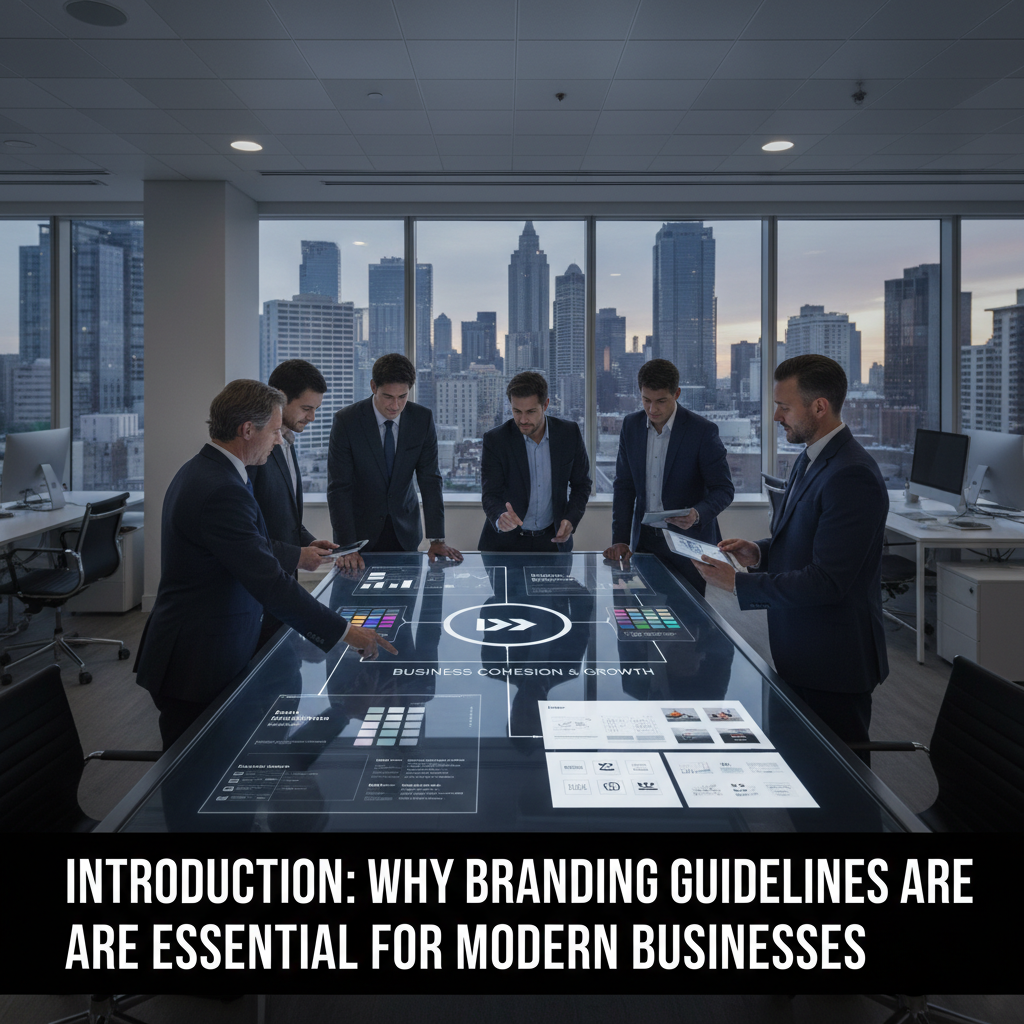
Introduction: Why Branding Guidelines Are Essential for Modern Businesses
Imagine your brand speaking in a dozen different voices at once. Your website is formal and corporate, your Instagram is quirky and casual, and your latest email campaign feels like it came from another company entirely. This fragmentation is confusing for customers and deadly for brand loyalty. In the hyper-competitive marketplace of 2026, where consumers interact with brands across countless digital and physical touchpoints, consistency isn’t just a luxury—it’s a fundamental requirement for survival and growth. This is where a robust set of branding guidelines becomes one of your most valuable assets. For more insights, see grow organic traffic on autopilot.
The Evolving Landscape of Brand Identity in 2026 and Beyond
The concept of a “brand” has expanded far beyond a simple logo and color palette. Today, your brand identity lives in every interaction: the tone of a customer service chatbot, the filter used on a TikTok video, the font on a PowerPoint slide, and the unboxing experience of your product. With this explosion of channels, maintaining a unified presence is more complex yet more critical than ever. Without a central playbook, your brand message becomes diluted and distorted, weakening its impact and eroding customer trust. The most significant branding guidelines benefits stem from creating a cohesive experience across this fragmented landscape, ensuring your brand is always recognizable and reliable.
What Are Branding Guidelines?
Simply put, branding guidelines (often called a brand style guide or brand book) are a comprehensive document that serves as the single source of truth for your brand’s identity. It’s the official rulebook that defines how your company presents itself to the world. This guide codifies everything from high-level strategy to minute detail, including your mission, brand voice, logo usage, color schemes, typography, and imagery style. It’s the blueprint that ensures every employee, stakeholder, and external partner—from marketing teams to agencies like Dynareach—understands how to communicate your brand correctly and consistently.
The Core Purpose of a Brand Style Guide
The ultimate purpose of a brand style guide is to build brand equity through consistency. It empowers your entire organization to represent the brand with clarity and confidence, eliminating guesswork and preventing off-brand creations. This alignment ensures that every piece of communication, whether a major advertising campaign or a simple social media post, reinforces the same core identity. By establishing these clear standards, you create a predictable and trustworthy brand experience that fosters recognition, builds loyalty, and ultimately drives business success. This guide is not a creative constraint but a strategic tool that unlocks long-term value.
1. Ensuring Brand Consistency Across All Touchpoints
Perhaps the most significant of all branding guidelines benefits is the ability to enforce unwavering consistency. A brand is a promise, and consistency is how you prove you can keep it. When your audience interacts with your company—whether on your website, a social media profile, or a physical product—the experience should feel familiar and reliable. Comprehensive guidelines act as the single source of truth for your entire organization, ensuring every marketing asset and customer communication works in harmony to build a strong, recognizable identity. This foundational consistency prevents the brand dilution that occurs when different teams or partners interpret the brand in their own way.
Visual Consistency: Logo, Color, and Typography
Your visual identity is the most immediate representation of your brand. Brand guidelines meticulously define how these core elements should be used. This includes rules for logo usage (clear space, minimum size, acceptable variations), a defined color palette with specific hex codes for digital and Pantone values for print, and a typographic hierarchy that designates fonts for headings, body copy, and calls to action. Without these rules, a sales team might stretch your logo on a presentation, or a social media manager might use an off-brand color for a post. These small inconsistencies seem minor alone, but they accumulate, eroding professionalism and confusing your audience. A clear rulebook prevents misrepresentation and ensures your brand looks polished and intentional everywhere it appears.
Messaging and Tone of Voice Consistency
2. Enhancing Brand Recognition and Recall
One of the most significant branding guidelines benefits is the power to make your brand unforgettable. In a crowded digital and physical landscape, being recognized is the first step toward being chosen. Brand guidelines act as the architectural blueprint for your brand’s memory structure, ensuring that every interaction a customer has reinforces who you are. This consistency is not about creative restriction; it’s about building a powerful and lasting mental shortcut in the minds of your audience.
Solidifying Your Brand’s Visual Identity
Think of your brand’s visual elements—your logo, color palette, and typography—as its face. Brand guidelines ensure this face is always presented in the same way, creating a consistent visual handshake with your audience. When a consumer sees the distinct red of Coca-Cola or the iconic swoosh of Nike, recognition is instant. This is by design.

Guidelines dictate the precise color codes, logo spacing rules, and font hierarchies. This removes ambiguity and ensures that whether your brand appears on a billboard, a social media feed, or a product package, it is immediately identifiable. This repeated, consistent exposure solidifies your visual identity, making it distinct and familiar.
Creating Memorable Brand Experiences
Human psychology favors the familiar. The more we are exposed to something in a consistent manner, the more we tend to trust and prefer it. Brand guidelines leverage this principle by ensuring uniformity across all touchpoints, which helps build a cohesive and memorable brand experience.
This goes beyond just visuals. Guidelines that define your brand’s tone of voice, messaging style, and even photography direction ensure that the entire experience feels unified. When what a customer reads on your website matches the tone of your support emails and the feel of your social media posts, you build a powerful sense of reliability and trust. This consistency makes your brand feel dependable and easier to recall when a purchasing decision needs to be made.
Standing Out in a Competitive Market
3. Streamlining Marketing and Design Workflows
Beyond maintaining consistency, one of the most practical branding guidelines benefits is a dramatic increase in operational efficiency. Strong guidelines act as a strategic tool, removing ambiguity and bottlenecks from your creative processes. This allows your team to move faster, collaborate more effectively, and produce higher-quality work without the constant friction of reinventing the wheel.
Reducing Creative Decision-Making Time
Think of the cumulative hours spent debating minor creative details. Should the logo go on the left or the right? Is this shade of blue on-brand? Does this headline capture our voice? Without a central source of truth, these questions lead to decision fatigue and slow down production. Branding guidelines eliminate this guesswork.
They serve as a ready-reference for your team, providing immediate answers to foundational questions about typography, color palettes, logo usage, and tone of voice. Instead of getting bogged down in repetitive choices, your creatives can invest their valuable time and energy where it truly matters: developing innovative campaign concepts and compelling messaging. This shift from foundational debates to strategic creation is a core advantage that accelerates your entire content pipeline.
Facilitating Collaboration Across Teams
As organizations grow, their marketing ecosystem often becomes a complex mix of in-house teams, freelance specialists, and agency partners. Clear guidelines are the universal language that unites them all. They ensure that a social media post created by a junior marketer, a sales deck designed by an external contractor, and a landing page built by a web agency like Dynareach all feel like they came from the same cohesive brand.

This shared framework minimizes misunderstandings and streamlines feedback cycles. Revisions become less about subjective preferences (“I don’t like that font”) and more about objective alignment with established rules (“Let’s use our primary headline font as specified in the guide”). This alignment ensures every contributor, internal or external, is working toward the same goal.
Onboarding New Marketing and Design Talent
4. Protecting Brand Equity and Reputation
Your brand’s equity—the value derived from consumer perception and recognition—is one of your most precious intangible assets. It’s built over time through consistent effort, exceptional quality, and positive associations. This hard-won value, however, is fragile. Without robust protection, it can erode quickly. Comprehensive branding guidelines serve as your company’s primary defense mechanism, protecting your reputation from internal inconsistencies and external misuse that threaten its integrity.
Preventing Brand Misuse and Dilution
Without clear rules, your brand identity can quickly become diluted. Imagine a partner using an old version of your logo, a sales team creating a presentation with off-brand fonts, or a new hire writing social media posts in a tone that completely misses the mark. Each deviation, however small, chips away at brand recognition. Over time, this uncontrolled usage blurs what your brand stands for, making it less memorable and distinct in a crowded market. One of the core branding guidelines benefits is preventing this “brand drift” by providing a single source of truth for how your visual and verbal assets must be used, ensuring every application reinforces your identity.
Maintaining Professionalism and Credibility
Consistency is the bedrock of professionalism. When your visual identity and messaging are uniform across all channels—from your website and paid ads to your email signatures and physical stationery—it signals that your organization is stable, detail-oriented, and reliable. This unified presentation builds subconscious trust. Customers, partners, and prospects are more likely to view a company as credible and authoritative when its appearance is consistently high-quality. An inconsistent brand, on the other hand, can appear disorganized and untrustworthy, undermining your credibility before you even have a chance to state your case.
Safeguarding Against Negative Perceptions
5. Boosting Internal Morale and Communication
While the external advantages are clear, one of the most powerful branding guidelines benefits is the profound positive impact they have on your internal team. A brand isn’t just built by the marketing department; it’s lived and communicated by every single employee. Well-defined guidelines are the tool that makes this possible, transforming your workforce into a cohesive, confident, and motivated unit. When your team is aligned, that strength and clarity radiate outward to your customers.
Fostering Brand Ambassadorship
When employees truly understand the brand’s mission, voice, and visual identity, they are equipped to become its most authentic ambassadors. Clear branding guidelines demystify the brand’s purpose, giving team members the language and confidence to talk about the company consistently and passionately. Whether it’s a sales representative crafting a pitch, a customer service agent resolving an issue, or a developer explaining a product feature, they can all represent the brand with a unified voice. This turns every interaction into an opportunity to reinforce your brand’s values, creating a powerful network of advocates who believe in the mission because they fully understand it.
Providing Clarity and Confidence to Employees
Ambiguity is a major source of workplace friction and inefficiency. Branding guidelines eliminate guesswork, providing a clear roadmap for execution. A designer knows which fonts and color codes to use without asking. A content creator understands the appropriate tone for a blog post versus a social media update. This clarity empowers employees, giving them the autonomy and confidence to make decisions and execute tasks efficiently. Instead of spending time seeking approval for basic creative choices, they can focus their energy on innovation and quality work. This sense of trust and direction is a significant morale booster, contributing to greater job satisfaction and a more productive environment.
Aligning Internal Understanding of Brand Values
6. The Role of Dynareach in Crafting Effective Branding Guidelines
Understanding the theory behind branding is one thing; building and implementing a framework that delivers tangible results is another. This is where a strategic partner becomes invaluable. At Dynareach, we see branding not as a standalone project but as the foundational element of a successful, integrated marketing ecosystem. Our approach is designed to ensure you realize the full spectrum of branding guidelines benefits from day one.
Expert Brand Strategy and Development
Before a single color is chosen or a font is selected, our process begins with a deep dive into your brand’s core DNA. We conduct thorough market research, analyze your competition, and develop detailed audience personas to understand who you’re speaking to. This strategic groundwork allows us to collaboratively define a unique brand position, a compelling mission, and a consistent tone of voice. This isn’t just about aesthetics; it’s about creating an authentic identity that resonates with your target market and sets the stage for sustainable growth.
Comprehensive Style Guide Creation
With the strategy firmly in place, our team translates it into a practical, comprehensive style guide. This document is far more than a simple logo sheet. It’s a detailed and actionable blueprint for your brand’s expression, covering everything from primary and secondary color palettes (with hex codes and usage rules) to typography hierarchies, iconography, photography styles, and voice and tone principles. We provide clear do’s and don’ts and showcase real-world application examples to ensure your team can apply the branding consistently and confidently across all materials.
Integrating Branding with Full-Stack Marketing
The true power of our approach lies in seamless integration. A brand guide created in a vacuum is of little use. As a full-stack marketing agency, Dynareach ensures your new branding is perfectly woven into every marketing channel we manage. Your website design becomes a direct reflection of the guide, creating an intuitive user experience. Your SEO content strategy will speak in the defined brand voice, attracting and engaging the right audience. Your paid ad campaigns will use approved creative for instant recognition and trust-building. Even your email marketing will reinforce brand identity with every send.
Frequently Asked Questions About Branding Guidelines
As the importance of a cohesive brand identity becomes ever more apparent, many questions arise about creating and using the documents that define it. Here are answers to some of the most common queries we encounter.
How often should branding guidelines be updated?
Think of your brand guidelines as a living document, not a static rulebook set in stone. We recommend a comprehensive review at least once every one to two years to ensure they still align with your business goals. However, you should update them immediately following any significant brand evolution. This includes events like a logo redesign, a shift in your company’s mission or values, or the launch of a major new product line. Proactive updates ensure your guide always reflects your brand’s current state.
Who needs to follow branding guidelines?
In short: everyone who represents your brand. This is a company-wide responsibility that extends beyond the marketing department. Your sales team, HR department, product developers, and customer service representatives all play a role in shaping your brand’s perception. The same rule applies to external partners, including freelancers, PR agencies, and production vendors. For example, when a client works with Dynareach, our team uses their brand guidelines as the blueprint for every website, ad, and email we create, guaranteeing perfect alignment.
What is the difference between a brand guide and a style guide?
This is a frequent point of confusion. A style guide is a component of a more comprehensive brand guide. A brand guide is the strategic foundation—the “why”—while a style guide is the tactical application—the “how.”
| Aspect | Style Guide | Brand Guide |
|---|---|---|
| Focus | How to execute (The Rules) | Why we exist (The Foundation) |
| Content | Logo usage, colors, fonts, tone | Mission, vision, values, persona |
| Scope | Visual and verbal expression | Overall brand strategy & identity |
A style guide ensures consistency, but a brand guide ensures that consistency is meaningful and rooted in a clear identity.
Conclusion: Your Path to a Stronger, More Recognized Brand
The journey from a simple business to an iconic brand is paved with intention, strategy, and above all, consistency. Branding guidelines are not creative constraints; they are the strategic blueprint that transforms your abstract company vision into a tangible, recognizable, and trusted entity in the hearts and minds of your customers. They are the essential framework that ensures every interaction with your brand is a step in the right direction.
Recap of Key Branding Guideline Benefits
We’ve seen that the primary branding guidelines benefits are both profound and practical. They establish unwavering consistency, ensuring that whether a customer sees a social media post, receives an email, or visits your website, they experience the same unified brand. This cohesion directly builds brand recognition, making you memorable in a crowded marketplace. Internally, these guidelines are a powerful tool for efficiency, empowering your teams to create on-brand materials quickly and confidently, minimizing rework and aligning everyone—from sales and marketing to HR and product development—toward a single, coherent vision. This alignment fosters a culture of brand ambassadorship from within.
The Long-Term Impact of Brand Consistency
While the immediate efficiencies are valuable, the true power of disciplined branding unfolds over time. Each consistent touchpoint is like a brick being carefully laid in the foundation of your brand’s legacy. Over months and years, this unwavering consistency cultivates deep-seated trust and loyalty with your audience. Customers learn not just what you do, but who you are, fostering a connection that transcends simple transactions. This sustained effort elevates your brand from a commodity to a market leader, building invaluable brand equity. This equity becomes a durable competitive advantage, increasing perceived value, commanding customer preference, and ultimately translating into sustainable growth and market authority.
Taking the Next Step with Dynareach
Understanding the importance of branding guidelines is the first step; implementing them effectively is the next. This is where professional partnership can make all the difference. At Dynareach, we see branding as the central nervous system of a comprehensive marketing strategy. Our expertise extends beyond creating a static brand book; we embed your brand’s unique DNA into every channel we manage. As a full-stack agency, we ensure your brand identity strengthens your SEO, improves the ROI of your paid ads through increased trust, and creates a seamless user experience on your website. We build brands that don’t just exist, but thrive.
Ready to enable your brand’s full potential and build a lasting legacy? Connect with the branding experts at Dynareach today to start your journey.