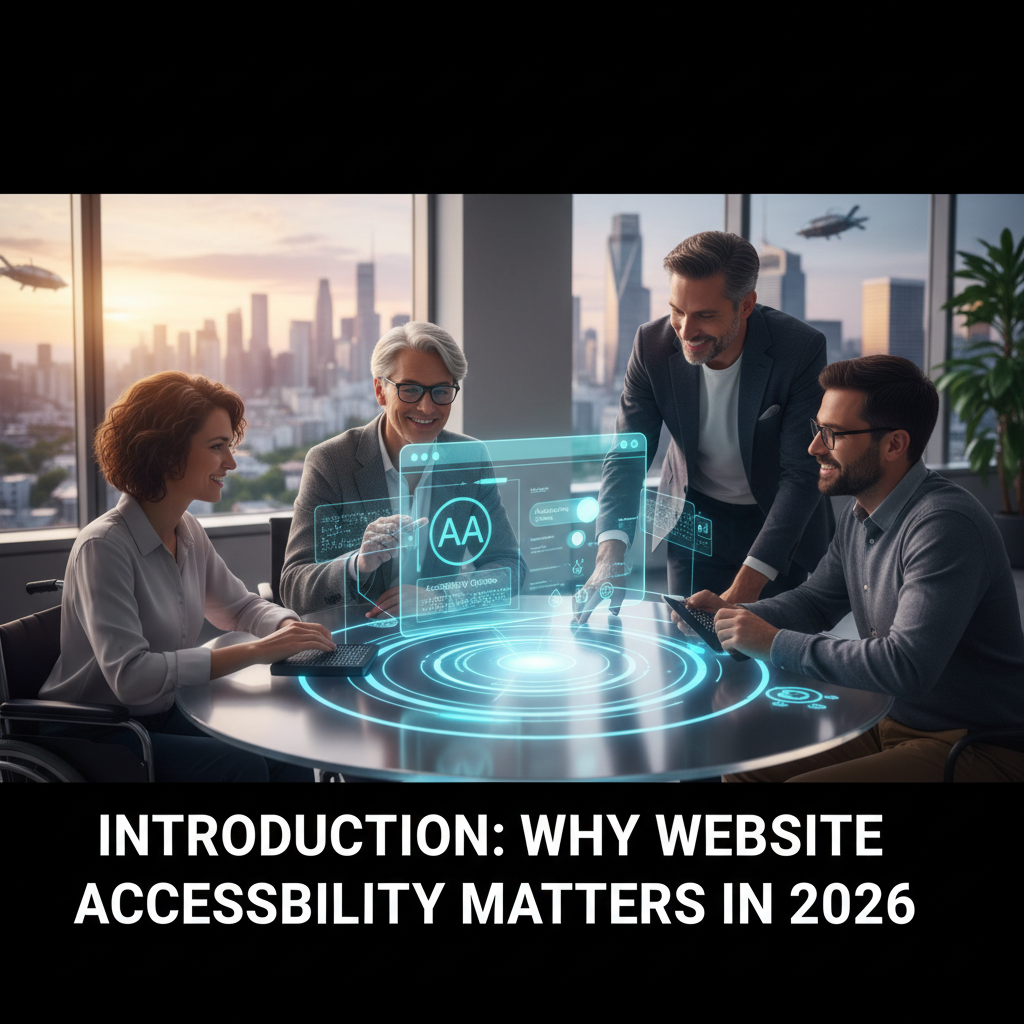
Introduction: Why Website Accessibility Matters in 2026
In 2026, the internet is not just a tool; it’s the primary venue for commerce, education, healthcare, and human connection. But what happens when this essential public square is inaccessible to a significant portion of the population? This is the reality for over a billion people globally when websites are not built with accessibility in mind. Website accessibility is the inclusive practice of designing and developing digital experiences that everyone, including individuals with disabilities, can perceive, understand, navigate, and interact with effectively. It’s about intentionally removing barriers to ensure universal access.
The Digital Landscape and Inclusivity
Digital inclusivity is no longer a niche concern but a core tenet of modern, user-centric design. An inaccessible website is the digital equivalent of a building with only stairs and no ramp. It effectively excludes people with visual, auditory, motor, or cognitive impairments. For example, a user who is blind relies on a screen reader to navigate content, while someone with a motor disability may depend solely on keyboard navigation. Embracing accessibility means creating a seamless experience for all, fostering brand loyalty, and expanding your market reach.
Legal and Ethical Imperatives
The drive for accessibility is propelled by both legal mandates and ethical principles. Globally, legal frameworks increasingly hold organizations accountable for the accessibility of their digital properties. Non-compliance can lead to significant financial penalties, brand damage, and protracted legal battles. However, looking past the legal risks reveals a more profound motivation: the ethical responsibility to create an equitable society. Providing equal access and opportunity online is simply the right thing to do. This is where established website accessibility guidelines, primarily the Web Content Accessibility Guidelines (WCAG), become indispensable. These offer a shared, global standard and a clear roadmap. By adhering to these, businesses can not only mitigate legal risks but also champion a more inclusive digital future for everyone.
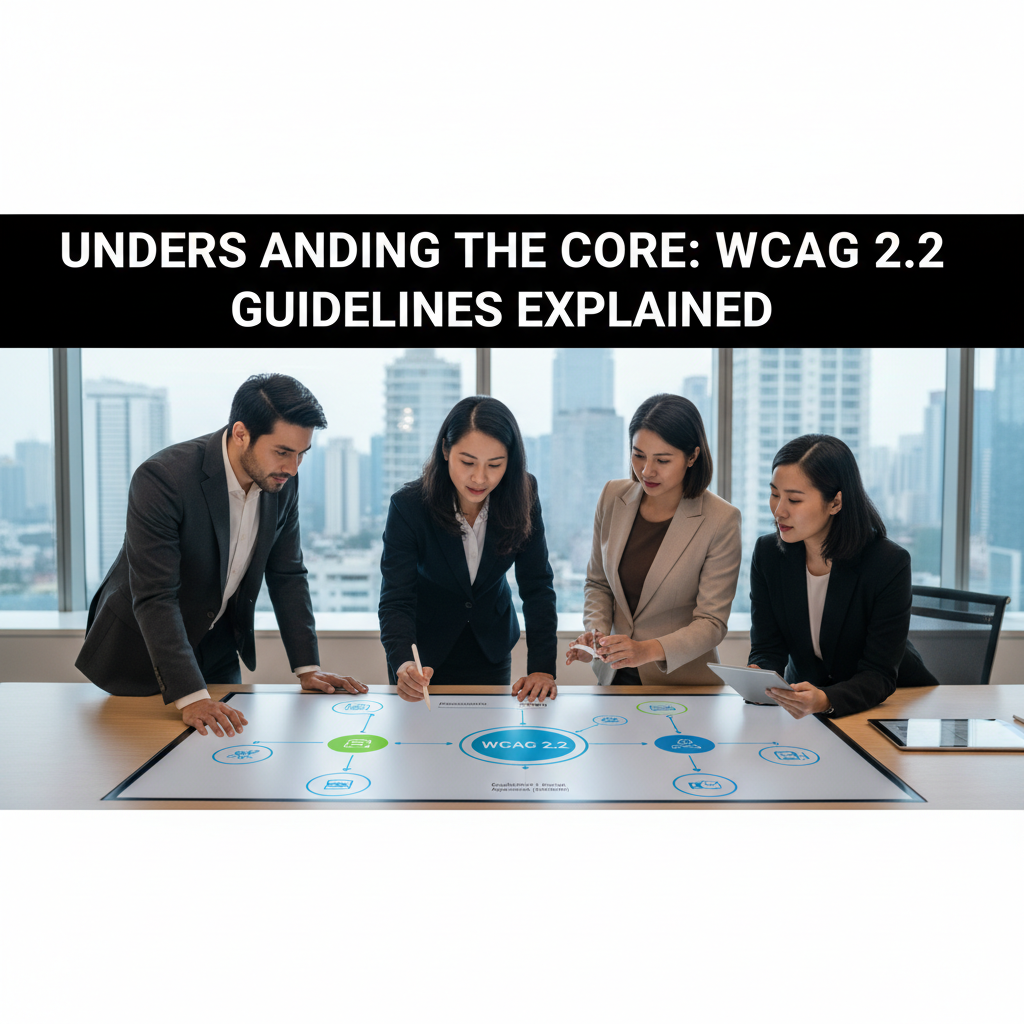
Understanding the Core: WCAG 2.2 Guidelines Explained
At the heart of digital inclusion are the Web Content Accessibility Guidelines (WCAG), published by the World Wide Web Consortium (W3C). The current standard, WCAG 2.2, provides the definitive framework for making web content accessible to people with a wide range of disabilities. Navigating these technical requirements can be complex, which is why many businesses partner with experts like Dynareach to ensure their digital presence is not only compliant but genuinely user-friendly for everyone.
The POUR Principles: Building Blocks of Accessibility
WCAG is structured around four foundational principles, known by the acronym POUR. These principles dictate that a website’s content must be:
Perceivable: Users must be able to perceive the information being presented. This means providing text alternatives (alt text) for images so screen readers can describe them, and adding captions to videos for users who are deaf or hard of hearing.
Operable: Interface components and navigation must be fully operable. A user must be able to interact with all controls, for instance, through keyboard-only navigation without requiring a mouse.
Understandable: The information and the operation of the user interface must be understandable. This involves using clear language and creating web pages that appear and operate in predictable, consistent ways.
Robust: Content must be robust enough that it can be interpreted reliably by a wide variety of user agents, including assistive technologies. This emphasizes clean, standard-compliant code.
Introduction: Why Website Accessibility Matters in 2026
Key Updates in WCAG 2.2 for 2026
WCAG 2.2 builds upon previous versions by adding success criteria that address modern user interface challenges. These additions are critical for compliance with the current website accessibility guidelines in 2026. Notable updates include:
Focus Not Obscured (AA): This requires that when an element receives keyboard focus, it is not completely hidden by other content like sticky headers or cookie banners.
Dragging Movements (AA): For any interface action that involves a dragging motion, a simple single-pointer alternative, such as tapping, must be provided.
Target Size (Minimum) (AA): Interactive targets like buttons and links must meet a minimum size or spacing requirement to prevent accidental activations for users with motor impairments.
Integrating these updates is non-negotiable for an inclusive web. The team at Dynareach helps clients audit and implement these specific WCAG 2.2 standards, ensuring every user has a seamless experience.
Practical Implementation: Making Your Website Accessible
Understanding the theory behind web accessibility is one thing; putting it into practice is another. A truly accessible website is the product of a collaborative effort across design, development, and content creation. By embedding accessibility into each stage of your workflow, you move beyond simple compliance and start building genuinely inclusive digital experiences. Following established website accessibility guidelines isn’t a final-step checklist but an ongoing commitment. For more insights, see SEO-optimized content.
Design Considerations for Accessibility
Accessibility begins with thoughtful design. Color contrast is paramount; text should have a contrast ratio of at least 4.5:1 against its background to be legible for users with low vision or color blindness. Font choice also matters significantly. Opt for clear, readable sans-serif typefaces and ensure font sizes are large enough, with adequate line spacing for comfortable reading. Beyond text, a clean, predictable structure with generous whitespace and clear visual hierarchies helps users with cognitive disabilities navigate your content without feeling overwhelmed.
Understanding the Core: WCAG 2.2 Guidelines Explained
Development Best Practices for Inclusive Experiences
Developers are crucial in building the functional backbone of an accessible site. The foundation is semantic HTML. Using tags like
We don’t believe in cookie-cutter websites. We believe in building platforms that actually drive growth — whether you’re a scrappy startup or an established brand ready to scale.
Newsletter
Subscribe for our monthly newsletter to stay updated