
Introduction: Unlocking Online Growth for Your Small Business in 2026
You’ve built a fantastic small business. You offer top-notch products or services, your customer service is impeccable, and you know your community inside and out. But there’s a persistent challenge: how do you ensure new customers can find you in a digital world crowded with competitors? The answer lies in mastering the digital main street of 2026—the search engine results page.
The Power of SEO for Small Businesses
At its core, Search Engine Optimization (SEO) is the art and science of improving your website’s visibility on search engines like Google. Think of it this way: when a potential customer in your neighborhood searches for “emergency plumber” or “best artisan bakery near me,” SEO is what helps your website appear at the top of their results. It’s not about tricking algorithms; it’s about signaling to search engines that your business provides the most relevant, valuable, and trustworthy answer to a user’s query. For a local enterprise, it’s the most powerful form of digital marketing, connecting you with customers at the exact moment they are looking to make a purchase.
Why Your Small Business Needs SEO More Than Ever
In 2026, simply having a website is not enough. The online marketplace is more competitive than ever, and consumer behavior has fundamentally shifted. The days of relying solely on foot traffic or print ads are gone. Today, the vast majority of consumers use online search to discover and vet local businesses. If your business isn’t visible on the first page of Google, you are effectively invisible to a large segment of your target audience. A well-executed strategy for SEO for small business website is no longer a luxury; it’s a fundamental requirement for survival and growth. It levels the playing field, allowing you to compete with larger brands for local customers’ attention without needing a massive advertising budget.
What This Guide Will Cover
This guide is designed to demystify SEO for small business website owners. We will cut through the noise and provide you with a clear, actionable roadmap to improve your online presence. You’ll learn how to identify the keywords your customers are actually using, optimize your website’s pages for both users and search engines, build your local credibility, and measure what’s working. While these steps are designed to be manageable, true mastery can take time. For businesses looking to accelerate their growth, partnering with experts like Dynareach can provide the strategic guidance and execution needed to dominate local search results. Now, let’s get started on turning your website into your most powerful customer acquisition tool.
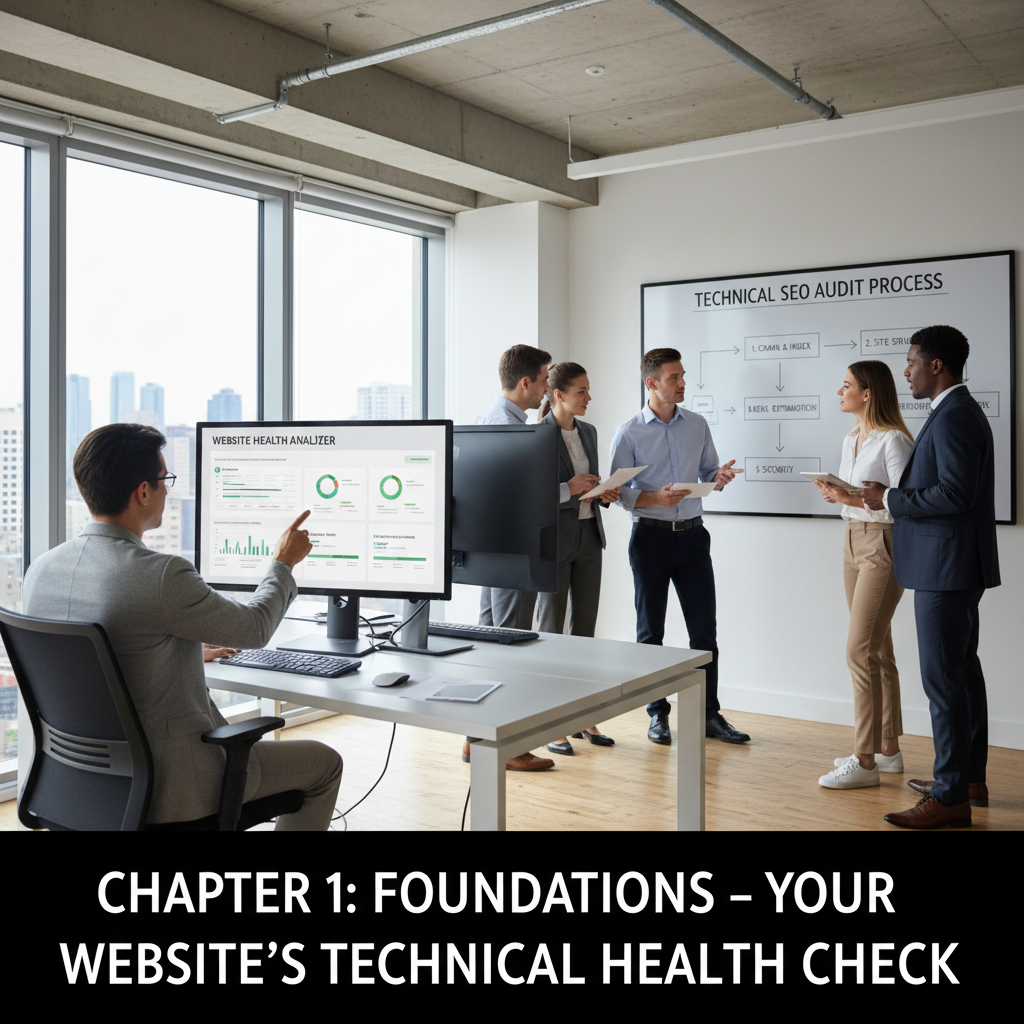
Chapter 1: Foundations – Your Website’s Technical Health Check
Before you write a single blog post or target a keyword, your website must be built on a solid technical foundation. Think of it like building a house; without strong fundamentals, everything else you build on top is at risk of collapse. In the digital world, this foundation is your site’s technical health. Effective SEO for a small business website begins here, ensuring search engines can easily find, crawl, and understand your content.
Website Structure and User Experience
A clean, logical website structure is crucial for both visitors and search engine crawlers. Users should be able to navigate your site intuitively, finding the information they need within a few clicks. This positive user experience (UX) encourages them to stay longer, reducing bounce rates and sending strong positive signals to Google. For search engines, a clear hierarchy—like Home > Services > Web Design—helps them understand the relationship between your pages and which ones are most important. A confusing site frustrates users and makes it difficult for search engine bots to index your content efficiently, effectively hiding it from potential customers.

Mobile-First Indexing and Page Speed
In 2026, the majority of online searches happen on mobile devices. Because of this, Google primarily uses the mobile version of your site for indexing and ranking—a practice known as mobile-first indexing. If your site is slow or performs poorly on a smartphone, your rankings will suffer, no matter how great it looks on a desktop.
Google measures this experience using metrics called Core Web Vitals. Optimizing them is non-negotiable.
| Core Web Vital | What It Measures | Ideal Target |
|---|---|---|
| LCP (Largest Contentful Paint) | Loading performance | Under 2.5 seconds |
| INP (Interaction to Next Paint) | Responsiveness to user input | Under 200 milliseconds |
| CLS (Cumulative Layout Shift) | Visual stability during loading | Score below 0.1 |
Achieving these scores can be complex. Partnering with a skilled agency like Dynareach ensures your site is technically optimized for speed and performance, passing the Core Web Vitals assessment with flying colors.
Secure Your Site: HTTPS
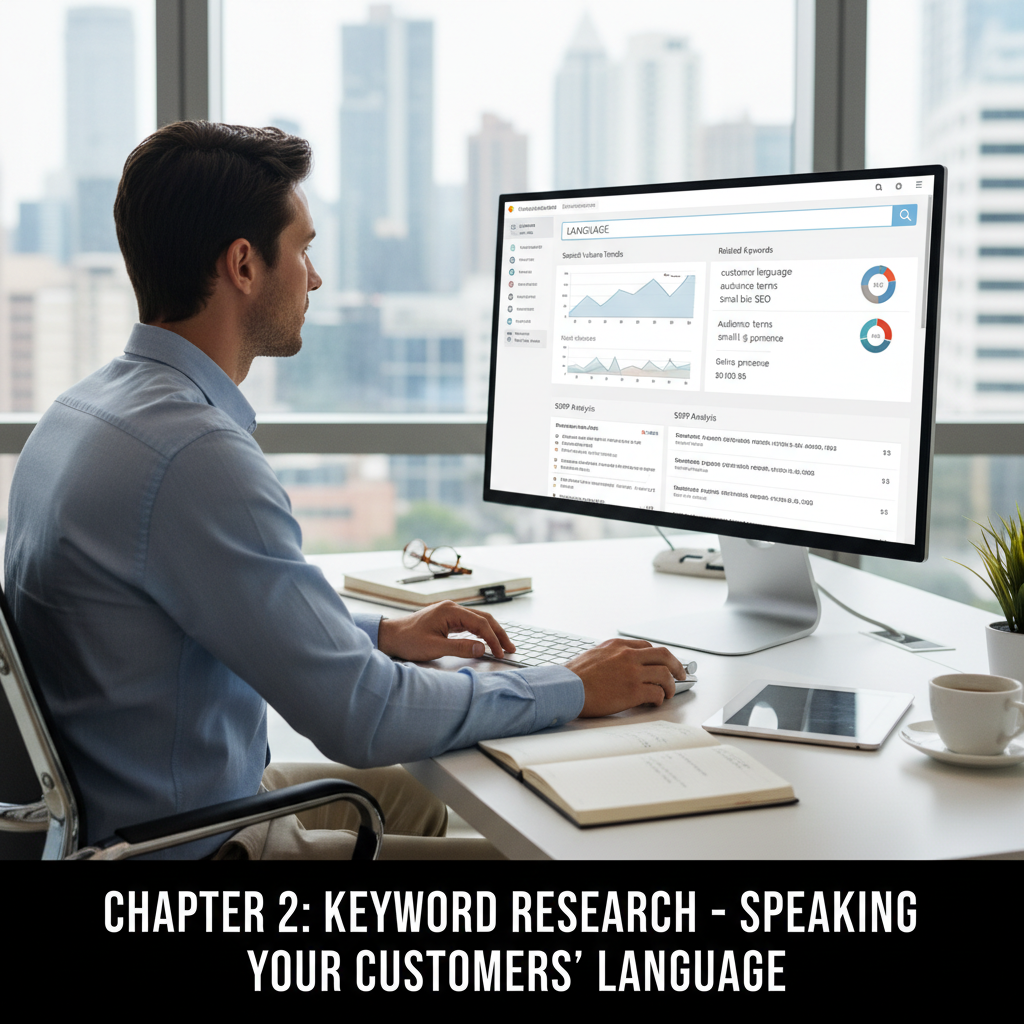
Chapter 2: Keyword Research – Speaking Your Customers’ Language
Think of keyword research as the blueprint for your entire digital marketing strategy. Before you can attract customers, you must understand the exact language they use when searching for your products or services online. Effective SEO for a small business website isn’t about guessing; it’s about using data to align your content with real-world user behavior. This process bridges the gap between what you offer and what your audience is actively looking for.
Identifying Your Target Audience’s Search Queries
The first step is to get inside your customer’s head. Start by brainstorming a list of core topics related to your business. If you own a local coffee shop, your list might include “espresso,” “cold brew,” and “local cafe.” From there, expand on these topics by considering customer problems or questions. Think about what they might type into Google: “best latte near me,” “coffee shop with free wifi,” or “where to buy whole bean coffee downtown.”
Use free tools like Google’s “People Also Ask” section and related searches to uncover authentic queries. This initial brainstorming provides the raw material you’ll use to find high-value keywords.
Long-Tail Keywords: The Small Business Advantage
While broad, one-word keywords like “shoes” may have massive search volume, they are incredibly competitive and often have low purchase intent. Small businesses thrive by targeting long-tail keywords—longer, more specific phrases of three or more words.
Someone searching “best waterproof hiking boots for men with wide feet” has a much clearer intent to buy than someone just searching “boots.” These specific queries have less competition, making it easier for you to rank. Mastering them is a cornerstone of a smart SEO strategy.
| Keyword Type | Example | Competition | Conversion Intent |
|---|---|---|---|
| Short-Tail | “Landscaping” | High | Low |
| Long-Tail | “Drought-tolerant garden design Austin” | Low | High |
Analyzing Competitor Keywords
Chapter 3: On-Page SEO – Optimizing Your Content for Search Engines
Once your keyword research is complete, the next step is to apply it directly to your website’s pages. This is called on-page SEO, and it involves optimizing the elements that search engines and users see. Mastering these fundamentals is a critical component of successful SEO for a small business website.
Crafting Compelling Titles and Meta Descriptions
Think of your page title and meta description as your website’s digital billboard on Google. The title tag (the clickable headline in search results) and the meta description (the short summary beneath it) are your first, and often only, chance to earn a click.
For maximum impact, keep your title tag under 60 characters and your meta description around 160 characters. Each should include your primary keyword and be written to entice a user to click. For example, instead of a title like “Services,” opt for “Expert Plumbing Services in [Your City] | 24/7 Repairs.” The meta description should then briefly summarize the value you offer, promising a solution to the user’s problem. Every page on your site must have a unique title and description that accurately reflects its content.
Strategic Keyword Placement and Content Quality
While getting the click is important, keeping the user on your page is what truly matters. This comes down to content quality. Your content must be informative, well-written, and directly answer the searcher’s query. Google’s algorithms are designed to reward pages that provide genuine value.
Integrate your primary keyword naturally within the first 100 words of your page and in at least one subheading. Sprinkle it, along with related secondary keywords, throughout the text. Avoid “keyword stuffing”—the outdated practice of repeating keywords unnaturally—as it creates a poor user experience and can result in search engine penalties. Write for your human audience first; the search engine rankings will follow.
Image Optimization and Internal Linking
Words aren’t the only part of your page to optimize. Images break up text and improve user engagement, but they also offer SEO value. Optimize them by:
- Compressing files: Use a tool to reduce image file sizes for faster page loading.
- Using descriptive filenames: Change “IMG_8021.jpg” to “local-bakery-chocolate-cake.jpg.”
- Writing alt text: Add a descriptive alt text tag to every image. This helps search engines understand the image content and is essential for accessibility.
Chapter 4: Local SEO – Dominating Your Geographic Market
For businesses with a physical storefront or a defined service area, local SEO is not just an option—it’s the engine of customer acquisition. It connects you with high-intent customers who are actively searching for your products or services “near me.” Mastering local search is a foundational pillar of any effective SEO for small business website strategy in 2026, ensuring you’re visible the moment a local customer needs you.
Google Business Profile: Your Local SEO Hub
Your Google Business Profile (GBP) is the single most critical asset in your local SEO arsenal. It acts as your digital storefront on Google Search and Maps, often providing a potential customer’s first impression of your business. Optimizing it is non-negotiable.
Start by claiming and verifying your profile. From there, your goal is to be meticulous. Fill out every single section, including your primary and secondary business categories, service areas, operating hours, and special attributes (e.g., “wheelchair accessible,” “free Wi-Fi”). Upload a steady stream of high-resolution photos of your storefront, team, products, and finished work. Regularly use the Google Posts feature to share updates, promotions, and company news. Answering customer questions in the Q&A section further signals to Google that you are an active and authoritative local entity.
Gathering and Managing Online Reviews
Online reviews are the modern-day word-of-mouth. They provide powerful social proof and are a significant ranking factor for the local map pack. Develop a simple, sustainable process for encouraging satisfied customers to leave feedback, such as a follow-up email or a QR code at your point of sale.
Even more important than gathering reviews is managing them. Respond to all feedback—promptly and professionally. Thank customers for positive reviews and address negative comments constructively and with empathy. This public engagement demonstrates that you value customer feedback and are committed to service excellence.
Local Citations and Geographical Keywords
Consistency across the web builds trust with search engines. A local citation is any online mention of your business’s Name, Address, and Phone number (NAP). Ensure your NAP is 100% identical across all major online directories and platforms. Discrepancies can confuse search engines and dilute your local authority.
Chapter 5: Off-Page SEO – Building Authority and Trust
While on-page SEO sets your foundation, off-page SEO is how you build your website’s reputation across the internet. It involves all the activities you do away from your site to raise its profile and authority in the eyes of search engines. Think of it as building your digital credibility, one external signal at a time.
Demystifying Backlinks: Quality Over Quantity
At the heart of off-page SEO are backlinks—links from other websites pointing to yours. Google and other search engines view these links as votes of confidence. When another site links to you, it’s signaling that your content is credible, trustworthy, and valuable.
However, not all votes are equal. The modern strategy for SEO for a small business website prioritizes quality over quantity. A single backlink from a highly respected industry blog or a local news outlet is far more powerful than dozens of links from low-quality, irrelevant directories. In fact, spammy or manipulative link-building can result in penalties that harm your rankings. Focus on earning links from authoritative sources within your niche to build a strong, penalty-proof backlink profile.
Content Marketing for Link Building
So, how do you earn those coveted high-quality links? The most sustainable and effective method is content marketing. Instead of asking for links, you create assets so valuable that other people naturally want to reference and share them. This is the secret to earning, not just building, links.
Consider creating:
- Definitive Guides: A comprehensive, go-to resource that covers a topic in-depth.
- Original Research or Data: Survey your customers or analyze industry data to publish unique findings.
- Helpful Tools or Templates: A simple calculator or checklist that solves a common problem for your audience.
- Compelling Infographics: Visually engaging graphics that simplify complex information and are highly shareable.
By consistently publishing exceptional content, you position your brand as a thought leader, making your site a natural magnet for backlinks.
Social Media Signals and Brand Mentions
Chapter 6: Tracking Your Success and Adapting Your Strategy
SEO is not a set-it-and-forget-it activity. To achieve meaningful, long-term growth, you must continuously measure your results and adapt your approach. This ongoing cycle of analysis and refinement ensures your efforts remain effective and your investment yields a strong, positive return.
Essential SEO Tools for Small Businesses
You don’t need a massive budget to track your performance. Google provides two powerful and completely free tools that are essential for any business. Google Analytics offers deep insights into who is visiting your site, how they found you, and how they behave once they arrive. Google Search Console is your direct line to Google, showing which search queries bring users to your site, identifying any technical errors, and reporting on your site’s overall health in Google’s index. While these are foundational, various affordable third-party SEO platforms can provide more granular keyword tracking and competitive analysis to round out your toolkit.
Monitoring Your Keyword Rankings and Traffic
Interpreting your data is the key to refining your SEO for small business website strategy. In Google Analytics, focus on the “Organic Search” traffic channel. Are your visitor numbers growing month-over-month? Which blog posts or service pages attract the most organic visitors? Metrics like bounce rate and average session duration tell you whether that content is meeting user expectations.
In Google Search Console, the “Performance” report is your goldmine. A high number of impressions but a low click-through rate (CTR) for a primary keyword is a clear signal. It means your page is visible in search results, but its title tag or meta description isn’t compelling enough to earn the click. Tracking these key performance indicators (KPIs) reveals what’s working and what requires immediate attention.
Adapting to Algorithm Changes and Future Trends
The digital marketing landscape is in constant motion. Google frequently updates its core algorithms, and emerging trends like generative AI in search are fundamentally reshaping how users find information. A static approach to SEO for small business website will quickly become obsolete. Staying informed and agile is non-negotiable for lasting success. However, most small business owners are too busy running their company to track every industry shift. This is where an expert partner becomes invaluable. For comprehensive tracking and agile strategy adjustments, consider partnering with an agency like Dynareach. We use advanced tools and deep expertise to keep your small business ahead of the curve, interpreting complex data and proactively adapting your strategy to secure your long-term success.
Conclusion: Your Path to Sustainable Online Growth
Embarking on the journey of SEO for a small business website can feel complex, but it is the single most effective strategy for achieving sustainable long-term visibility and growth. By focusing on the core principles, you are not just chasing rankings; you are building a valuable digital asset that serves your business for years to come.
Recap of Key SEO Principles
Throughout this guide, we’ve explored the essential pillars of a successful SEO strategy. It begins with a solid foundation of technical SEO, ensuring your site is fast, secure, and easily understood by search engines. On top of that, compelling on-page SEO—driven by strategic keyword research, high-quality content, and optimized meta descriptions—captures your audience’s attention. Finally, off-page SEO, including earning authoritative backlinks and mastering your local presence through your Google Business Profile, builds the trust and authority needed to rise above the competition. Each element works in concert to create a powerful, organic marketing engine.
The Long-Term Rewards of Consistent SEO Efforts
Unlike paid advertising, where visibility vanishes the moment you stop paying, SEO is an investment with compounding returns. Consistent effort builds momentum, creating an upward spiral of increasing traffic, authority, and customer trust. While paid ads can deliver a quick boost, a well-executed SEO strategy provides a steady stream of qualified leads who find you organically because they see you as a credible solution to their problems. This shift from short-term tactics to long-term asset building is fundamental to creating a resilient and profitable online presence.
Partnering for Success: How Dynareach Can Help
Navigating the nuances of SEO requires expertise and persistent effort—resources that are often stretched thin in a small business. That’s where a dedicated partner can make all the difference. At Dynareach, we specialize in creating holistic digital strategies that integrate expert SEO with professional web design and targeted digital advertising. We don’t just optimize websites; we build growth frameworks tailored to your unique business goals, allowing you to focus on what you do best while we secure your online success.
Ultimately, effective SEO for a small business website is your pathway to independence from paid platforms and the key to building a brand that lasts. Ready to enable lasting growth and turn your website into your most powerful marketing tool? Schedule a complimentary strategy session with Dynareach today.