
SEO Services for Small Businesses Price: A 2026 Breakdown
The average price for small business SEO services in 2026 is between $1,500 and $4,000 per month for a retainer. Project-based work often ranges from $2,000 to $20,000, while hourly consulting rates typically land between $100 and $149 per hour. Your final cost depends entirely on the scope, your starting point, and the competitiveness of your industry. A simple local campaign will cost far less than a national e-commerce strategy targeting high-value keywords.

How Much Do SEO Services for Small Businesses Cost?
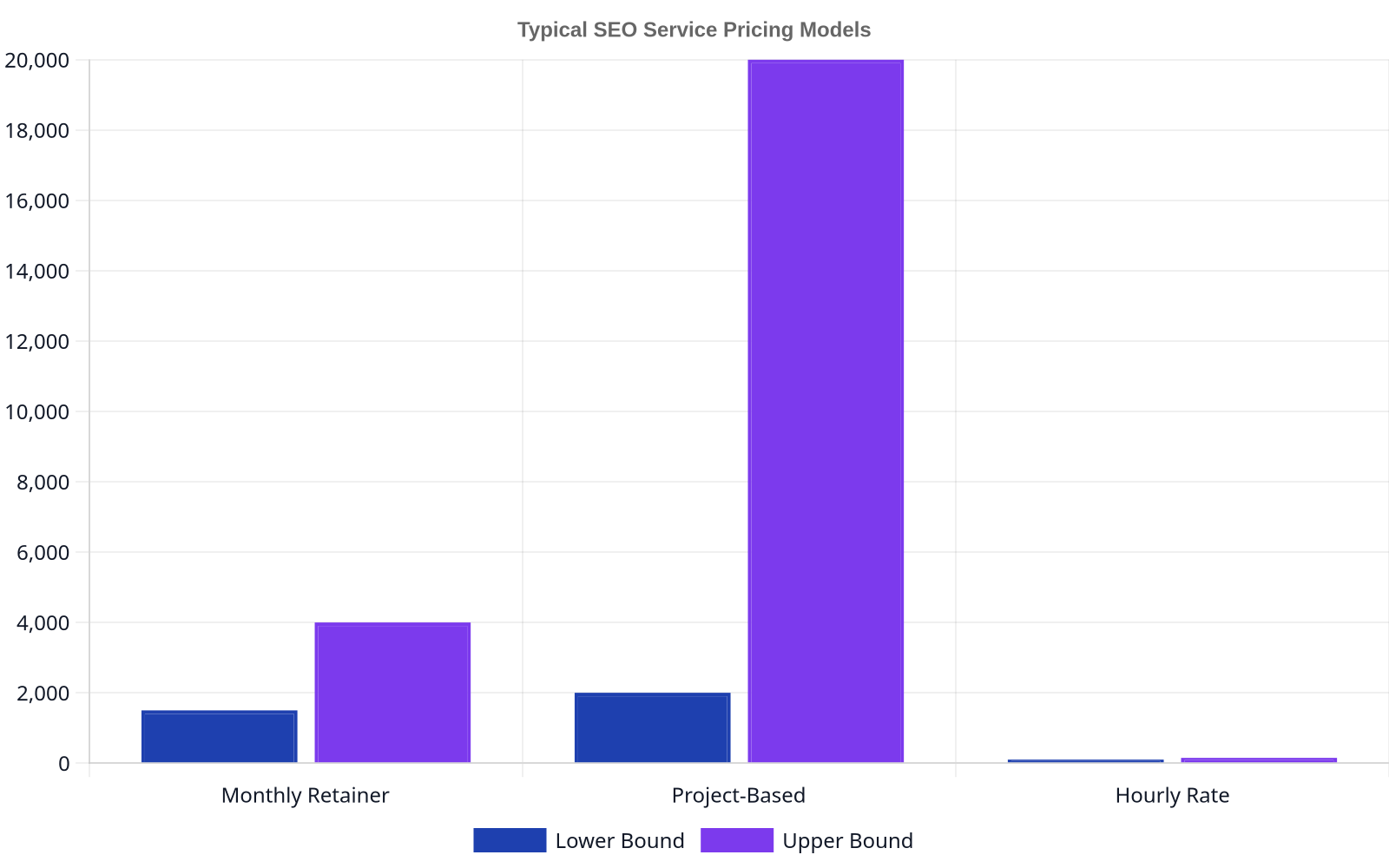
Understanding the price of SEO services for small businesses requires looking at the different ways agencies structure their fees. There is no one-size-fits-all number, but there are standard models. The most common are monthly retainers, project-based fees, and hourly rates. For most small businesses, a monthly retainer is the most effective structure for achieving and maintaining search visibility.
Here’s a breakdown of what you can generally expect to pay for different SEO pricing models in 2026:
Source: Market data and pricing information from Clutch indicate these ranges are typical for reputable agencies.
At Dynareach, we focus on creating SEO programs where content is treated as a long-term investment, ensuring the budget you allocate builds a sustainable asset for your business, not just a temporary ranking boost.
Factors Influencing SEO Service Costs

Two businesses can pay vastly different prices for SEO and both be getting a fair deal. The cost is a direct reflection of the work required to achieve your goals. Key variables include your current website health, the competitiveness of your industry, and the geographic area you’re targeting.
- Scope of Services: A basic local SEO package is less complex than a national e-commerce campaign that includes technical SEO, extensive content creation, and digital PR for backlinks. Our approach integrates core services like on-page optimization, technical SEO, and keyword research to build a solid foundation.
- Business Size & Goals: A startup aiming for initial visibility has different needs than an established business looking to dominate a competitive market. Ambitious goals, like ranking for highly competitive terms, require a larger budget and a more intensive strategy.
- Website Condition: Is your website brand new, or does it have years of poorly optimized content and technical issues? A site requiring a major technical overhaul and content audit will demand more upfront investment than a clean, well-structured one.
- Industry Competition: Trying to rank for “personal injury lawyer in Los Angeles” is a different battle than “custom pottery in rural Ohio.” Highly competitive niches, particularly in finance, legal, and health, demand significantly more resources to gain traction. A study by the University of Houston Small Business Development Center highlights the necessity of a professional online presence to stand out.
- Geographic Targeting: Local SEO for a single-location business is the most affordable. Targeting multiple cities (regional SEO) increases complexity and cost. National or international campaigns are the most expensive, requiring a broad strategy to compete across diverse markets.

Understanding Monthly SEO Retainers for Small Businesses
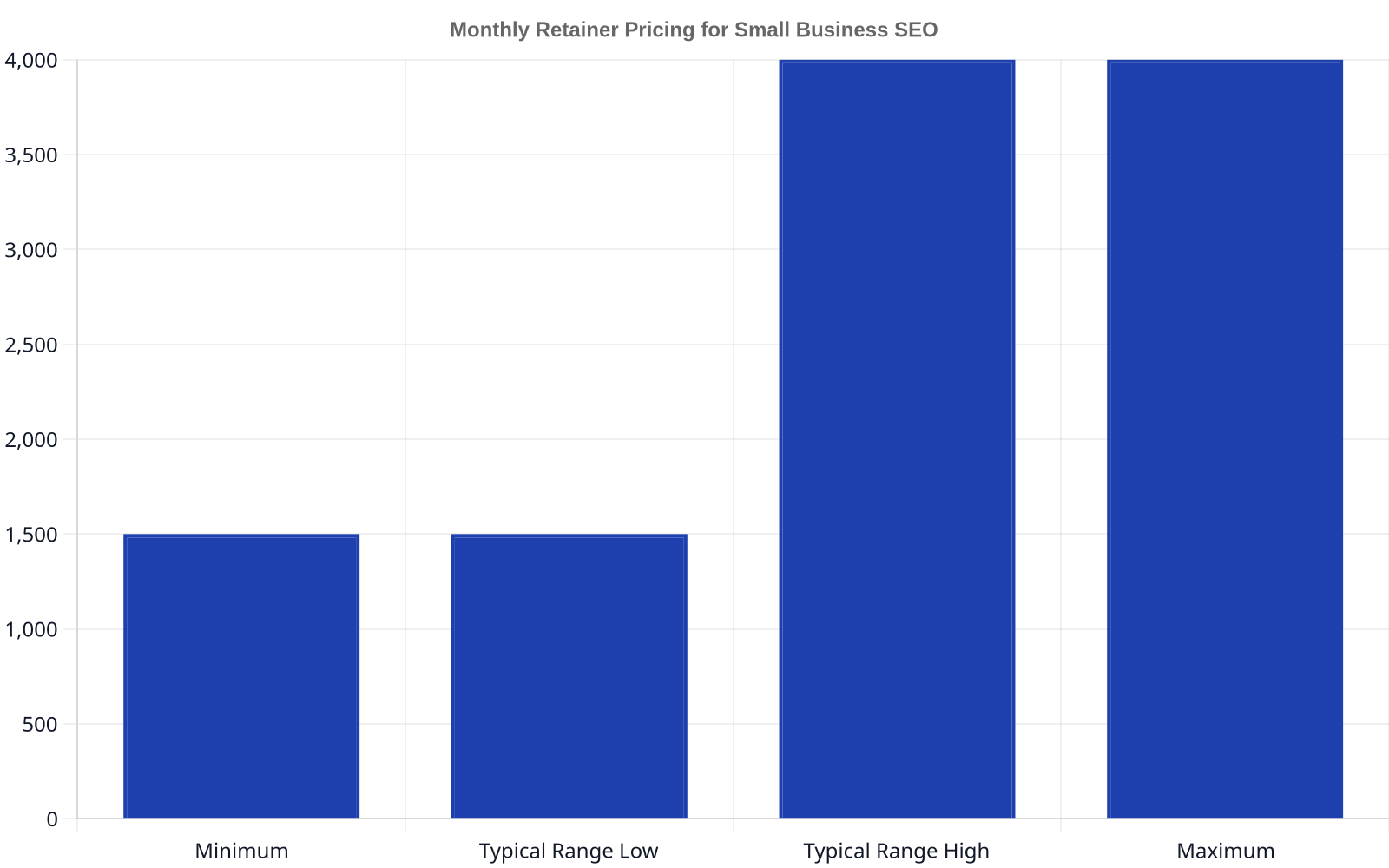
A monthly retainer is the most common pricing model for comprehensive SEO. It involves a fixed monthly fee for an agreed-upon set of services. This model works best because SEO is a long-term strategy, not a one-time fix. It allows an agency to become a true partner, continuously optimizing, building authority, and adapting to algorithm changes.
The goal isn’t just to rank for a keyword. It’s to build a system where your ideal customers find you consistently, month after month. That requires ongoing effort, not a single sprint.
A typical monthly retainer for a small business, as noted, falls between $1,500 (as of September 2026)and $4,000.
- At the lower end ($1,500 (as of September 2026)/month): This might cover fundamental on-page SEO, local SEO (Google Business Profile management), basic keyword tracking, and monthly reporting for a business in a low-competition market.
- At the higher end ($4,000 (as of September 2026)+/month): This budget allows for a more aggressive strategy, including consistent content creation (blog posts, articles), technical SEO audits, link-building campaigns, and deeper strategic consulting. This is necessary for businesses in competitive industries or those targeting a national audience. For example, some specialized SEO projects reviewed on Clutch can cost less than $10,000, but this is usually for a one-off task, not a sustained growth campaign.
Costs People Forget: The Hidden Expenses in SEO
Budgeting for the monthly retainer is just the start. Several other costs can arise that business owners often overlook. Failing to account for these can derail an otherwise well-planned SEO strategy.
- Content Creation Costs: Your SEO agency might identify content gaps, but who will write the articles, film the videos, or design the infographics? High-quality content is a separate expense, whether you hire freelance writers, use a content service, or have the agency produce it for an additional fee.
- Website Development Fees: If a technical SEO audit reveals your site is slow, not mobile-friendly, or built on a platform that hinders SEO, you’ll need a developer to fix it. These fixes, from improving site speed to implementing schema markup, are a separate cost from the SEO strategy itself.
- Link-Building & Digital PR: Earning high-authority backlinks often requires more than just creating good content. Budgets for digital PR campaigns, sponsoring content on industry blogs, or using services like HARO (Help a Reporter Out) should be considered. These campaigns build authority, which is critical for competitive rankings.
- Specialized Software and Tools: While your agency will have its own tool stack (Ahrefs, Semrush, Moz Pro), you may want your own access to analytics or rank tracking software for transparency. These subscriptions can add up.

Where to Cut Costs Without Regretting It
Tight budgets are a reality for small businesses, but cutting the wrong corners in SEO can be a costly mistake. Instead of looking for the cheapest provider, focus on smart savings.
- Focus on Local SEO First: If you serve a specific geographic area, concentrate all your initial efforts there. Dominating your local market provides a strong foundation and faster ROI before you attempt to compete on a national level.
- Handle Some Content In-House: If you or someone on your team is a strong writer and understands your customer, you can produce the first draft of blog posts or FAQs. Your SEO agency can then optimize them for keywords and structure, saving on full-service content creation fees.
- Prioritize Technical Fixes: Don’t try to fix every single technical issue at once. Work with your agency to identify the fixes that have the biggest impact on user experience and rankings, like mobile-friendliness and site speed, and tackle those first.
- Avoid “Guaranteed Ranking” Scams: The biggest way to save money is to avoid wasting it. Any agency that guarantees a #1 ranking is a red flag. As Phoenix.edu notes in their marketing resources, SEO is a process of optimization, not a predictable guarantee.
A cheap SEO plan that does nothing is infinitely more expensive than a pricier one that delivers leads. The real cost is the opportunity you lose by being invisible to your customers.
Investing in SEO is about generating a return. Our work is designed to ensure your website gets found on Google, bringing in real traffic and customers. This focus on growth strategies is what turns an SEO budget from an expense into a powerful investment.
Further reading
FAQ
Can I do SEO myself for my small business?
Yes, you can handle basic on-page SEO and local listings yourself, especially if you’re on a tight budget. However, you will likely hit a ceiling. A professional agency brings expertise in technical SEO, competitive strategy, and link building that is difficult to replicate without years of experience and expensive tools.
How long does it take to see results from SEO?
Typically, you should expect to see initial movement and leading indicators (like impression growth and keyword ranking improvements) within 3 to 6 months. Significant results, such as a substantial increase in organic traffic and leads, often take 6 to 12 months. The timeline depends on your website’s starting point, the competition, and the aggressiveness of the campaign.
What is included in a typical monthly SEO service?
Most monthly packages include an initial audit, keyword research, on-page optimization (titles, metas, content), technical monitoring, Google Business Profile management, and monthly performance reporting. More comprehensive plans add content creation, link-building campaigns, and more in-depth technical fixes.
Why is SEO so expensive?
Effective SEO is labor-intensive. It involves deep technical expertise, strategic planning, creative content development, and relationship-building for links. You are paying for the time and experience of a team of specialists, access to professional tools that cost thousands per month, and a strategy tailored to your specific business goals. The high price reflects the high value of ranking at the top of Google for valuable keywords.
Is SEO worth the cost for a small business?
Absolutely, provided the strategy is sound. Unlike paid ads, which stop when you stop paying, the authority and rankings built through SEO are a long-term asset that can generate organic traffic and leads for years. For many businesses, SEO provides one of the highest returns on investment of any marketing channel.
Choosing the right SEO partner is about more than just finding the right price; it’s about finding a team that understands your business and can build a sustainable growth strategy. If you’re ready to see how a strategic SEO plan can work for your business, you can schedule a discovery call with our team.