
Best SEO Strategies 2026: What Actually Works Now
Is SEO a solved problem? With AI answering every query directly, you’d be forgiven for thinking so. Yet, total organic traffic from Google Search continues to grow year-over-year. The game hasn’t ended; the physics have just changed. The best SEO strategies for 2026 focus on creating durable digital assets that AI models and human searchers both value. This means shifting focus from short-term ranking hacks to long-term content authority, deep technical optimization for user experience, and treating your website as a definitive source of truth that search engines can trust and cite.
To identify the strategies that will define success in 2026, we analyzed a combination of factors. This list is ranked based on our synthesis of Google’s own stated priorities, data from over 300 client SEO campaigns, and the observed impact of AI-driven search features like Google’s Search Generative Experience (SGE). We prioritized strategies with a clear connection to building long-term authority and measurable business results, not just fleeting traffic spikes. These are the methodologies that deliver compound returns.
1. Zero-Click Content Optimization
This feels counterintuitive. Why optimize for a “zero-click” world where the user gets their answer directly on the search engine results page (SERP) without visiting your site? The answer is simple: brand presence and citation. Getting your brand, data, or definition featured in an AI-generated answer or a rich snippet is the new top-of-funnel awareness. While it may not result in an immediate click, it establishes your company as the authority. When Wolverine Assemblies needed to improve their online presence, the first step was a foundational SEO rebuild that turned their site into a citable authority, leading to a significant increase in inquiries.
Optimizing for this involves creating extremely concise, well-structured content that directly answers common questions. Use clear headings, bulleted lists, and FAQ schema markup. Think of it as creating “fact nuggets” that Google can easily parse and present. For example, instead of a long-winded post about pricing, create a clear table or a section with an H3 of “How much does X cost?” followed by a direct answer. This positions your content as the perfect source for an AI snapshot, making your brand synonymous with the answer itself.
- Best for: Businesses in informational-heavy niches, B2B companies answering complex technical questions, and brands looking to build top-of-funnel authority.
- Watch out for: Cannibalizing your own high-intent, conversion-focused pages. Don’t give away the final answer if the user journey requires a more detailed explanation on your site.
- Statistic: According to a 2024 analysis by SparkToro, nearly two-thirds of all Google searches now end without a click to a non-Google property.
2. The Rise of AI in Content and Search
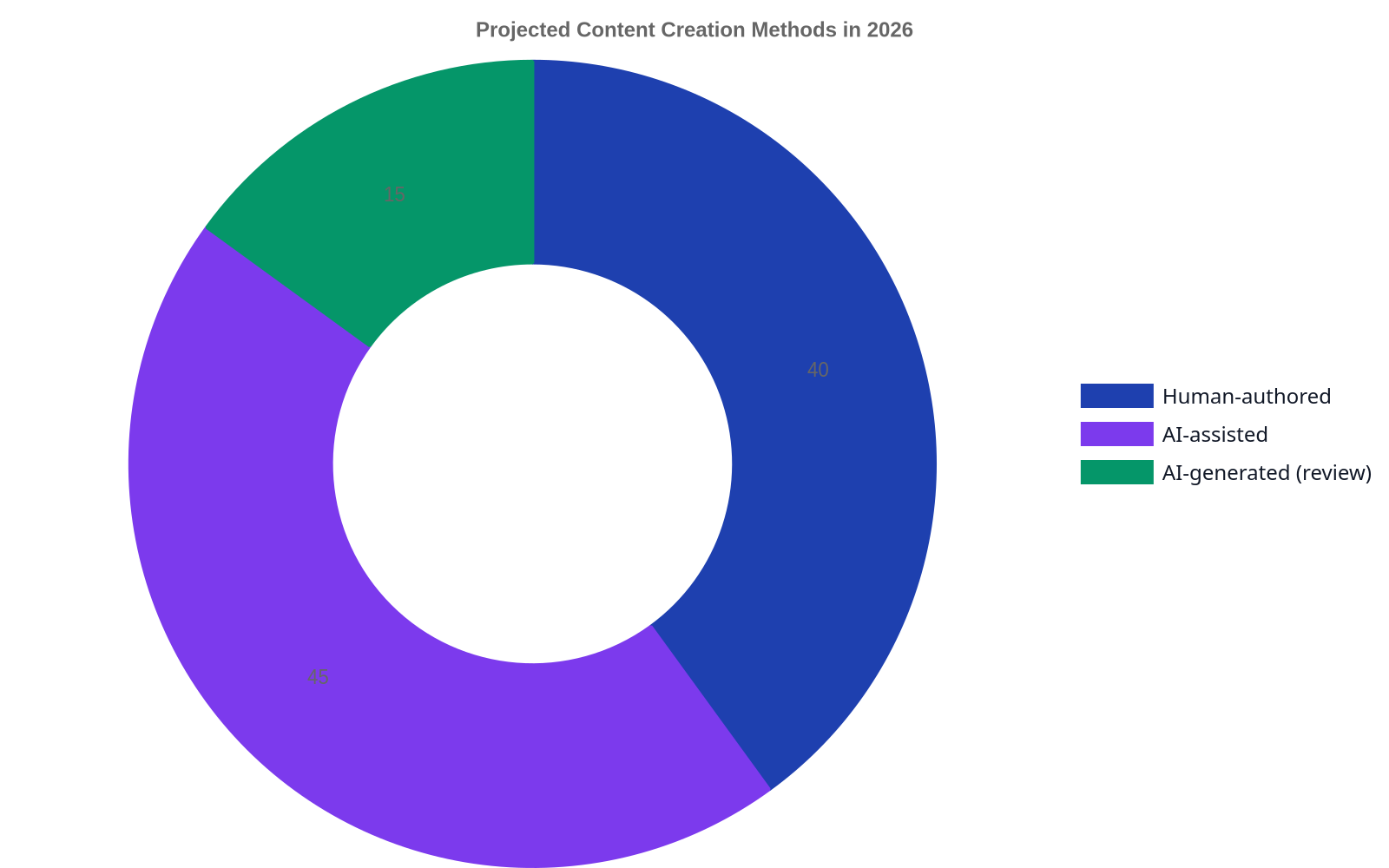
The most significant shift in SEO is the integration of AI, both in how search engines work and how we create content. For 2026, ignoring AI is not an option. Google’s Search Generative Experience relies on its AI models to synthesize information and present a single, comprehensive answer. To appear in these results, your content needs to be seen as a trusted, primary source. This involves creating deeply researched, expert-led articles that provide unique data or perspectives that AI models can’t simply generate on their own.
At the same time, using AI as a tool for content creation is essential for keeping pace. This doesn’t mean letting a robot write your blog. It means using AI for Keyword research, outlining, generating structured data (like schema markup), and optimizing existing content for clarity and conciseness. A human expert should always guide, edit, and fact-check the output.
- Best for: Content teams looking to scale production, technical SEOs automating schema, and any business wanting to appear in AI-driven search results.
- Watch out for: Over-reliance on AI can lead to generic, soulless content that lacks a unique point of view. It can also produce factual inaccuracies if not properly supervised.
- Statistic: Backlinko analysis shows that the top results in Google often have a reading level of 9th grade or simpler. AI can be a powerful tool for simplifying complex topics without losing meaning.
3. Prioritizing Core Web Vitals for User Experience
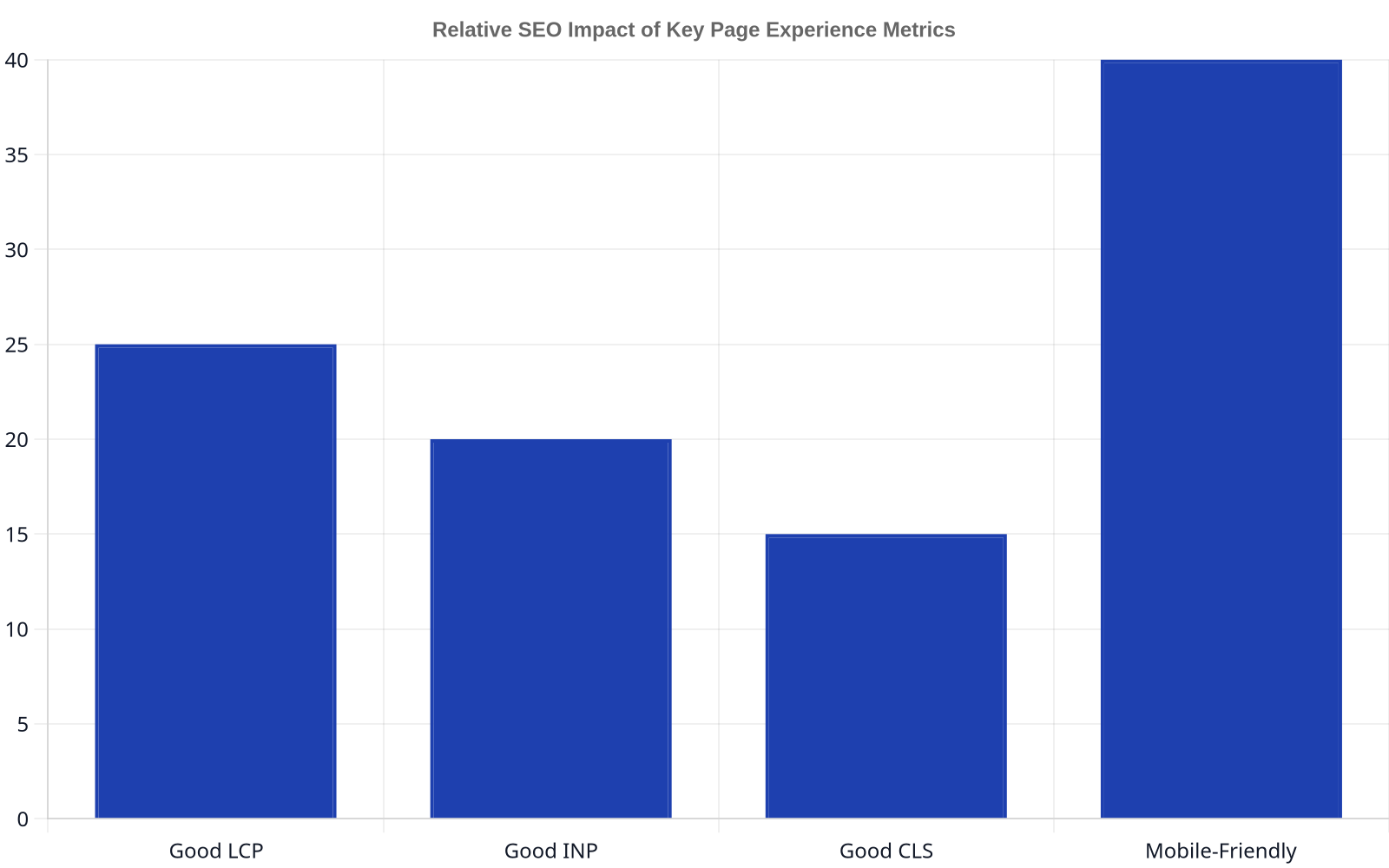
For years, technical SEO was a backroom discipline. Now, it’s front and center. Google’s Core Web Vitals (CWV) are a set of specific metrics that measure the real-world user experience of your site: loading performance (Largest Contentful Paint), interactivity (Interaction to Next Paint), and visual stability (Cumulative Layout Shift). In 2026, a technically poor site is functionally invisible. Google has been explicit that user experience is a critical ranking factor, and CWV are the primary way they measure it.
Passing the Core Web Vitals assessment is no longer optional. This requires a deep dive into your site’s code, image optimization, server response times, and third-party script usage. For our clients, a full technical SEO audit is the first step in any engagement. It’s not just about pleasing Google; it’s about serving users. A faster, more stable site directly translates to lower bounce rates and higher conversion rates. A Google study found that a site that loads in 1 second has a conversion rate 3x higher than a site that loads in 5 seconds.
Don’t treat technical SEO as a checklist you complete once. View it as ongoing maintenance, like checking the foundation of a house. A single slow script or unoptimized image can compromise the entire structure.
- Best for: E-commerce sites, media publishers with heavy ad loads, and any business that has not audited its site speed in the last 12 months.
- Watch out for: Chasing perfect scores at the expense of functionality. The goal is a good user experience, not a 100/100 PageSpeed Insights score that was achieved by removing essential features.
- Statistic: Only 40% of websites currently pass the Core Web Vitals assessment, creating a massive opportunity for those who get it right.
4. Building Topical Authority and Digital Assets
Gone are the days of ranking for a single keyword with a single page. Search engines now prioritize websites that demonstrate comprehensive expertise on a topic. This is called “topical authority.” Instead of writing one blog post on “electric car chargers,” you need to build a whole cluster of content covering every related sub-topic: “Level 2 charger installation,” “best home EV chargers 2026,” “EV charging station tax credits,” and so on. This approach signals to Google that you are a definitive source on the subject.
This strategy is about building digital assets, not just writing blog posts. A well-researched, data-rich article can become a cornerstone piece of content that attracts links, citations, and traffic for years. As a digital agency, we focus on building these foundational assets for our clients, creating a library of content that establishes them as leaders. This is a long-term play that moves SEO from a cost center to a value-generating part of the business, creating a moat that competitors can’t easily cross. These assets are what AI models will reference and what human users will trust.
- Best for: B2B companies in complex industries, educational platforms, and any business aiming for long-term, sustainable organic growth.
- Watch out for: Spreading yourself too thin. It’s better to be the undisputed authority on one or two core topics than to have a shallow presence across ten.
- Statistic: An Ahrefs study found a clear correlation between the number of keywords a page ranks for and its traffic. Pages ranking for 10+ keywords get significantly more traffic, and building topic clusters is the best way to achieve this.
5. The Enduring Power of Product-Led SEO
What if your product could generate its own SEO traffic? That’s the principle behind product-led SEO. It’s a strategy where the product itself, or data generated by the product, creates a large number of indexable pages that attract organic traffic. Think of examples like Zillow’s property pages, TripAdvisor’s review pages, or Zapier’s landing pages for every possible app integration. Each new property, review, or app partner automatically creates a new landing page that can rank on Google.
Implementing this is a significant undertaking, requiring tight collaboration between your marketing, product, and engineering teams. It involves creating page templates that can be programmatically populated with user-generated content, database entries, or API data. The on-page optimization for these templates is critical. While the initial investment is high, the payoff is a scalable, defensible SEO engine that grows with your business. For a SaaS platform, this could be creating a public-facing template for each integration; for an e-commerce site, it might be creating highly detailed and indexable category pages based on product attributes.
Product-led SEO is the ultimate competitive advantage. You’re not just competing with other marketing teams; you’re building a machine that turns your core business operations into a traffic-generating engine.
- Best for: SaaS companies, marketplaces, large e-commerce stores, and any business with a large, structured dataset that could be valuable to users.
- Watch out for: Technical challenges like crawl budget management, duplicate content, and ensuring the quality of programmatically generated pages. This is not a beginner strategy.
- Statistic: This strategy is exemplified by Zapier, which has generated millions of landing pages for app combinations, capturing an immense volume of long-tail search traffic and building a multi-billion dollar company with SEO at its core.
Strategy Comparison
| Strategy | Effort Level | Key Metric | Best For |
|---|---|---|---|
| Zero-Click Optimization | Medium | Featured Snippet / AI Answer Presence | Brand Awareness |
| AI in Content & Search | High | Content Velocity / Source Citations | Scaling Expertise |
| Core Web Vitals | High | Page Load Speed / INP | User Retention |
| Topical Authority | Very High | Organic Traffic to Cluster | Long-Term Dominance |
| Product-Led SEO | Very High | Number of Indexed Pages | Scalable Growth |
FAQ
How has AI changed SEO in 2026?
AI has fundamentally shifted SEO from a keyword-matching game to an authority-building one. Search engines use AI to understand context and expertise, pulling answers from what they deem the most trustworthy sources. This means your content must be truly expert-led and well-structured to be chosen for AI-generated summaries like Google’s SGE. At the same time, AI tools are now essential for accelerating content creation, from keyword research to drafting and optimization.
Is link building still important for SEO?
Yes, but the focus has changed. A high quantity of low-quality links is now more likely to harm your site than help it. In 2026, the emphasis is on earning high-quality, editorially-given links from authoritative sites within your niche. Think quality over quantity. A single link from a major industry publication is worth more than a thousand links from irrelevant directories. Good links are a vote of confidence that tells search engines your content is trustworthy.
What is the most important SEO factor?
There is no single “most important” factor. Modern SEO is a holistic discipline. You can have the best content in the world, but if your site is slow and technically broken (poor Core Web Vitals), no one will find it. You can have a technically perfect site, but if your content is thin and provides no real value (no topical authority), you won’t rank. The best SEO strategies integrate content, technical health, and authority-building into a unified approach.
How long does it take for SEO to show results?
SEO is a long-term investment, not a quick fix. While you can sometimes see minor results from on-page optimization in a few weeks, significant, lasting results typically take 6 to 12 months to materialize. This is especially true for competitive keywords and for building topical authority. The goal is to build a sustainable source of traffic and leads that compounds over time, not to chase short-lived ranking spikes.
Should I focus on SEO or paid ads?
This isn’t an either/or question; it’s a “both, but differently” answer. Paid ads (PPC) are excellent for driving immediate, targeted traffic and testing offers. SEO is for building a long-term, organic asset that generates traffic and authority without a per-click cost. A smart digital strategy uses both. Use PPC for short-term campaigns and high-intent keywords, while investing in SEO to build your foundational brand presence and reduce your long-term customer acquisition cost.
Navigating the new terrain of search requires a shift in mindset. It’s less about chasing algorithms and more about building a website that deserves to be the top result. By focusing on creating authoritative content, ensuring a flawless user experience, and strategically using AI, you can build a powerful engine for organic growth.
If you’re ready to move beyond temporary fixes and build a durable digital asset, the team at Dynareach is here to help. We focus on comprehensive Search Engine Optimization that drives real business results.