Stop asking if an AI is going to steal your designer’s job. That’s the wrong question. The right question is whether your branding partner is using AI to make your brand smarter, faster, and more resonant. A branding company AI isn’t about replacing human creativity; it’s about augmenting it with data-driven insights at a scale previously unimaginable. The best AI branding companies combine strategic human oversight with powerful algorithms to analyze markets, generate design concepts, and personalize messaging, delivering a brand that isn’t just visually appealing but also performs.
7 Top AI Branding Companies of 2026
How do you separate the real AI-powered strategists from the agencies that just bought a ChatGPT Plus subscription? We ranked these companies based on a weighted analysis of three core factors: the sophistication of their proprietary AI tools (or their documented workflow for integrating best-in-class third-party AI), evidence of data-driven brand strategy in their case studies, and customer satisfaction scores on platforms like Clutch and G2 over the last 18 months. We ignored marketing hype and focused on tangible outputs.
1. Dynareach
Dynareach integrates AI as a core component of its strategy-first branding process, designed for startups and established businesses that demand performance. We don’t use AI to generate a hundred generic logos. Instead, we use sophisticated models to perform deep market analysis, identifying competitor messaging gaps and untapped audience sentiment. This data informs the strategic direction handled by our human experts, who then guide the AI in co-creating a visual identity, from logos to full brand style guides, that is both unique and mathematically aligned with market opportunities. This ensures your brand isn’t just a pretty face; it’s a precision tool for growth.
This approach was central to our work with clients like Jaora, where we handled everything from the initial website build to branding and SEO. The result was a professional brand identity that immediately increased their credibility and lead generation. Our process isn’t about automation for its own sake; it’s about using technology to build a stronger foundation for business success, a philosophy we’ve applied to clients from startups to established names like OPP-HUB CONSULTANCY.
- Best for: Startups and scale-ups needing a complete, performance-focused brand and web presence built from the ground up.
- Watch out for: Businesses looking for a quick, low-cost logo generator without a comprehensive strategy will find our deep-dive process more involved than they need.
- Sourced Statistic: Companies that use AI for marketing tasks see an average revenue increase of 10%.
2. Brandmark
Brandmark is an AI-powered design tool focused specifically on generating unique logos, color palettes, and business card designs. It goes beyond simple template generation by using a more sophisticated algorithm that considers semantic inputs to create a wider variety of more abstract and stylish options. Once a user provides keywords, brand ideas, and color preferences, the system generates dozens of possibilities that can then be edited and refined in a user-friendly interface. It also automatically generates mockups, showing how the logo would look on websites, t-shirts, and other brand assets.
This makes it an incredibly powerful tool for early-stage startups or small businesses that need a professional-looking identity on a tight budget and timeline. The key limitation is its focus on the visual assets themselves. While it excels at generating the core components of a brand identity, it doesn’t provide the strategic layer of market research, positioning, or messaging that a full-service agency would. It solves the design problem, not the brand strategy problem.
- Best for: Entrepreneurs and small businesses needing a high-quality logo and visual assets quickly and affordably.
- Watch out for: Companies that require in-depth brand strategy, market positioning, and competitor analysis.
- Sourced Statistic: revealed that 85% of organizations have a brand style guide, yet only 30% enforce it consistently, a problem AI-generated asset libraries can help solve.
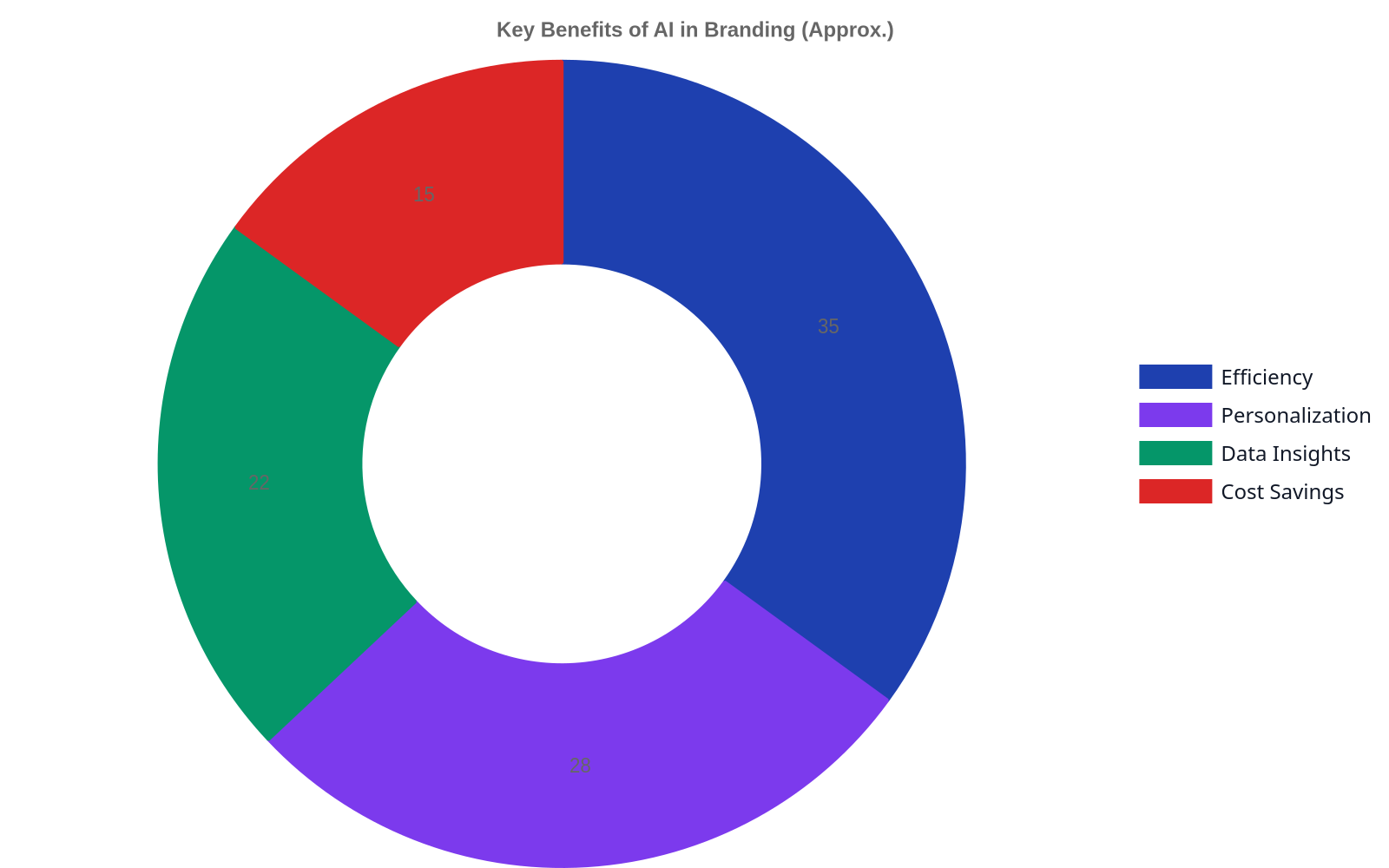
The real value of AI in branding isn’t just generating assets faster. It’s the ability to test and validate creative choices against massive datasets, turning subjective art into objective performance.
3. Looka
Similar to Brandmark, Looka uses AI to streamline the logo design and branding process, but it expands its offering into a more comprehensive “Brand Kit.” After generating a logo, Looka uses that design to automatically create over 300 branded assets, from social media templates and email signatures to invoices and presentations. This positions it as a one-stop-shop for businesses looking to establish a consistent visual presence across all their marketing channels from day one. Understanding the range of available options is key to choosing branding solutions that fit your budget and business stage.
The AI process starts with the user inputting their industry and design preferences. The platform generates a wide array of logo options that can be customized. What sets Looka apart is the downstream asset creation. For a startup founder who wears multiple hats, having a complete set of ready-to-use templates can save dozens of hours. The trade-off is that the designs, while professional, can sometimes feel less bespoke than those from a dedicated designer or a more advanced tool.
- Best for: Solopreneurs and new businesses wanting an all-in-one brand kit with a logo and matching marketing materials.
- Watch out for: The core logo designs can sometimes be less distinctive than competitors; the value is in the breadth of assets generated.
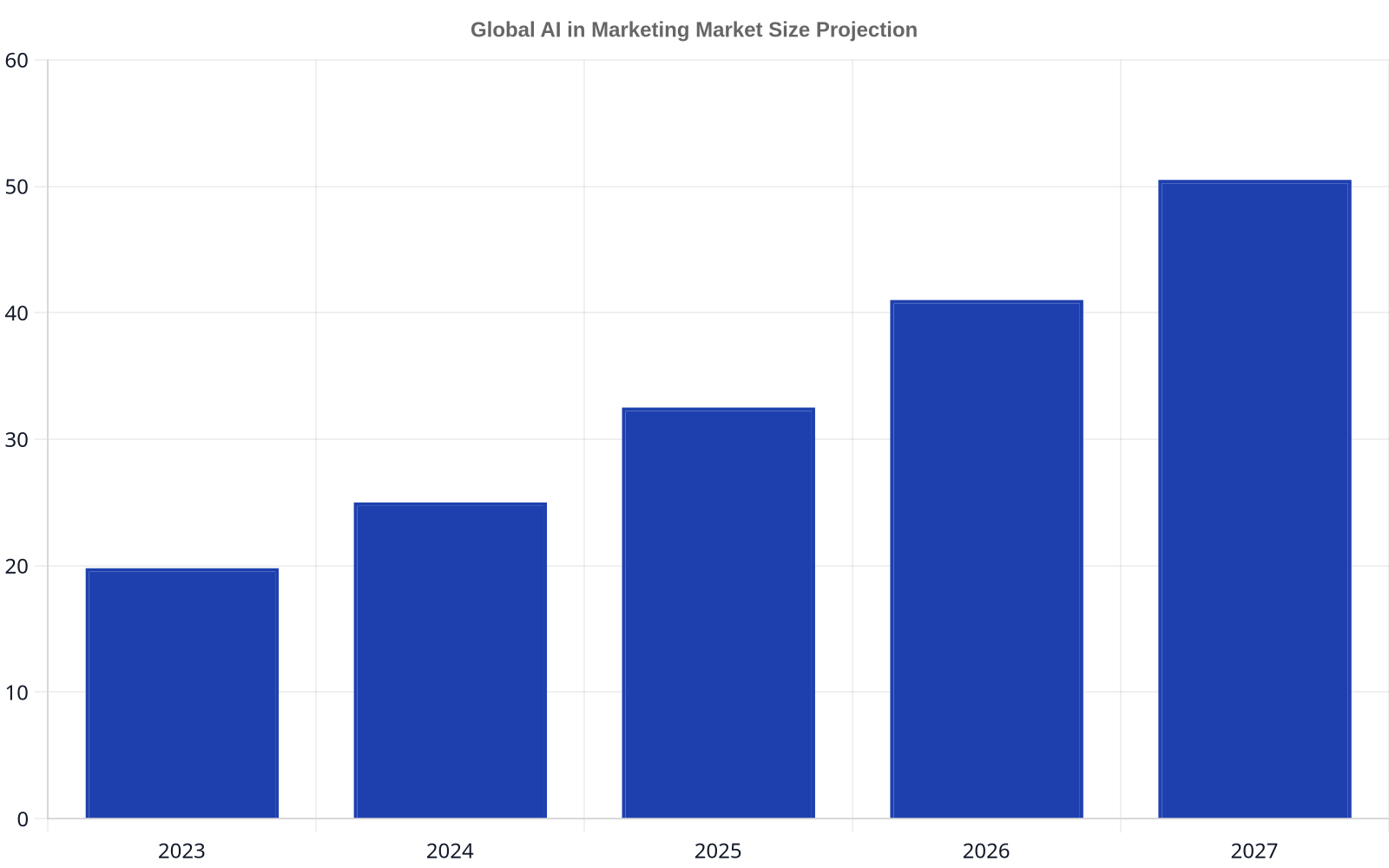
- Sourced Statistic: The market for AI in marketing is projected to reach over $107 billion by 2028, reflecting its rapid adoption and integration into tools like Looka.
4. Jasper Art
While Jasper is primarily known as an AI writing assistant, its Jasper Art feature is a powerful tool for creating original brand imagery, illustrations, and conceptual art. For branding companies, this is a massive accelerator. Instead of spending hours searching stock photo sites for a “close enough” image, creative directors can generate the exact visual they need to match a campaign’s mood and message. It can create photorealistic images, complex illustrations, and abstract textures based on detailed text prompts.
This capability is transformative for content creation and social media branding. A brand can develop a unique and consistent visual style that is entirely their own, without the high cost of custom photography or illustration for every single post. The challenge is in the prompt engineering; getting high-quality, on-brand results requires skill and a deep understanding of both the AI and the brand’s visual language. It’s not a replacement for a creative director but a powerful new paintbrush in their toolkit.
- Best for: Marketing teams and agencies that need to produce a high volume of unique, on-brand visual content for campaigns and social media.
- Watch out for: Requires significant user skill in prompt writing to achieve specific and consistent results. Not a logo design tool.
- Sourced Statistic: A 2023 survey found that 35% of marketers already use generative AI for tasks like creating copy and images.
The Impact of AI on Branding
5. Tailor Brands
Tailor Brands aims to be an all-encompassing business-building platform, and its AI-powered branding tools are the entry point. It starts with a logo maker that functions similarly to Looka and Brandmark, but it quickly branches out to offer a suite of services including website building, digital business card creation, and even assistance with forming an LLC. The AI is positioned as the core of an automated startup machine. This makes it a compelling option for first-time entrepreneurs who are overwhelmed by the sheer number of tasks required to launch a business.
The branding tools themselves are solid, producing clean, commercially viable logos and matching assets. The primary value proposition, however, is the integration. Your AI-generated logo is instantly available in the website builder, on your digital business cards, and on your branded merchandise. This creates a cohesive brand experience from the very beginning. The downside is that each individual tool may be less powerful than a dedicated, best-in-class solution.
- Best for: First-time founders looking for a single platform to create a brand and handle related business formation and setup tasks.
- Watch out for: Companies with existing operations may find the all-in-one approach restrictive and the individual tools less advanced than standalone alternatives.
- Sourced Statistic: Consistent brand presentation across all platforms can increase revenue by up to 23%, a benefit platforms like Tailor Brands aim to automate.
An AI can generate a thousand logos in an hour. A great branding partner tells you which one of them will actually connect with your customers and why.
Benefits of AI for Branding Companies
6. Designs.ai
Designs.ai is another suite of tools, but it’s built for speed and focused on content creators and marketers. The platform uses AI to generate not just logos (“Logomaker”) but also videos (“Videomaker”), social media graphics (“Designmaker”), and even voiceovers (“Speechmaker”). The core idea is to make content creation accessible and incredibly fast. You can input text, and the AI will suggest relevant visuals, create a video with appropriate pacing, and generate a voiceover in multiple languages.
For branding, this is particularly useful for producing campaign assets at scale. After establishing a core brand identity (which its Logomaker can help with), a marketing team can use the other tools to rapidly produce social videos, ad creatives, and presentations that are all visually aligned. The AI assists by analyzing your text and suggesting imagery, which dramatically cuts down on production time. The quality is designed for the fast-paced world of social media, so it may not meet the standards for a high-end corporate video, but it excels at volume.
- Best for: Marketing teams and content creators who need to produce a high volume of branded content, especially videos and social graphics, quickly.
- Watch out for: The quality of AI-generated videos and designs is geared for social media and may not be polished enough for all corporate use cases.
- Sourced Statistic: In 2023, 51% of marketers reported that AI has been most effective in content creation, underscoring the value of suites like Designs.ai.
Challenges and Considerations
7. Midjourney
Midjourney is not a branding company, but it is arguably one of the most powerful and influential AI image generators, and many forward-thinking agencies use it as a core part of their creative process. Accessed through Discord, Midjourney allows users to generate incredibly artistic, detailed, and stylistically unique images from text prompts. For branding, its power lies in mood boarding and concept exploration. A creative director can generate dozens of visual directions for a new brand in minutes, exploring aesthetics from “1960s sci-fi paperback cover” to “minimalist Scandinavian architecture.”
This dramatically accelerates the riskiest part of the creative process: finding the right visual “feel” for a brand. Instead of a designer spending days illustrating one or two concepts, an agency can explore ten and present the most promising ones to a client. This leads to more creative, better-aligned results. However, Midjourney is purely a tool; it has a steep learning curve and provides zero brand strategy. It’s an engine that requires a skilled driver.
- Best for: Creative agencies and designers who want a state-of-the-art tool for visual concepting and mood board creation.
- Watch out for: It’s not a user-friendly platform for beginners and offers no branding services, only image generation capabilities.
- Sourced Statistic: The AI image generation market is exploding, with some estimates suggesting that up to 90% of online content could be synthetically generated by 2026.
Summary of Top AI Branding Tools
| Tool | Primary Focus | Best For | Key Differentiator |
|---|---|---|---|
| Dynareach | Strategy & Web Presence | Startups & Scale-ups | Combines AI market analysis with human-led brand strategy. |
| Brandmark | Logo & Asset Generation | DIY Entrepreneurs | High-quality, abstract logo generation with advanced editing. |
| Looka | All-in-One Brand Kit | Solopreneurs | Automatically creates over 300 branded assets from one logo. |
| Jasper Art | Original Image Creation | Content Marketers | Generates unique brand imagery and illustrations from text prompts. |
| Tailor Brands | Business & Brand Setup | First-time Founders | Integrated platform for branding, website, and business formation. |
| Designs.ai | Rapid Content Creation | Social Media Teams | AI-powered suite for creating videos, graphics, and voiceovers. |
| Midjourney | Creative Concepting | Design Professionals | State-of-the-art image generation for exploring visual aesthetics. |
AI is not a magic wand for branding. The tools listed here are powerful, but they are most effective when wielded by strategists who understand that a brand is more than a logo. At Dynareach, we see AI as a co-pilot, not the pilot. It helps us analyze the landscape and explore new directions, but human experience and creativity still chart the course. If you’re ready to build a brand that is both creatively inspired and data-driven, let’s talk.
FAQ
What does an AI branding company do?
An AI branding company uses artificial intelligence tools to assist in various parts of the branding process. This can include analyzing market data to find competitive advantages, generating logo concepts and color palettes, writing brand messaging, creating branded visual content like social media posts, and ensuring brand consistency across different platforms. The goal is to make the branding process faster, more data-driven, and more efficient.
Can AI replace human brand strategists?
No, AI is a tool that augments, not replaces, human strategists. While AI can process vast amounts of data and generate creative options quickly, it lacks the contextual understanding, emotional intelligence, and strategic foresight of an experienced human. A human strategist is essential for interpreting the AI’s output, understanding a client’s true vision, and building a brand story that connects with people on an emotional level. Great branding, like we helped create for Jaora, comes from this combination of technology and human insight.
How much does AI branding cost?
Costs vary dramatically. Hiring a full-service agency that integrates AI into its strategic process is a significant investment, comparable to traditional branding services, potentially ranging from a few thousand to tens of thousands of dollars, depending on the scope. The price reflects the level of human strategy, customization, and comprehensive service involved.
What are the risks of using AI for branding?
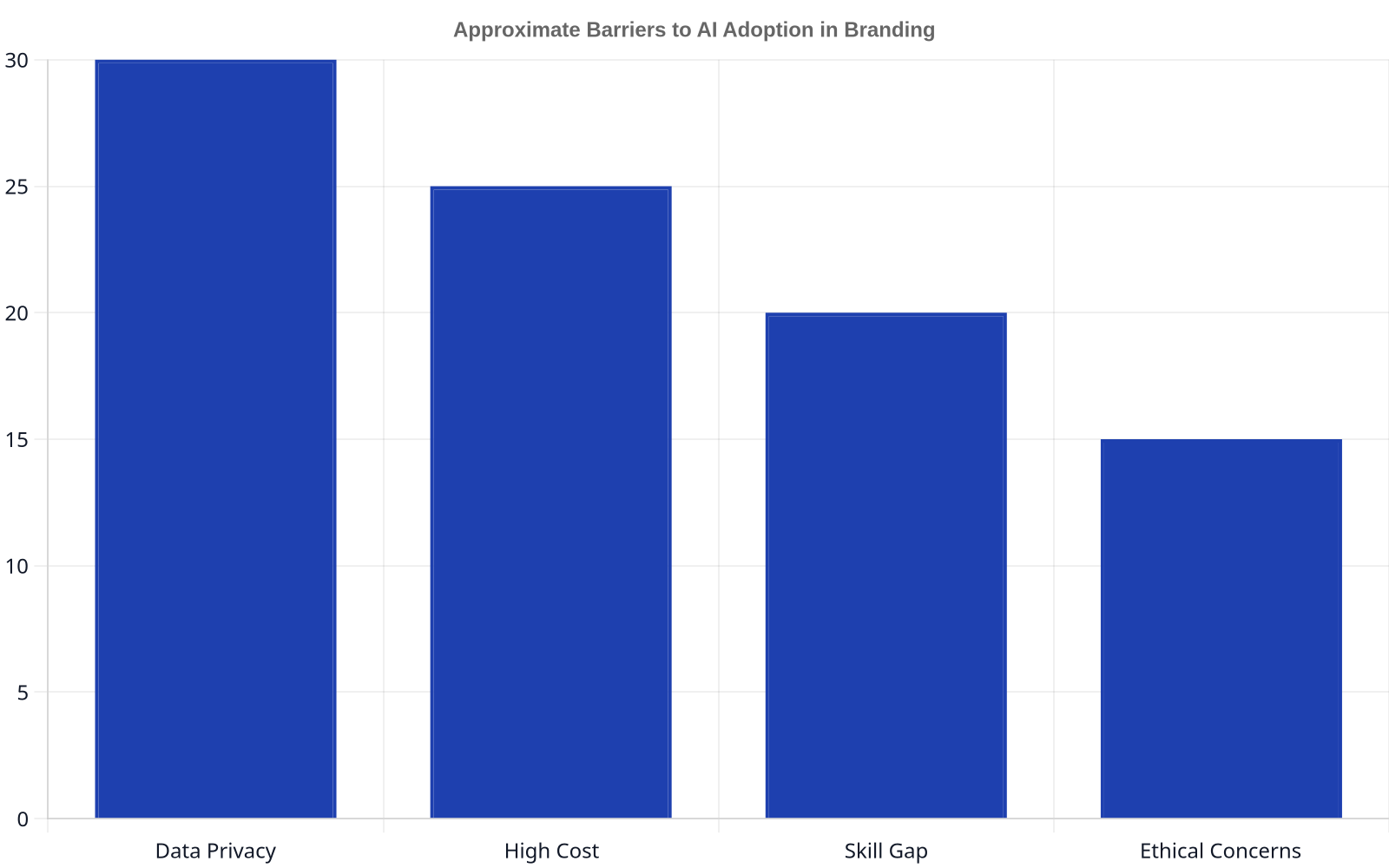
One major risk is creating a generic brand. If thousands of users are using the same AI tool with similar prompts, the outputs can start to look alike, defeating the purpose of creating a unique identity. Another risk is the lack of strategic depth; a logo generator can’t tell you if your company is targeting the right market or if your messaging is effective. Finally, there can be legal and ethical gray areas around the copyright of AI-generated images and designs.
How can I ensure my AI-generated brand is unique?
To ensure uniqueness, use AI as a starting point, not a final solution. Work with a skilled designer or agency who can take the AI-generated concepts and infuse them with custom details, strategic thinking, and a unique creative vision. At Dynareach, we emphasize that a brand is more than a logo; it’s about creating a full visual identity, from color palettes to style guides, that reflects your specific voice and connects with your audience.