The notion that a website is a fixed digital brochure is about to become a fossil. For years, we built sites like static architecture, pages with defined walls and predictable layouts. That era is over. By 2027, your website won’t be a place people visit; it will be an intelligence that visits them, adapting its very structure and content in real time. The key AI website builder trends for 2027 point toward a future of generative, adaptive, and spatial web experiences, where static pages are replaced by dynamic interfaces personalized for each user. AI-native generation, scrollytelling, and contextual design will render the traditional template obsolete, transforming sites from rigid documents into interactive, individualized platforms.
Understanding the Evolution of AI in Web Development
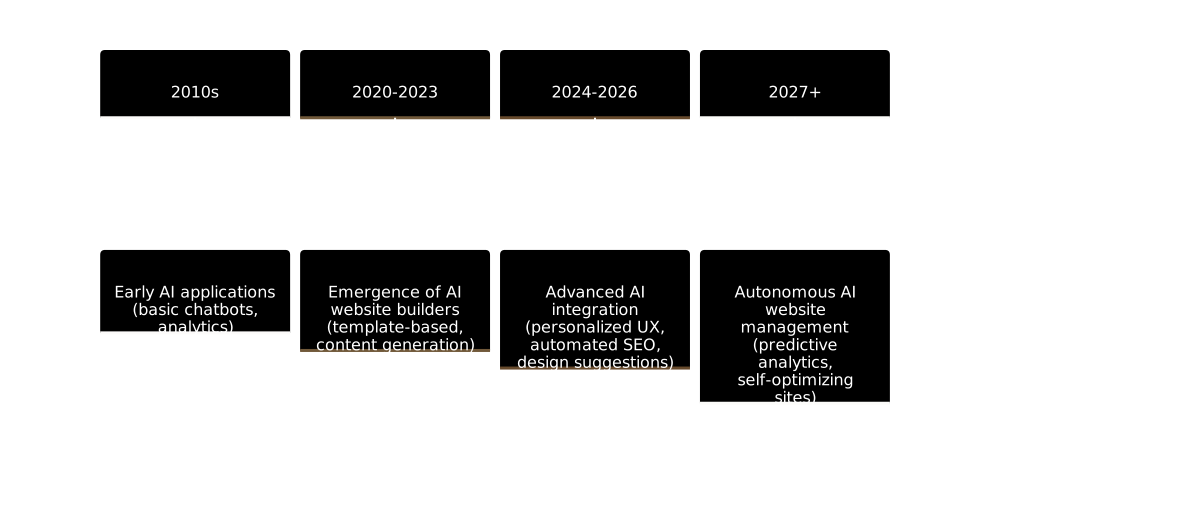
To grasp where we’re headed, we have to respect the path we’ve traveled. AI in web development didn’t just appear with large language models. Its integration has been a gradual, accelerating process that started with simple automation and is now culminating in full-blown generative systems.
From Task Automation to Generative Design
Initially, AI’s role was confined to discrete, repetitive tasks. Think automated image compression, basic SEO suggestions, or chatbot scripts that followed rigid decision trees. These were helpful, but they were tools wielded by a human designer, not creative partners. For instance, platforms like early Wix ADI (Artificial Design Intelligence) could generate a basic site from a few user prompts, but the result was formulaic, a remix of existing components.
The shift began when AI moved from automating to generating. Instead of just optimizing an image, AI could create one from scratch. Instead of suggesting keywords, it could write the copy. This leap is foundational to the current trends. We are moving from AI-assisted design, where the human makes all key creative decisions, to a model of co-creation, where the AI presents novel solutions that a human designer refines. This is a core part of our Web & Software Development service, blending sophisticated tooling with expert human oversight.
The Move from Templates to Modules
The traditional web design workflow, even with advanced builders like Webflow or Editor X, has been template-based. You pick a starting point and customize it. While flexible, this approach still operates within a predefined container. Every visitor to your homepage sees the same hero section, the same value propositions, the same testimonials.
AI-native platforms are dismantling this paradigm. Instead of templates, they operate on a system of intelligent modules or “blocks.” A “testimonial block” isn’t a static element but an instruction: “display the most relevant customer quote based on this visitor’s industry, location, and browsing history.” A “features block” might re-order product capabilities to highlight those most aligned with a user’s known pain points. This modular, API-first approach means a site can assemble itself uniquely for every single visit.
Market Growth Projections: The AI Website Builder Landscape
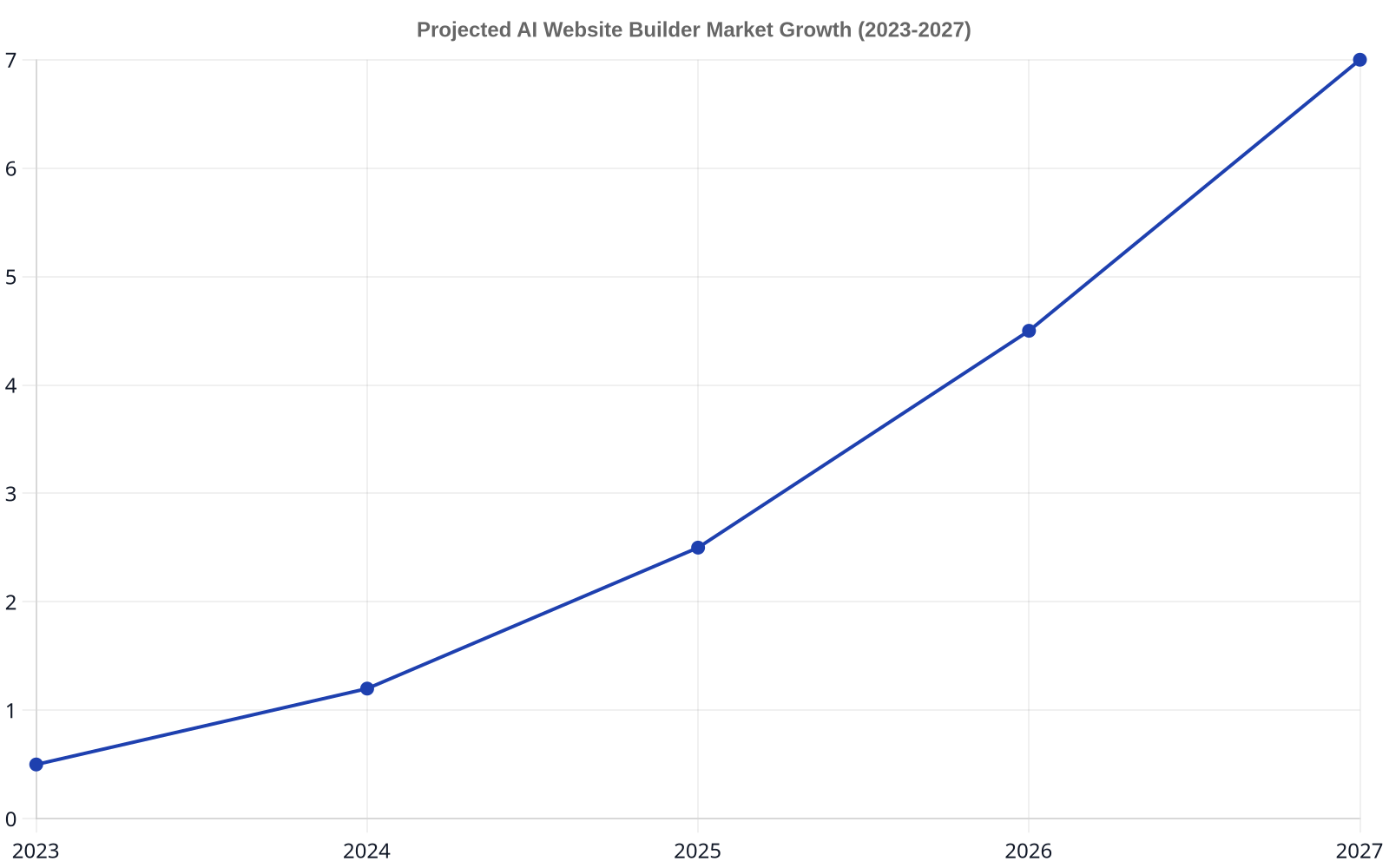
The financial momentum behind these technologies is staggering. While current figures show a nascent market, projections indicate an explosive growth trajectory. The global AI-powered website builder market, valued in the low billions today, is expected to grow exponentially as businesses recognize the competitive necessity of hyper-personalized, dynamic web presences. This isn’t a niche for tech startups; it’s becoming the standard for everything from complex e-commerce stores to enterprise SaaS platforms.
Key AI Website Builder Trends for 2027

By 2027, the fusion of AI and web design will mature into several dominant trends. These aren’t just aesthetic fads; they represent a fundamental rethinking of how users interact with digital information and how businesses can create truly personal connections at scale.
AI-Native Generation and Generative UI (GenUI)
This is the most significant shift. An AI-native website is one designed, coded, and populated by artificial intelligence from the ground up, based on a set of goals and prompts. Generative UI (GenUI) is the engine for this, creating interface components on the fly that are tailored to the immediate context of the user. Imagine a visitor arrives from a LinkedIn ad about a specific B2B feature. The website’s GenUI would instantly assemble a homepage variant that foregrounds that feature, pulls in a case study from a similar company, and adjusts the call-to-action to “Book a Demo” instead of “Start a Free Trial.” This moves beyond simple A/B testing into a realm of infinite variation.
A website will no longer be a single, canonical “source of truth.” Instead, it will be a million different truths, each one assembled for an audience of one.
Tools are already emerging that point to this future. While platforms like Framer AI and Durable provide a glimpse, the 2027 versions will be far more sophisticated. They won’t just generate layouts; they will generate the complete user flow, writing code that is not only functional but also optimized for performance and accessibility based on the user’s device and connection speed.
Deep Personalization and Contextual Adaptation
Personalization today is often crude: “Welcome back, [First Name]!” or showing products related to a previous purchase. The next wave of AI-driven adaptation is far deeper. By integrating with a company’s CRM, analytics, and third-party data sources, a website in 2027 will understand a visitor’s context with uncanny precision. It will know:
- Their Firmographic Data: If a visitor is from a Fortune 500 company, the site might display enterprise-level pricing and security compliance information.
- Their Intent Signal: Someone arriving from a “price comparison” search query will see a different layout than someone arriving from a “how-to” guide.
- Their Technical Environment: A user on a slow 3G connection in a rural area could be served a lightweight, text-focused version of the site automatically.
This contextual awareness allows the site to remove friction proactively. A report on digital experiences by McKinsey highlights that consistency and responsiveness are key drivers of customer satisfaction. AI-driven adaptation is the ultimate expression of this principle, ensuring every interaction feels relevant and effortless.
The Rise of Spatial Computing and 3D Web
The flat, two-dimensional grid of web design is finally breaking. With the mainstreaming of VR/AR hardware like Apple’s Vision Pro, the web is gaining a z-axis. This isn’t about turning every corporate website into a Fortnite-style game. It’s about using depth and space to create more intuitive and immersive experiences.
For an e-commerce site, this means moving from flat product photos to interactive 3D models you can inspect from any angle. For a data visualization, it means flying through a 3D chart instead of scrolling past a static PNG. AI’s role here is crucial for optimization and accessibility. Generative AI will create these 3D assets on demand and, more importantly, automatically generate simplified 2D fallbacks for users on older devices, ensuring the experience degrades gracefully.
Key Features Driving Adoption
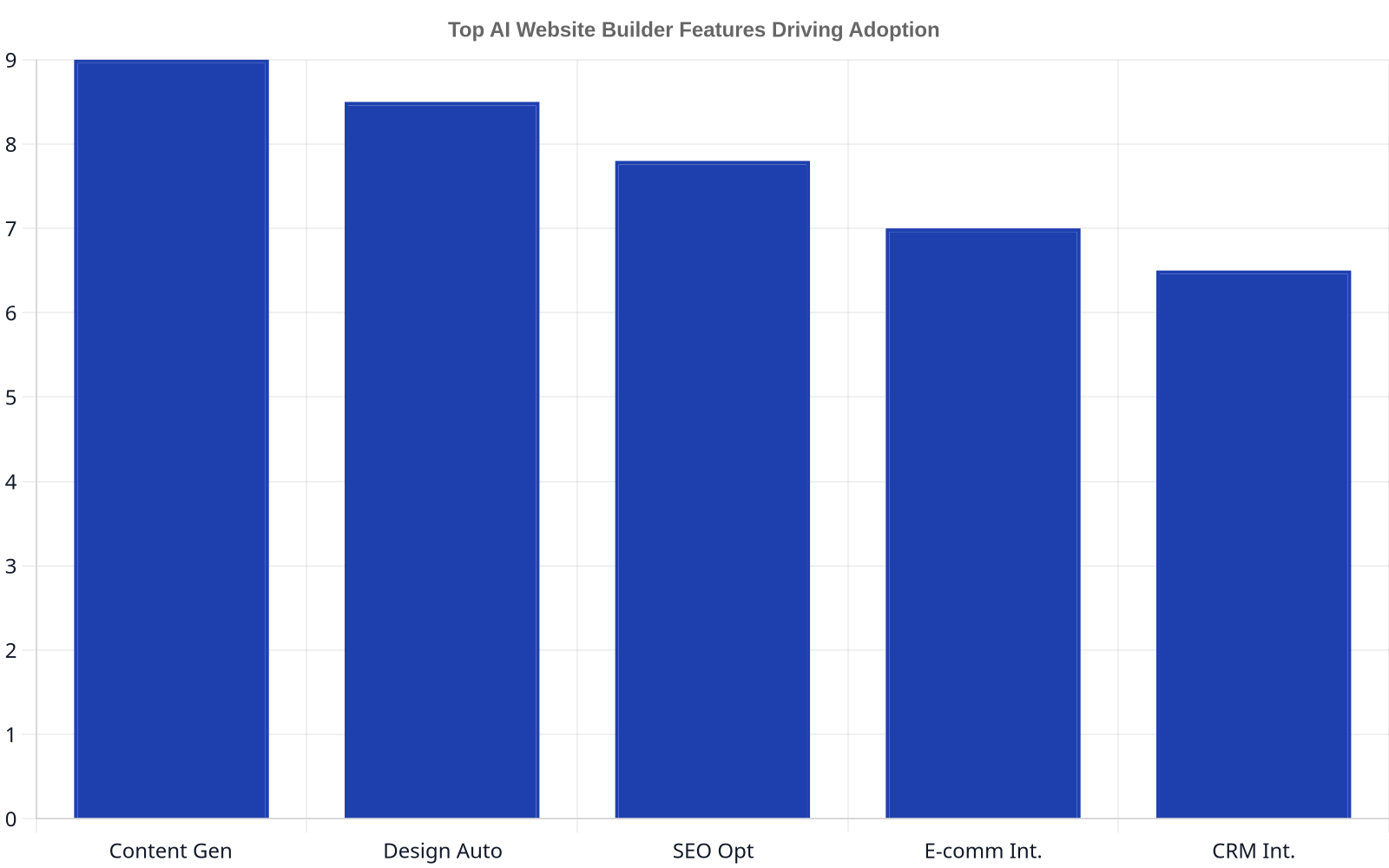
Certain features are becoming primary catalysts for businesses to adopt these new tools. It’s not the novelty but the tangible business outcomes that are compelling the switch. Automated content generation, real-time UI adaptation, and predictive analytics are leading the charge, as they directly address core challenges in marketing and user engagement.
The Human-AI Partnership in Web Creation
The rise of AI doesn’t mean the death of the web designer. It signals a change in the designer’s role from a builder to an architect and a strategist. The future workflow won’t be about wrestling with CSS or manually placing pixels. It will be about defining goals, training the AI, and curating the outputs.
From Pixel-Pusher to System-Orchestrator
In the 2027 design workflow, a human strategist will provide the AI with the core brand identity, strategic goals, and target audience profiles. The AI will then generate multiple complete design systems, user flows, and content architectures. The designer’s job is to evaluate these systems, test their effectiveness against business KPIs, and provide feedback to the AI for refinement.
This is a more strategic, high-impact role. Instead of spending 80% of their time on execution and 20% on strategy, designers will flip that ratio. The value of a human designer will be in their taste, their ethical judgment, and their ability to connect a brand’s abstract goals to the concrete parameters the AI needs to do its work. Companies achieving the greatest returns from AI are those that focus on augmenting employee skills, not replacing them.
Challenges: Bias, Homogenization, and Ethics
This new paradigm is not without its risks. An AI trained on the existing internet could perpetuate design biases or fall into a pattern of aesthetic homogenization, where every site starts to look like a mathematically perfect but soulless version of the same thing. One of the most critical roles for human designers will be to inject novelty and challenge the AI’s assumptions.
Furthermore, the data required for deep personalization raises serious privacy concerns. Businesses will need to navigate a complex landscape of regulations like GDPR and CCPA, and designers will be on the front lines of creating interfaces that are not only personalized but also transparent and respectful of user consent. User privacy cannot be an afterthought in web development.

The Future Workflow: AI-Assisted Website Creation

The process of building a website is set to be radically streamlined. Where a custom site might take 3-6 months today, an AI-assisted workflow could compress that to a few weeks or even days. Here is a numbered breakdown of that future process:
- The Strategic Briefing (Human-led): The project starts with a deep dive into goals. The client and a human strategist define KPIs, target user personas, brand voice, and core messaging pillars. This input is translated into a detailed prompt for the AI.
- Generative Sprint (AI-led): The AI takes the brief and generates 3-5 complete, functional website prototypes. This includes the visual design, information architecture, written copy, and even a draft content calendar for the blog. Each prototype might explore a different strategic angle or visual metaphor.
- Curation and Refinement (Human-AI Collaboration): The designer reviews the AI-generated options, discarding what doesn’t work and blending elements from different versions. They might prompt the AI for revisions: “Make the tone of this page more professional,” or “Generate three alternative hero images for a user in the healthcare sector.”
- Integration and Training (Human-led): The designer connects the chosen design to the client’s business systems: the CRM, the e-commerce backend, and the analytics suite. They then “train” the website’s adaptive logic, setting rules for how content and layout should change for different user segments.
- Autonomous Operation and Reporting (AI-led): Once live, the site operates with a high degree of autonomy. It continuously runs its own A/B tests, refines its personalization algorithms, and reports back to the human team on performance against the initial KPIs.
Scrollytelling and Micro-interactions Evolved
Narrative-driven landing pages, or “scrollytelling,” will become richer and more interactive. Instead of a single, linear story, the scroll experience will adapt. For example, as a user scrolls, AI-generated visuals could appear that relate directly to the text they’re reading. Micro-interactions, the small animations that provide user feedback, will also become context-aware. A “submit” button might give a more enthusiastic animation if the user has filled out a form quickly, subtly reinforcing positive behavior.
| Feature | Traditional Web Design (2023) | AI-Driven Web Design (2027) |
|---|---|---|
| Design Process | Manual layout creation based on templates. | Generative design based on prompts and goals. |
| Personalization | Basic (e.g., username display, related items). | Deep (e.g., real-time UI changes based on user data). |
| Content | Statically written and manually updated. | Dynamically generated and adapted per visitor. |
| User Experience | One-size-fits-all, linear navigation. | Adaptive, non-linear, and context-aware. |
| Human Role | Executor and builder of pages. | Strategist, curator, and AI trainer. |
The goal is no longer just to build a website that works. It’s to build a system that learns, adapts, and performs on its own.
User Adoption Rates by Business Type
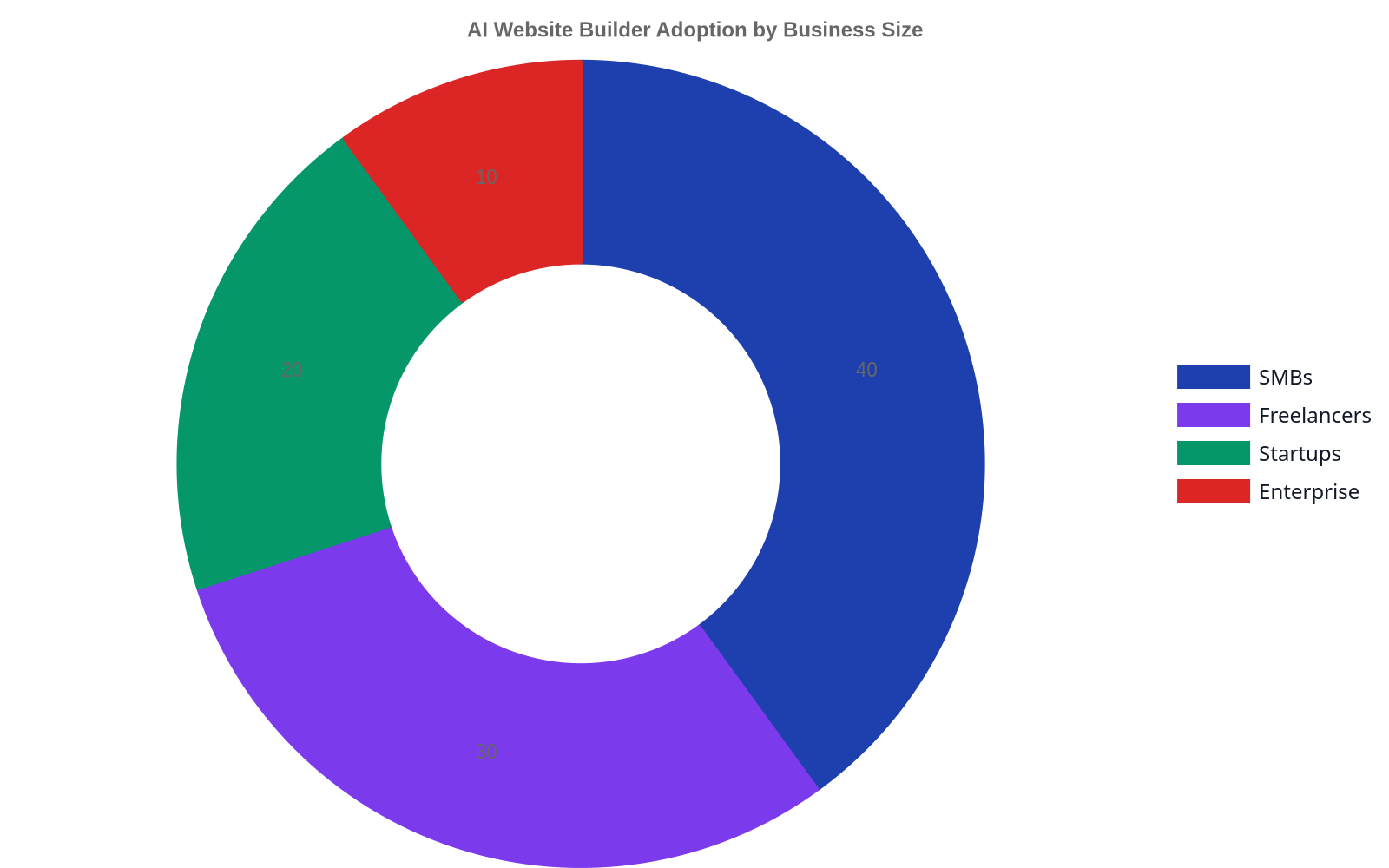
Adoption of these advanced AI tools won’t be uniform. Initially, small businesses and startups will be the most aggressive adopters, using AI to compete with the resources of larger incumbents. Enterprises will follow, but their adoption will be more measured, focusing on integrating AI into existing complex systems rather than wholesale replacement. The freelance market will also see a major shift, with individual creators using AI to deliver sophisticated products that were once the exclusive domain of large agencies.
The Impact on SEO and Digital Marketing
The rise of AI-native websites will profoundly change the practice of SEO. The focus will shift away from optimizing static pages for specific keywords and toward optimizing systems to meet user intent.
Topical Authority Over Keyword Density: Search engines like Google are already prioritizing expertise and comprehensive coverage of a topic. An AI that can generate vast amounts of high-quality, relevant content will be an invaluable tool for building topical authority at a scale impossible for human teams alone.
User Experience as a Core Ranking Factor: With every site becoming hyper-personalized, user experience signals (time on site, conversion rate, bounce rate) will become even more critical for ranking. A website that dynamically adapts to a user will naturally produce better engagement metrics, which will be rewarded by search engines.
The End of the Single “Money Page”: Instead of driving all traffic to one or two highly optimized landing pages, SEO strategy will involve creating adaptive frameworks. The goal will be to rank the system itself, trusting it to present the right page variation to the right user. This aligns with the broader move in digital marketing toward more holistic, user-centric strategies.
FAQ
Will AI website builders replace web developers by 2027?
No, they will change the role of web developers. The focus will shift from manual coding of front-end components and layouts to more complex backend integrations, AI model management, and system architecture. Developers will be needed to build and maintain the sophisticated platforms that enable AI-driven design, and to handle the custom integrations that off-the-shelf AI cannot.
How much will an AI-built website cost in 2027?
Costs will likely stratify. At the low end, simple, fully automated websites from builders like Durable could become extremely cheap or even free, commoditizing the basic “brochure” site. However, custom, strategically-guided AI-driven websites for businesses with specific goals (like e-commerce stores or SaaS platforms) will still represent a significant investment, comparable to current agency-led projects. The value will be in the strategy, curation, and integration, not the raw code generation.
What is the difference between AI-assisted and AI-generated design?
AI-assisted design uses AI as a tool to help a human designer work more efficiently. This could be an AI suggesting color palettes or optimizing image sizes. AI-generated design, or AI-native design, involves the AI creating the entire website (layout, code, and content) from a high-level prompt or set of goals. The human’s role becomes one of a curator or director rather than a hands-on builder.
How will AI website builders handle SEO?
Future AI builders will have SEO capabilities baked into their core. They will automatically generate schema markup, optimize meta tags, ensure fast load times, and even write SEO-focused content based on keyword research. However, human oversight will still be crucial for high-level strategy, such as identifying a market niche or building a backlink profile. SEO will become less about on-page tweaks and more about guiding the AI’s content and user experience strategy.
Can AI create a website that truly reflects my brand?
Yes, but it requires precise human guidance. An AI can only work with the inputs it is given. The success of an AI-generated site will depend on the quality of the brand guidelines, strategic goals, and target audience profiles provided by the human team. The AI can generate options that are on-brand, but a human with deep brand knowledge is still needed to make the final selection and ensure the result feels authentic.
By 2027, refusing to integrate AI into your web strategy will be like insisting on a horse and buggy in the age of the automobile. The tools are evolving from novelties into non-negotiable infrastructure for competitive online performance. The businesses that will win are not those that simply adopt AI, but those that learn to partner with it strategically, blending machine-scale generation with irreplaceable human insight and creativity. If you’re ready to move beyond the static template and build a web presence that truly performs, we should talk.